
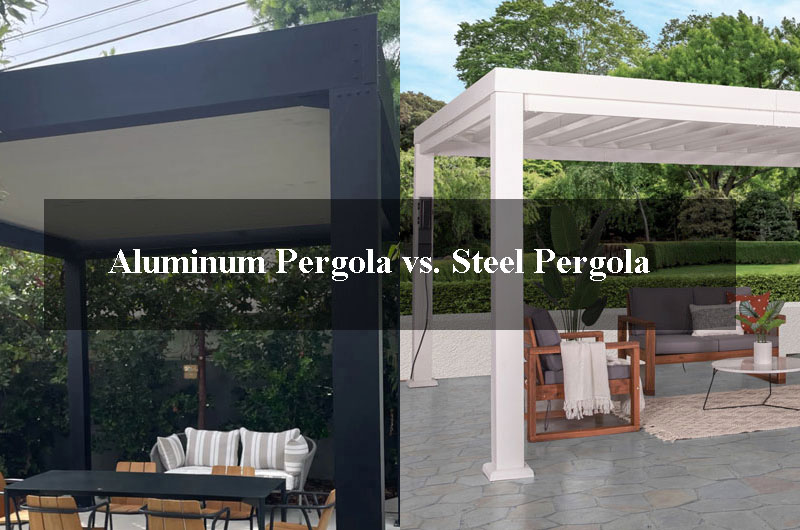
When it comes to choosing materials for a pergola, metal options – especially aluminum and steel are increasingly favored for their durability, low maintenance, and contemporary appeal.
But which metal material is better?
In this article, we’ll compare aluminum pergolas and steel pergolas in terms of strength, durability, cost, corrosion resistance, maintenance, aesthetics, and overall value to help you choose with confidence.
A Comparison Chart
Here’s a quick comparison chart between aluminum pergolas and steel pergolas to help you weigh the key differences at a glance.
| Feature | Aluminum Pergola | Steel Pergola |
|---|---|---|
| Material Weight | Lightweight | Heavy |
| Structural Strength | Moderate to high (suitable for most residential use) | Very high (ideal for large spans and heavy loads) |
| Load-Bearing Capacity | Suitable for louvers, lighting, light accessories | Excellent for heavy roofing, glass panels, fans |
| Corrosion Resistance | Naturally corrosion-resistant, does not rust | Requires galvanization or coating to prevent rust |
| Performance in Coastal Areas | Excellent | Fair to good (depends on coating quality) |
| Maintenance Requirements | Very low | Medium to high |
| Service Life | 20–30+ years | 15–30 years (with proper maintenance) |
| Surface Finish | Powder coating, anodizing | Galvanized + powder coated or painted |
| Design Style | Modern, minimalist, sleek | Industrial, bold, architectural |
| Installation Difficulty | Easy, faster installation | More complex, heavier handling |
| Installation Cost | Lower | Higher |
| Best Applications | Residential patios, gardens, pergolas, louvered systems | Commercial spaces, large pergolas, heavy-duty structures |
If you would like to learn more, please continue reading…
1. Material Properties
Aluminum Pergolas
Aluminum is a lightweight, corrosion-resistant metal that does not rust. Because of its low density, it’s easier to handle during installation.
Aluminum’s natural oxidation layer protects it from weathering, and with powder-coated finishes, it can withstand decades of outdoor exposure without fading.
Steel Pergolas
Steel is a heavier, stronger, and more rigid metal. It is known for exceptional structural strength and load-bearing capacity.
However, unlike aluminum, untreated steel is prone to rust and corrosion if exposed to moisture without protective coatings like galvanization or paint.
2. Strength and Structural Performance
Steel Pergola Strength
When it comes to sheer strength, steel clearly outperforms aluminum.
Steel has a higher tensile strength than aluminum, meaning steel pergolas can support heavier loads (such as dense vines, lighting fixtures, or even shade canopies), without bending or warping.
For wide-span pergolas or commercial projects requiring maximum structural strength, steel is commonly the material of choice.
Aluminum Pergola Strength
Although aluminum isn’t as strong as steel, modern engineering and design innovations make aluminum pergolas structurally stable for most residential applications.
With well-designed cross-sections and proper support, aluminum pergolas can handle moderate loads and weather stress without issue.
For pergolas under typical patio sizes (e.g., up to 20–25 feet wide), aluminum’s strength is usually sufficient.
Verdict: Steel wins on raw strength, but aluminum is adequate for most residential uses.
3. Corrosion Resistance and Longevity
Aluminum
One of aluminum’s biggest advantages is its natural corrosion resistance.
Aluminum naturally develops a protective oxide layer that resists rust, making it well-suited for humid or coastal areas exposed to moisture and salt air.
With a quality powder-coat finish, aluminum pergolas require minimal additional protection and can last 20–30 years or more.
Steel
Steel needs protective coatings to resist corrosion.
Galvanized steel (zinc-coated) has improved rust resistance, and powder-coated finishes add another protective layer. However, if these coatings are scratched or damaged, steel can begin to rust, especially in coastal or wet climates.
Stainless steel delivers excellent corrosion resistance, but its premium performance comes with a much higher price tag.
Verdict: Aluminum is more corrosion-resistant by nature and easier to maintain, especially in challenging climates.
4. Maintenance Requirements
Aluminum Pergola Maintenance
One of aluminum’s greatest perks is low maintenance.
Because aluminum doesn’t rust, you generally only need to clean the structure occasionally with mild soap and water to remove dirt or pollen.
Repainting is rarely necessary thanks to durable powder coatings.
Steel Pergola Maintenance
Steel pergolas require more frequent maintenance.
Over time, even with coatings, steel paint may chip, exposing metal to moisture and potential rust. Regular inspections, touch-up painting, and rust prevention treatments could be required every few years to ensure long-term durability.
Verdict: Aluminum requires less maintenance and offers long-term peace of mind.
5. Aesthetics and Design Versatility
Aluminum Pergolas
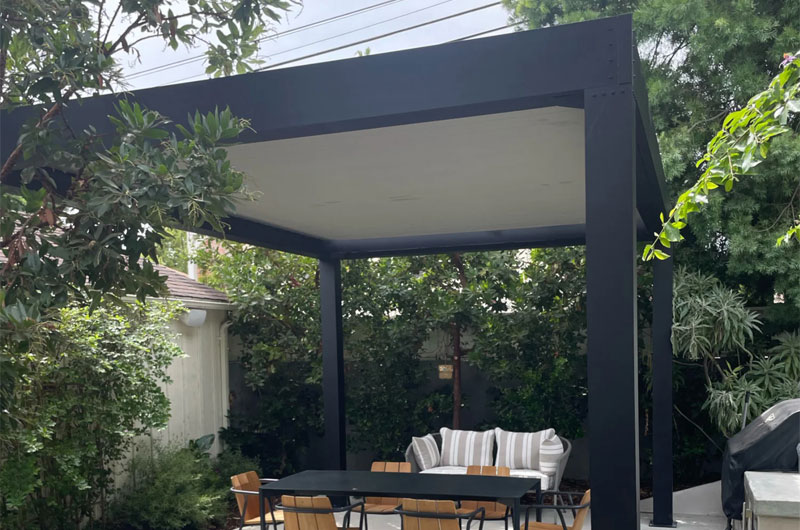
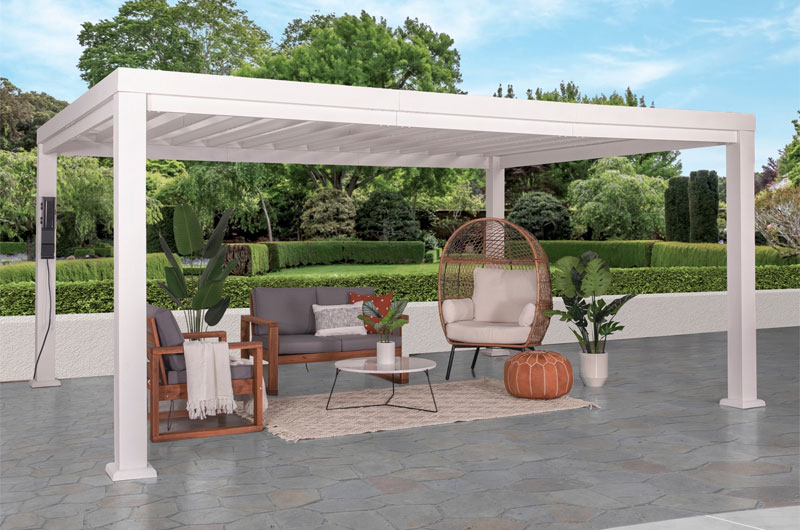
Aluminum pergolas have a modern, sleek aesthetic.
Their lightweight nature allows for clean lines and contemporary profiles that suit minimalist and modern architecture.
Aluminum is easy to shape and extrude, so manufacturers can offer a wide range of styles, colors, and finishes that appeal to today’s design trends.
Steel Pergolas
Steel pergolas give a bold, industrial look that appeals to many homeowners as well.
Steel beams and posts can be designed into dramatic, architectural statements.
If you prefer a more robust, structural style or want to install heavy accessories like fans, tinted glass roofs, or shade screens, steel delivers.
Verdict: For clean, modern design, aluminum has a slight edge. For dramatic architectural appeal, steel is strong and striking.
6. Installation and Construction Costs
Aluminum Pergolas
Because aluminum is lightweight, it’s easier and faster to install, potentially reducing labor costs.
However, the material itself (especially with quality powder coating) can be priced similarly or slightly higher than basic steel.
Steel Pergolas
Steel typically costs less per pound than premium aluminum but may incur higher installation costs due to heavier weight, need for welding or bolting, and more complex handling.
Additional costs include surface preparation, galvanization, and coating for corrosion protection.
Verdict: Installation costs for steel may be higher, but material costs depend on quality and grade. Aluminum often balances cost and ease of install well.
7. Environmental and Sustainability Considerations
Aluminum
Aluminum is highly recyclable, and much of the aluminum in circulation today is recycled material.
Additionally, aluminum’s lighter weight reduces emissions during transportation compared to heavier steel.
Steel
Steel is among the most widely recycled materials globally.
However, its production (especially without recycled content) can have higher energy and carbon footprints compared to aluminum.
Verdict: Both metals are recyclable, but aluminum often has a smaller environmental footprint over its lifecycle.
8. Cost Comparison (Approximate)
Note: Actual pricing varies by region, design complexity, finish quality, and installation requirements. These figures are estimates.
| Material | Average Material Cost | Installation Complexity | Long-Term Maintenance |
|---|---|---|---|
| Aluminum | $30–$80 per sq. ft | Easy | Low |
| Steel | $25–$70 per sq. ft | Moderate to high | Medium to high |
While upfront costs may be comparable, the total cost of ownership often favors aluminum due to its lower maintenance needs.
10. Final Verdict: Which Is Better?
So, which metal material is better for a pergola, aluminum or steel?
The answer depends on your priorities:
- If durability, low maintenance, and corrosion resistance are your top concerns, especially in coastal, rainy, or humid areas, aluminum pergolas are typically the better choice.
- If maximum structural strength, bold industrial design, or heavy accessory loads are essential, steel pergolas have advantages that aluminum can’t match.
- In most residential settings, aluminum offers an ideal balance of durability, appearance, and long-term cost efficiency.
- For larger, commercial, or architecturally striking projects, steel may be more fitting.