
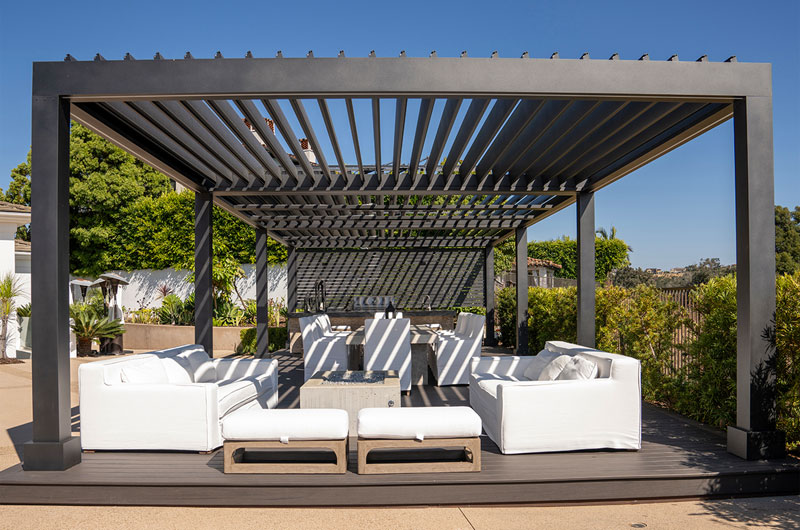
In recent years, outdoor living spaces have become a focal point for homeowners seeking to expand their usable square footage and create a tranquil sanctuary in their backyard.
Among the best additions to elevate an outdoor space is an aluminum louvered pergola.
However, before making a purchase, it’s important to consider several key factors to ensure you select a pergola that fits your needs, style, and budget.
1. Define Your Purpose and Needs
Start by asking yourself what purpose the pergola will serve.
Are you looking for shade on hot days, a sheltered spot to dine outdoors, a structure to support outdoor lighting and heaters, or a mix of all these?
Understanding your primary goals will guide you in prioritizing the features and accessories that matter most.
For example, if shade is the top priority, you might opt for a pergola with adjustable louvers that can fully close to block out sun. If rain protection is essential, ensure the design you choose truly seals when closed and has adequate drainage options.
2. Material Quality and Durability
While aluminum naturally resists rust and corrosion, making it perfect for outdoor use, quality can vary significantly between pergolas. Consider the following:
Gauge and Thickness of the Aluminum
Heavier gauge aluminum generally means greater durability and longevity. Thinner aluminum may be cheaper but might not withstand heavy winds, snow loads, or long-term wear as well.
Powder Coating
Look for a pergola with a high-quality powder-coated finish, which provides UV protection, prevents fading, and boosts resistance to scratches and corrosion.
Hardware and Fittings
Stainless steel screws and reinforced brackets add strength and longevity. Inferior hardware can be prone to rust or failure over time.
3. Louver Functionality
Adjustable louvers are a signature feature of louvered pergolas, offering flexibility in controlling light and airflow.
These louvers allow you to control sunlight, airflow, and shelter. But there are several considerations here:
Manual vs. Motorized Louvers
Manual pergolas are more budget-friendly but need physical effort to adjust. Motorized systems often operated via remote or app, offer convenience and precision but add to the price.
Waterproofing Design
High-quality louvered systems have integrated drainage channels that direct water away when the louvers are closed. Check how well the design keeps water out and where the water will drain.
Degree of Adjustability
Some pergolas offer wide angles of louver movement, allowing flexible control over light and shade. Ensure the design you select allows you to achieve the range of coverage you want.
4. Size and Site Planning
Careful planning of size and placement is essential:
Measure Your Outdoor Space
Take accurate measurements of the area where you want the pergola installed. Consider walkways, doors, windows, and nearby structures to avoid conflicts.
Consider Building Codes and Permits
Depending on your location, you may need a permit for structures above a certain size. Check local building codes and homeowners association rules.
Orientation
Position your pergola to take advantage of natural shade and views. For example, orient the pergola so that the sun’s path doesn’t blast the space in the late afternoon.
5. Foundation and Installation Considerations
Aluminum pergolas can be installed on various surfaces, but proper anchoring is crucial:
Concrete Slab vs. Deck Mounting
If mounting on a deck, verify that the deck is structurally capable of supporting the pergola’s weight. For ground installations, a solid concrete slab often offers the best stability.
DIY vs. Professional Installation
Some pergolas come as DIY kits with step-by-step instructions, while others may require professional installation.Complex motorized systems and large structures typically need experienced installers to ensure safety and proper operation.
6. Weather Resistance and Climate Considerations
Aluminum pergolas are renowned for their weather resistance, but local climate still matters:
Wind Load Ratings
If you live in a windy area, look for pergolas engineered with high wind load ratings. Some manufacturers offer reinforced systems or optional tie-downs.
Snow Load Capacity
In regions with heavy snow, verify that the pergola can withstand winter loads. Louvers that close completely can hold snow unless properly designed with adequate slope and drainage.
UV Protection
Strong sun exposure can fade finishes over time. High-quality powder coats and UV-resistant finishes help ensure lasting beauty.
7. Accessories and Customization Options
A pergola doesn’t have to be just a basic frame. Many additional features can enhance usability:
Lighting Options
Integrated LED lights or mountable lighting systems help extend your pergola’s use into the evening.
Ceiling Fans and Heaters
These make your space comfortable in hot summers or cool nights.
Retractable Screens or Shades
Screens can increase privacy, block wind, or shade from low sun angles.
Gutters and Downspouts
If rain protection is vital, integrated gutters help control water flow away from seating areas.
Make a list of accessories that matter to you and check that your chosen pergola model supports them.
8. Aesthetic and Design Integration
Your pergola should complement your home, landscape, and outdoor design style. Consider:
Architectural Match
Select styles, finishes, and colors that complement your home’s exterior.
Color Choices
Many pergolas come in standard colors such as white, bronze, black, or custom shades. Think about how color will look in your space and how easy it will be to coordinate with furniture and décor.
Modern vs. Traditional Styles
While aluminum pergolas often have a contemporary look, design variations range from sleek minimalism to more ornate profiles. Pick a style that enhances your space’s overall vibe.
9. Budget and Long‑Term Value
Cost varies widely based on size, features, quality, and installation complexity.
A cheap pergola may save money upfront but could cost more over time in maintenance or premature replacement.
Warranty
Reputable manufacturers offer warranties covering structural components and finishes. A solid warranty can provide peace of mind and protect your investment.
Resale Value
High-quality outdoor enhancements like a well‑designed pergola can raise your property’s appeal and potentially its market value.
10. Manufacturer Reputation and Support
Before you buy, research brands and read reviews. Look for companies known for:
- Solid product quality
- Clear warranty terms
- Good customer service
- Installation support
Ask for references, look at completed installations, and verify that customer support is responsive should you need help down the road.