
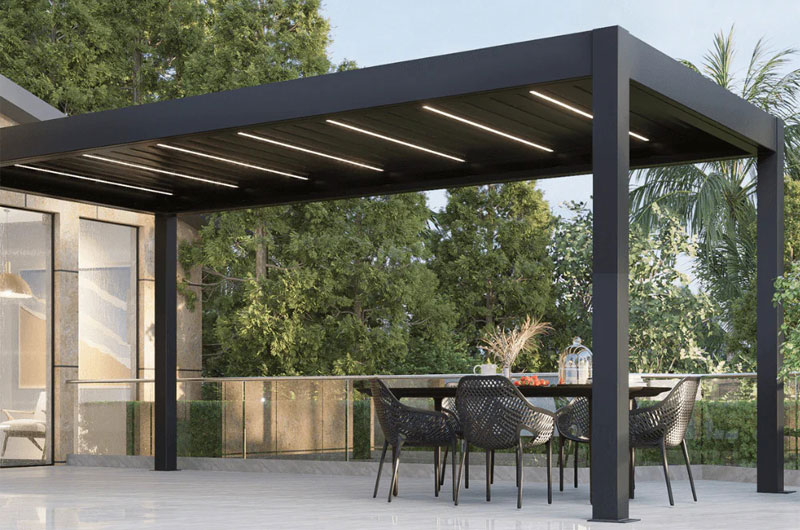
While pergolas have been traditionally made from wood or vinyl, aluminum has emerged as the premier material for modern pergolas.
Its unmatched combination of durability, design flexibility, low maintenance, and sustainability makes aluminum the best choice for both residential and commercial outdoor structures in today’s design landscape.
Here’s a detailed introduction to the benefits of modern aluminum pergolas.
1. Unmatched Durability Against the Elements
One of the most compelling reasons aluminum stands out is its superior durability.
Unlike wood, which may warp, rot, crack, or splinter over time when exposed to moisture, aluminum remains fully resistant to these issues. Aluminum also won’t rust like steel, making it ideal for both coastal environments with salty air and inland regions with high humidity or rainfall.
Aluminum’s inherent resilience means it can withstand:
- Rain and moisture
- Intense UV exposure
- Freeze/thaw cycles
- Wind and temperature fluctuations
Since aluminum does not absorb water, it prevents issues like mold growth or wood decay that plague traditional pergolas.
For homeowners seeking a structure that lasts decades with minimal degradation, aluminum delivers performance that wood simply cannot match.
2. Low Maintenance
Aluminum pergolas are highly valued for their low maintenance, unlike traditional wooden pergolas, which often require yearly sealing, staining, or painting to withstand the elements and retain their look.
In contrast, aluminum pergolas typically require nothing more than an occasional rinse with soap and water to keep them looking new. Powder-coated finishes adhere strongly to aluminum surfaces, providing long-lasting protection against peeling, flaking, and fading.
This ease of upkeep saves busy homeowners and property managers considerable time, effort, and ongoing expense.
3. Design Flexibility and Customization
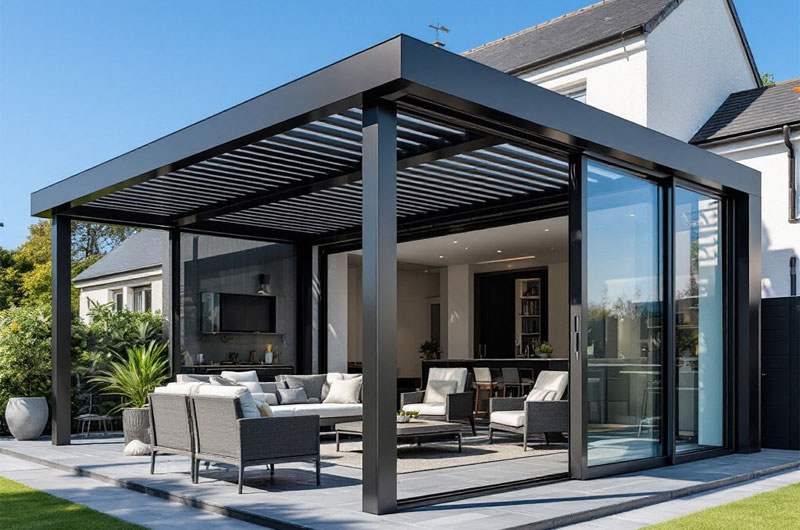
When it comes to design, aluminum excels.
Thanks to aluminum’s excellent strength-to-weight ratio, pergolas can feature slim, elegant profiles that create a modern appearance without sacrificing structural stability.
Aluminum can be easily formed into a variety of shapes and integrated with contemporary architectural elements, making it ideal for:
- Minimalist designs
- Angular or geometric styles
- Curved or custom profiles
- Integrated lighting or shade systems
Thanks to advanced manufacturing techniques, aluminum pergolas can be tailored precisely to match the style and dimensions of any outdoor space.
4. Wide Range of Finishes and Colors
Another area where aluminum outshines its competitors is finish options.
Powder coating technology has evolved to offer hundreds of colors, textures, and metallic finishes that withstand UV exposure without fading. Popular finishes include:
- Matte and satin colors
- Wood-grain finishes (for a wood-like appearance without the drawbacks)
- Metallic and anodized surfaces
- Custom color matches
This range allows homeowners and designers to harmonize pergolas with existing exterior palettes or stand out with bold, contemporary hues.
The ability to blend form and function — beauty with performance — makes aluminum ideal for modern design.
5. Lightweight Strength
Aluminum’s natural properties make it lightweight yet incredibly strong. This means:
- Easier installation
- Reduced structural load
- Lower material transportation costs
- Compatibility with larger spans and open designs
Because aluminum doesn’t require bulky supports, pergolas can feature wider open areas without obstructive columns or beams.
This design flexibility is especially beneficial for commercial settings or expansive residential patios, where a clear, open outdoor space is desired.
6. Eco-Friendly and Sustainable
In an era where sustainability is increasingly important, aluminum stands out as an environmentally responsible material.
Aluminum is extremely recyclable, with almost 100% of it capable of being reused without any loss in quality.
Key environmental advantages include:
- High recyclability
- Long service life reduces material replacement
- Low environmental impact in manufacturing with modern techniques
- No harmful coatings or preservatives required
For environmentally conscious homeowners and designers, aluminum pergolas offer an eco-friendly solution that delivers durability and modern style without sacrificing quality.
7. Cost-Effectiveness Over the Long Term
While the upfront cost of an aluminum pergola may be higher than some wood or vinyl alternatives, the lifetime value is far superior.
Consider the total cost of ownership:
- Wood pergolas may need yearly staining or sealing.
- Wood and vinyl can warp, fade, or crack, requiring repairs or replacement.
- Aluminum pergolas require little maintenance and hold their appearance for decades.
When factoring in labor, materials, maintenance products, and potential replacement costs, aluminum typically becomes the more economical choice over time.
8. Integration With Modern Features and Technology
Modern pergolas are no longer static structures; they are often integrated with:
- LED lighting
- Retractable louvers or canopy systems
- Solar panels or shade sails
- Smart automation for light, shade, and weather response
Aluminum’s engineering versatility makes it easy to incorporate these features seamlessly. The material’s stability and precision fabrication allow for smooth integration of electrical, mechanical, and smart components.