
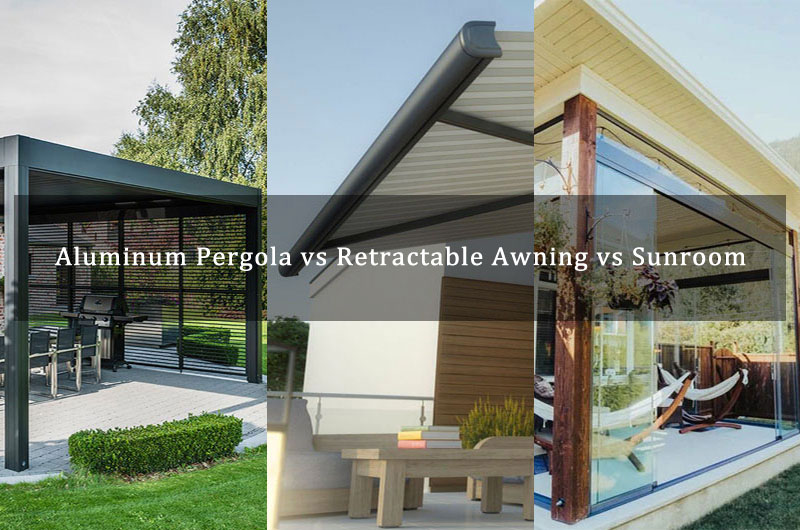
Homeowners today have a variety of high-performance options to elevate their outdoor living areas.
Among the most popular are aluminum louvered pergolas, retractable awnings, and sunrooms. Each solution enhances comfort and usability, but they differ significantly in structure, function, aesthetics, cost, and long‑term value.
Understanding these differences can help you make the right choice for your lifestyle.
What Is an Aluminum Louvered Pergola?
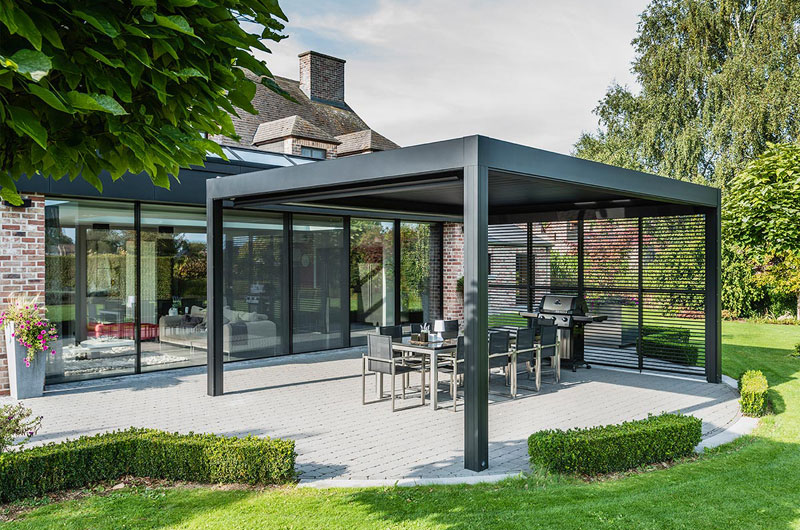
An aluminum louvered pergola is a permanent structure featuring adjustable louvers – horizontal slats in the roof that you can tilt to control sunlight, shade, and airflow.
Made primarily from aluminum, these pergolas are strong, low-maintenance, and blend seamlessly with modern architecture.
They can be freestanding or attached to your home, and many models have options for LED lighting, zip screen blinds, electric lifting windows, integrated heaters, and smart automation.
Key Benefits
- All‑weather Adaptability: Adjustable louvers let you fully open the roof on sunny days for natural light or close it to block rain and harsh sun, effectively acting like a solid roof during rainstorms.
- Durability: Aluminum resists rust and corrosion, making it ideal for coastal or rainy climates.
- Low Maintenance: Unlike wood, it won’t rot, splinter, or need frequent staining and painting.
- Customizable: Sizes, colors, and accessories can be tailored to your outdoor space.
Considerations
- Cost: The initial cost is higher than traditional pergolas and many retractable awnings.
- Installation: Typically requires professional installation and potentially structural reinforcement.
What Is a Retractable Awning?
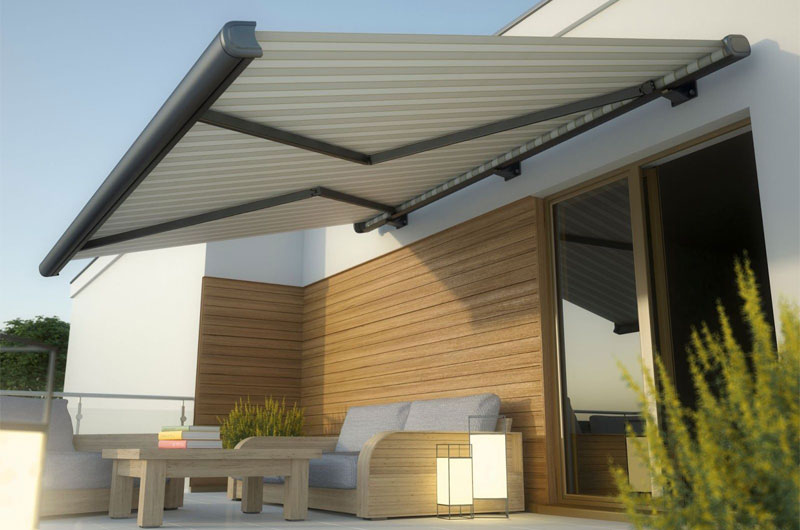
A retractable awning is a flexible shade system, usually made of fabric stretched over a folding frame that extends and retracts over a deck or patio.
You can operate retractable awnings manually with a crank or automatically with a motor and sensors.
Key Benefits
- Affordability: Generally, the most budget‑friendly option among the three.
- Quick Shade On Demand: Extend shade only when needed, then retract to enjoy full sun.
- Style Variety: Available in many fabric colors and patterns to match your home.
- Energy Savings: Placed above windows or sliding doors, they can significantly reduce indoor heat gain, lowering cooling costs.
Considerations
- Durability Concerns: Fabric and mechanical parts can wear over time, especially under heavy wind, storms, or UV exposure. Quality impacts longevity.
- Limited Weather Protection: Retracted during bad weather, and extended fabric offers limited protection against heavy rain or snow.
- Maintenance Needed: Fabric may require cleaning, eventual replacement, and protection against mold and mildew in humid climates.
What Is a Sunroom?
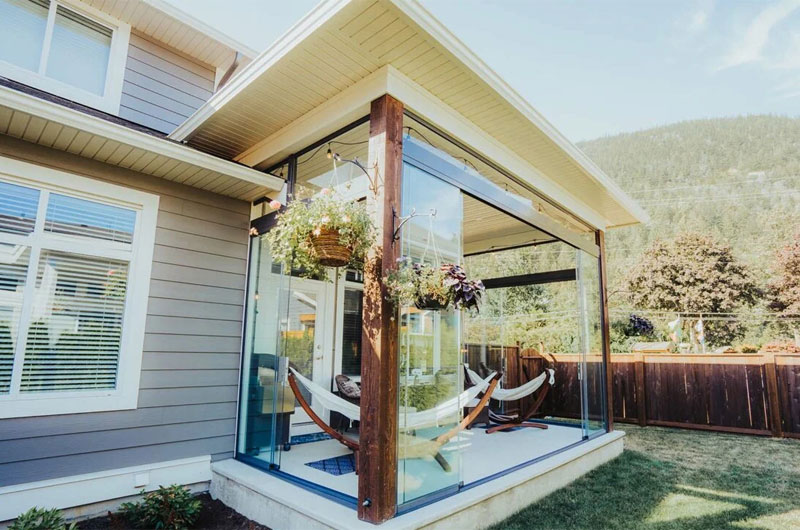
A sunroom is an enclosed patio or porch space constructed primarily of glass walls and roof panels to maximize natural light.
The structure is attached to the home and often designed to blend indoor comfort with outdoor views.
With proper insulation, like retractable roof shutters, sunrooms can serve as comfortable, year-round living spaces.
Key Benefits
- Indoor‑Outdoor Comfort: Offers a climate‑controlled environment where you can enjoy outdoor views without exposure to elements like wind, bugs, or rain.
- Year‑Round Use: With insulation, HVAC integration, and double‑pane glass, a sunroom becomes a usable room in all seasons.
- Versatility: Functions as a dining area, family room, greenhouse, home office, or lounging space.
Considerations
- Highest Cost: Sunrooms are the most expensive due to construction, foundation work, windows, and HVAC needs.
- Permitting and Structural Complexity: Requires building permits and must meet insulation and energy codes.
- Less Natural Airflow: Fully enclosed spaces sacrifice the breezy openness of outdoor shade solutions.
Comparing the Three: Side‑by‑Side
| Feature / Factor | Aluminum Louvered Pergola | Retractable Awning | Sunroom |
|---|---|---|---|
| Cost | Mid‑range to high | Low to mid | High |
| Weather Protection | Excellent (adjustable louvers) | Moderate (limited in storms) | Excellent (fully enclosed) |
| Durability | High (aluminum, rust-proof) | Moderate (fabric and mechanisms) | Very high (solid construction) |
| Maintenance | Low | Moderate (fabric cleaning) | Moderate to high (glass & HVAC) |
| Flexibility / Adjustability | High (louvers adjustable) | Medium (extend/retract only) | Low (fixed enclosure) |
| Aesthetics | Modern, architectural | Stylish, simple | Blends indoor/outdoor |
| Year-Round Use | Partial (weather dependent) | Limited | Full (climate-controlled) |
| Installation Complexity | Moderate to high | Low to moderate | High (construction required) |
| Best For | Outdoor living, all-weather comfort | Quick shade, budget-conscious | Full-time indoor-outdoor space |
To help determine which option is best for you, here’s a detailed comparison across key factors:
1. Cost
- Aluminum Louvered Pergola: Mid‑range to high, custom options and automation increase price.
- Retractable Awning: Most affordable upfront, costs vary based on size and automation.
- Sunroom: Highest total investment due to construction, insulation, and possible HVAC.
If budget is your top priority, awnings are attractive. But if you want long‑term functionality and durability, pergolas may justify the upfront investment. Sunrooms are for those wanting true indoor comfort outdoors.
2. Weather Protection
- Retractable Awning: Good for shade and light rain, the fabric can be damaged in severe weather.
- Aluminum Louvered Pergola: Excellent flexibility, closed roof gives solid protection from rain and sun.
- Sunroom: Best protection from all elements, you’re fully enclosed and climate‑controlled.
If you live in an area with heavy storms or intense sun, a pergola or sunroom offers stronger protection. Awnings are great for mild climates.
3. Aesthetic and Design
- Pergola: Modern, architectural, and visually striking, it enhances outdoor living spaces.
- Awning: Stylish and simple, best for homeowners who want quick shade without changing architecture.
- Sunroom: Blends indoor and outdoor aesthetics but is a solid architectural addition rather than a design accent.
Pergolas make a statement and can be integrated into landscaping. Awnings are functional and discreet. Sunrooms become part of the home’s footprint.
4. Functionality & Usability
- Pergolas: Highly functional – adjustable light and airflow, optional smart control, and integrated lighting or heaters.
- Awnings: Primarily shade – limited functionality beyond sun protection and aesthetic shade.
- Sunrooms: Most functional – fully usable space year‑round with furniture and activities.
Choosing between flow‑through outdoor living (pergola), simple shade (awning), or an interior‑like space (sunroom) depends on how you use your outdoor area.
5. Maintenance
- Pergolas: Minimal – occasional cleaning and louver lubrication.
- Awnings: Moderate – cleaning, seasonal retraction, and potential fabric replacement.
- Sunrooms: Moderate to high – glass cleaning, HVAC servicing, and general space upkeep.
For those seeking minimal maintenance, aluminum pergolas offer a clear edge.
Which One Is Best?
There’s no universal answer, the best option depends on your needs, climate, budget, and how you use your outdoor space.
Choose an Aluminum Louvered Pergola if:
- You want flexible shade and weather protection.
- You value durability and low maintenance.
- You enjoy outdoor living and want a feature that adds architectural value.
- You live in a region with variable weather and need adaptable coverage.
Choose a Retractable Awning if:
- Your budget is limited, but you still want instant shade.
- You want something simple, stylish, and space‑efficient.
- Your climate is generally mild with limited storms.
- You want to reduce heat in your indoor spaces during hot months.
Choose a Sunroom if:
- You want year‑round, all‑weather living space.
- You’re willing to make a significant investment in outdoor improvements.
- You want a multi‑use space that functions like an extra room.
- Your property and local regulations allow for structural additions.