
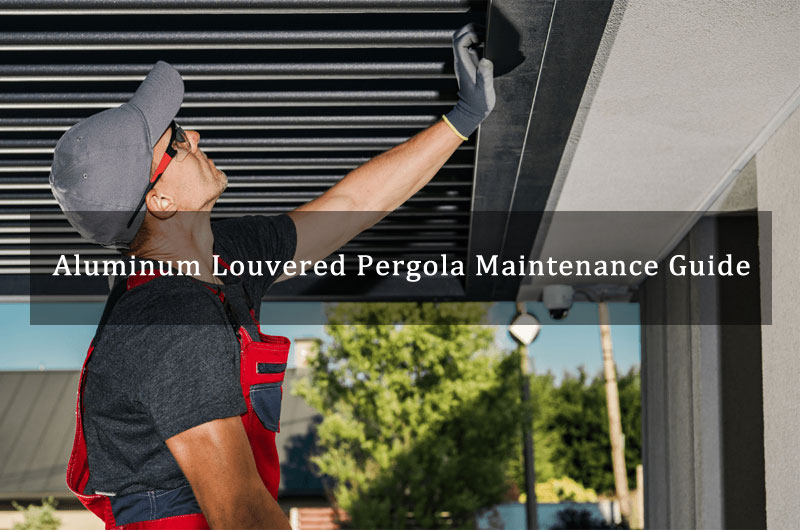
Aluminum pergolas require less maintenance than wood or steel counterparts, but they still face environmental factors such as:
- UV exposure
- Rain, snow, and humidity
- Dust, pollen, and airborne debris
- Bird droppings and tree sap
- Salt air (in coastal areas)
Neglecting routine care can lead to cosmetic degradation, operational issues in louver mechanisms, and shorter service life.
With a proactive approach, your aluminum louvered pergola can stay functional and attractive for decades.
Routine Maintenance (Weekly to Monthly)
1. Quick Visual Inspection
Check the pergola’s condition at least once a month.
Look for:
- Loose hardware and fasteners
- Debris on louvers or in gutters
- Dirt buildup on frames
- Signs of insect nests or bird activity
Catching issues early reduces repair costs and prevents bigger problems.
2. Surface Cleaning
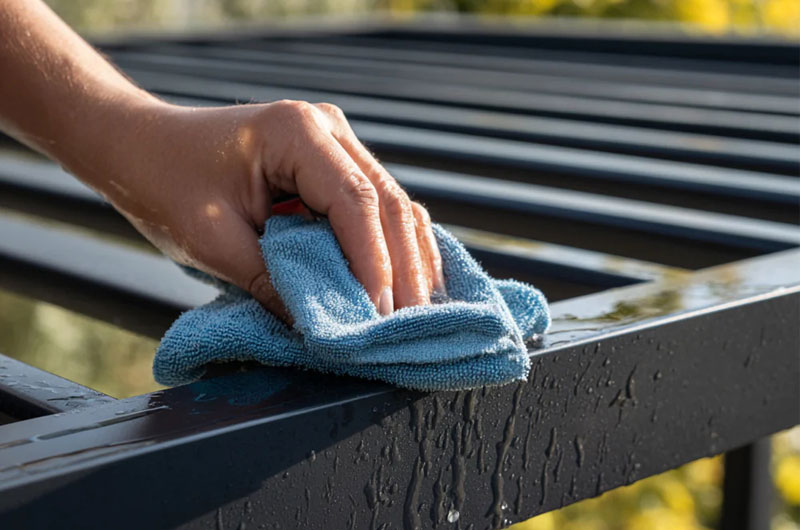
Keeping the aluminum free from dirt and grime improves aesthetics and prevents buildup that could hold moisture.
Step-by-Step Cleaning:
- Rinse with a garden hose to remove loose dust and debris.
- Mix a mild solution of dish soap and warm water.
- Use a soft sponge to wash surfaces.
- Rinse well and allow the surface to air dry completely.
Avoid: Harsh chemicals, acidic cleaners, abrasive pads, and power washers on close range; they can damage the finish.
Deep Cleaning & Stain Removal (Quarterly)
For deeper cleaning every 3–4 months:
1. Remove Organic Deposits
Bird droppings, tree sap, and pollen can be sticky and acidic. Use a non-abrasive cleaner formulated for outdoor metals, following directions carefully.
2. Address Water Stains or Mineral Deposits
Hard water can leave rings or whitish spots. To remove mineral deposits, gently wipe with a 50:50 mixture of water and white vinegar using a soft cloth. Rinse well after application.
3. Cleaning Louvers
If your pergola has motorized or adjustable louvers, clean each slat:
- Place ladder safely under the pergola
- Set louvers flat (parallel to ground) for easier access
- Clean top and bottom of each blade with mild soap solution
Regular deep cleaning keeps the pergola looking new and prevents discoloration.
Mechanical and Moving Parts
Many aluminum pergolas come with adjustable louvers operated manually or via a motorized system. These components require specific attention.
1. Check the Louvers’ Operation
Operate the louvers through their full range of motion periodically to:
- Ensure smooth movement
- Confirm no obstruction or unusual noise
- Detect early motor strain
If the operation feels stiff or jerky, inspect for debris lodged in moving parts.
2. Lubrication
Metal-to-metal contact points benefit from occasional light lubrication (silicone spray or a product recommended by the manufacturer).
Focus on:
- Pivot points
- Tracks or slides
- Motor gear linkages (if serviceable)
Tip: Avoid over-lubricating – excess lubricant can attract dust.
3. Motorized Systems
If your pergola includes an electric motor or automation:
- Confirm weatherproof seals are intact
- Keep remote sensors and controls clean
- Check power connections and cables
- Test limit switches as per manufacturer guidelines
Refer to the specific manual for service intervals or professional maintenance requirements.
Hardware and Structural Integrity
1. Tighten Fasteners
Wind, rain, and temperature changes can loosen bolts and screws over time.
- Use a torque wrench where applicable
- Follow the manufacturer’s torque specs
- Inspect corner brackets, post anchors, and brace connections
2. Inspect for Corrosion
Aluminum resists rust but can develop oxidation or white corrosion (aluminum oxide). This appears as a chalky film and isn’t structurally harmful but can dull the finish.
To manage oxidation:
- Gently scrub with a soft brush and mild cleaner
- Rinse thoroughly
Coastal homes may need more frequent cleaning because salt air accelerates oxidation.
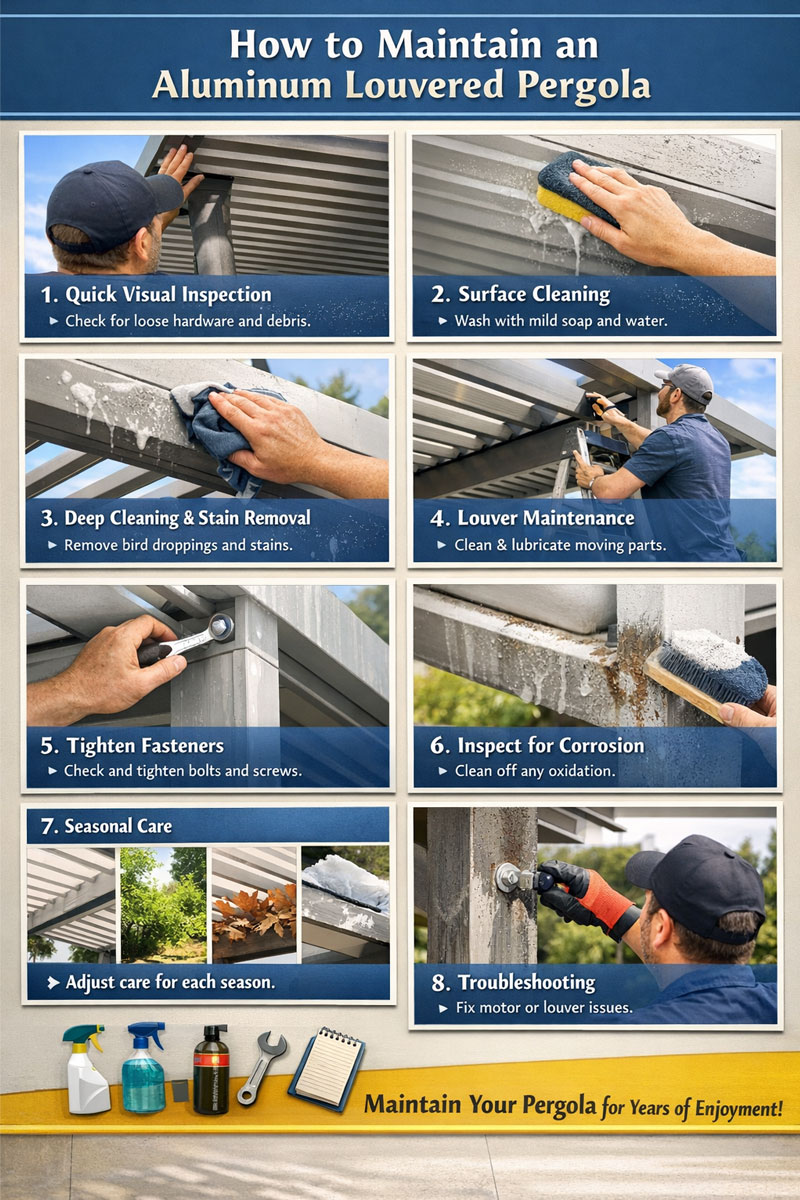
Seasonal Maintenance
Spring
- Deep clean frame and louvers
- Check gutters and drainage paths
- Prepare for increased usage
Summer
- Wash away pollen and summer dust
- Lubricate moving parts before peak usage
- Monitor shading performance
Fall
- Clear leaves and organic debris
- Check drainage for autumn rains
- Inspect seals before winter
Winter
- If your area gets snow or ice, operate louvers to shed buildup if possible.
- Don’t let heavy snow pile on flat louvers; remove gently with a soft broom (avoid metal shovels).
- Ice can lock moving parts, so refrain from forcing movement until thawed.
Protective Treatments (Optional)
1. Wax or Protective Coatings
Some owners apply automotive-grade carnauba wax or a specialized finish protectant to aluminum surfaces.
Benefits include:
- Enhanced shine
- Additional barrier against grime
- Easier future cleaning
Apply as directed, typically once or twice a year. Avoid wax on moving parts or tracks where buildup could impede movement.
2. Shade Covers and Fabrics
If your pergola has retractable shades or curtains, maintain those separately:
- Follow fabric care instructions
- Remove and clean as needed
- Store cushions and fabric panels in winter (if applicable)
When to Call a Professional
Aluminum pergolas are low-maintenance, but certain issues benefit from expert help:
- Motor or electrical system repairs
- Structural damage from wind or impact
- Re-alignment of posts or louvers
- Warranty-related service
Always use authorized technicians when under warranty.