
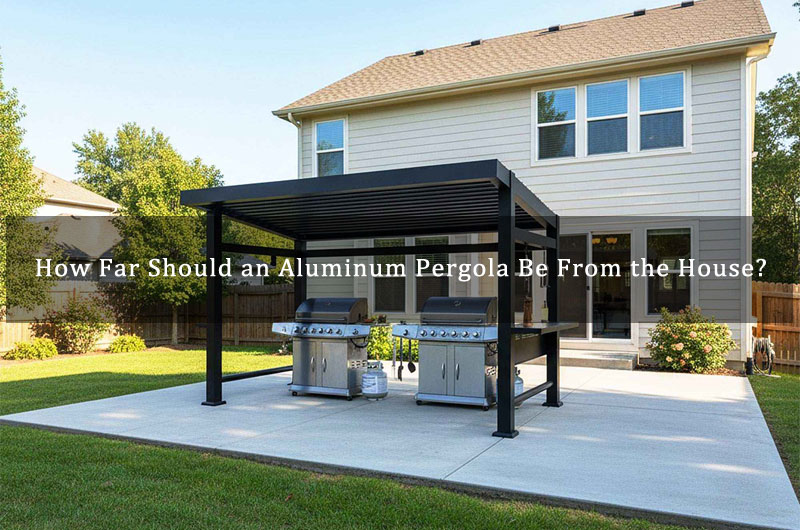
A question homeowners frequently ask before installation is: How far should an aluminum pergola be from the house?
In most residential settings, an aluminum pergola should be placed at least 12–24 inches (30–60 cm) away from the house if it is a freestanding pergola.
This spacing allows for:
- Proper water drainage
- Wall ventilation
- Easy cleaning and maintenance
- Protection of exterior siding and finishes
However, this is only a general guideline. The correct distance can vary significantly depending on design and installation type.
Wall-Mounted Aluminum Pergolas
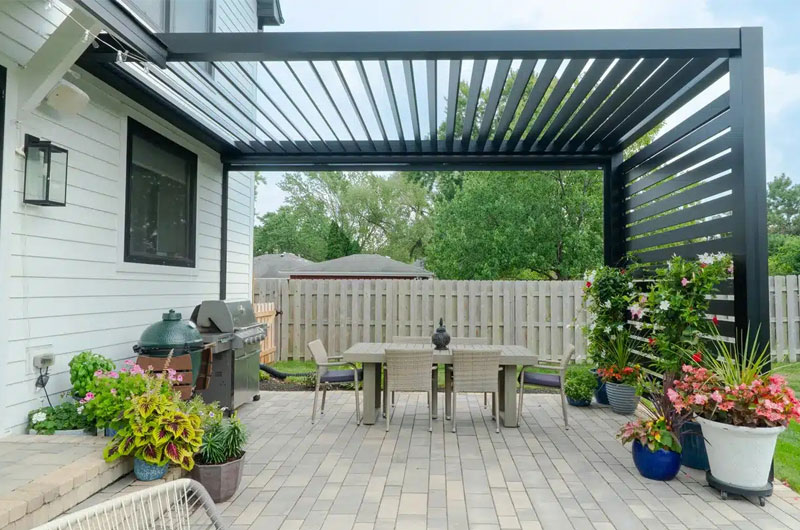
A wall-mounted pergola is designed to attach directly to your home’s exterior wall using a ledger board or structural bracket system. In this case:
- Distance from the house: 0 inches
- The pergola connects directly to the building structure
- Requires professional installation and proper waterproof flashing
Best for:
- Patios directly adjacent to the house
- Seamless indoor-outdoor transitions
- Limited yard space
Important considerations:
- Wall integrity and load-bearing capacity
- Proper sealing to prevent water intrusion
- Compliance with local building codes
Freestanding Aluminum Pergolas
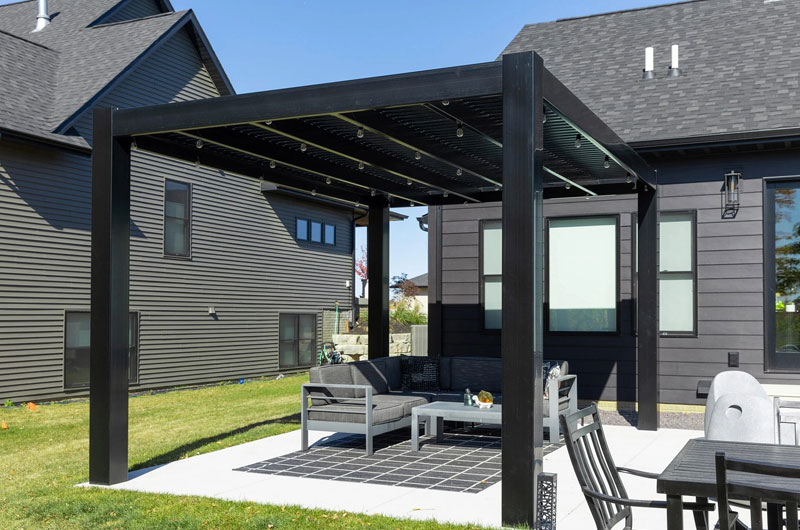
Freestanding pergolas are independent structures supported by posts and footings. They offer more flexibility in placement.
Recommended distance:
- Minimum: 12 inches (30 cm)
- Ideal: 18–36 inches (45–90 cm)
Why spacing matters:
- Prevents moisture buildup between structures
- Reduces risk of mold or mildew on walls
- Allows room for gutter overhang and roof runoff
- Makes exterior repairs and cleaning easier
5 Key Factors That Determine the Ideal Distance
1. Local Building Codes and Permits
Building regulations often specify minimum setbacks from the house or property lines. Some municipalities require:
- A minimum gap for fire safety
- Clearance for eaves, windows, and doors
- Access for inspection and maintenance
Always check local codes or HOA rules before finalizing pergola placement.
2. Roof Overhangs and Gutters
Most homes have roof eaves that extend 12–24 inches from the exterior wall. Placing a pergola too close can cause:
- Water dripping onto pergola beams
- Splash-back onto walls
- Gutter overflow issues
Tip: Measure from the edge of the roof overhang, not the wall itself, and leave extra clearance for rainfall.
3. Drainage and Water Flow
Aluminum pergolas, especially louvered pergolas, manage water differently depending on design. Poor spacing can cause:
- Water pooling between the pergola and house
- Foundation erosion
- Water staining on walls
A minimum 18–24 inches gap allows rainwater to drain freely and reduces long-term damage risks.
4. Airflow and Ventilation
Placing a pergola too close to your home can restrict airflow, trapping heat and humidity.
Proper spacing:
- Improves air circulation
- Keeps the outdoor space cooler
- Protects siding, stucco, or wood finishes
This is particularly critical in humid or coastal environments.
5. Maintenance and Accessibility
You’ll need space to:
- Clean windows
- Wash exterior walls
- Maintain pergola components
- Access electrical or drainage systems
A narrow gap can make routine maintenance difficult and costly over time.
Recommended Distances by Pergola Use Case
| Pergola Application | Suggested Distance |
|---|---|
| Wall-mounted pergola | 0 inches |
| Freestanding pergola near patio | 12–24 inches |
| Pergola with louvered roof | 18–36 inches |
| Pergola near gutters or downspouts | 24+ inches |
| Pergola with lighting or fans | 24–36 inches |
Special Considerations for Louvered Aluminum Pergolas
Adjustable louvered pergolas require extra attention to spacing because:
- Integrated gutters redirect rainwater
- Louvers may tilt toward or away from the house
- Motorized components need service access
For louvered systems, a minimum of 18–24 inches from the house is strongly recommended unless wall-mounted by design.
Aesthetic and Functional Design Tips
- Create a walkway: A small gap can double as a discreet path or drainage channel.
- Add greenery: Use the space for vertical plants or decorative gravel.
- Match alignment: Align pergola posts with architectural lines of the house for visual balance.
- Consider doors and windows: Ensure pergola placement doesn’t block natural light or door swing.
Common Mistakes to Avoid
- Placing the pergola directly under roof runoff without clearance
- Ignoring local code requirements
- Blocking ventilation openings or dryer vents
- Installing too close for future maintenance access
- Assuming “closer is always better” for shade
Final Thoughts
There is no one-size-fits-all answer, but in most cases:
- Wall-mounted pergola: Attached directly to the house
- Freestanding aluminum pergola: 18–24 inches from the house offers the best balance of safety, function, and aesthetics
If you’re unsure, consult a professional installer or pergola manufacturer – they can recommend spacing based on your home’s structure, climate, and pergola design.