
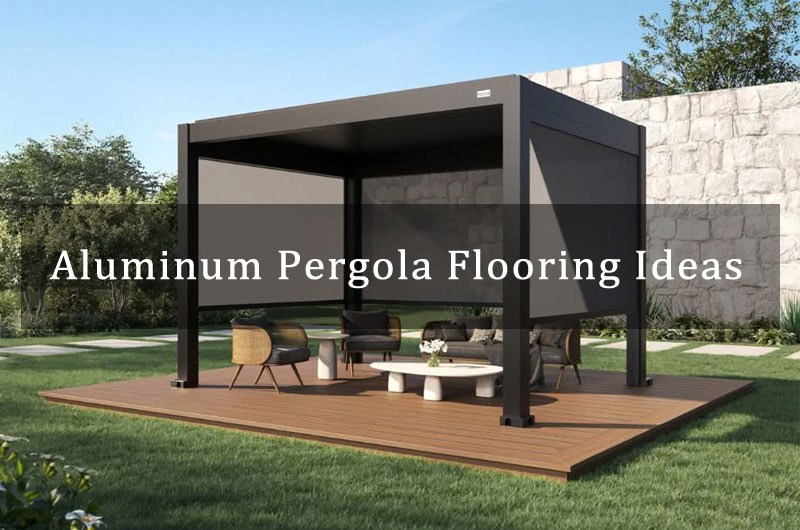
Combining architectural beauty with outdoor versatility, an aluminum louvered pergola is one of the most dynamic upgrades you can make to your backyard, patio, or outdoor living space.
But while much attention goes into choosing louvers, roofing, and support structures, flooring plays an equally important role in shaping the look, feel, and function of your pergola area.
The right flooring can enhance durability, complement your pergola’s modern lines, and make the space more comfortable and usable year-round.
This article explores creative and practical 10 flooring ideas for aluminum louvered pergolas that balance aesthetics, comfort, and maintenance.
1. Classic Wood Planks
Wood decking is a timeless choice that brings warmth and natural texture to a pergola space. It complements sleek aluminum louvers perfectly, blending modern lines with a touch of natural warmth.
Why It Works
- Visual contrast: The rich grains and tones of wood soften the industrial look of aluminum.
- Comfort underfoot: Wood stays cooler in the sun and feels comfortable barefoot.
- Customizable: Stain or seal in a variety of colors to match your house or furniture.
Best Wood Types
- Cedar – naturally resistant to rot and insects.
- Redwood – rich color and stable boards.
- Ipe or Cumaru – dense tropical hardwoods with excellent longevity.
Considerations
Wood requires regular sealing and maintenance, and high-end species can be costly. However, the beauty and comfort often make it worth the effort.
2. Composite Decking
For homeowners who want wood’s aesthetic without high upkeep, composite decking is a smart alternative.
Advantages
- Fade and stain resistance
- No sanding, staining, or sealing required
- Available in many wood-like colors and textures
Composite boards made from recycled wood fibers and plastic are resistant to moisture, cracking, and insect damage – ideal for pergolas exposed to sun and rain.
Design Tips
- Choose lighter colors to keep the floor cooler in full sun.
- Use hidden fasteners for a seamless, modern appearance.
- Complement with aluminum or metal furniture to create visual harmony.
3. Porcelain or Ceramic Tiles
If your pergola space doubles as an outdoor dining or entertaining area, porcelain tile can elevate the flooring with a refined, finished look.
Benefits
- Wide range of colors and patterns – from stone-look to concrete finishes.
- Easy to clean and maintain
- Extremely durable – resists fading, scratching, and moisture.
Installation Notes
- Use outdoor-rated tiles with a non-slip surface.
- A well-prepared sub-base and effective drainage are essential to avoid cracking.
- Consider large format tiles for a high-end, seamless look.
Style Pairing
Modern tiles in gray or slate tones complement the cool metallic lines of aluminum pergolas.
4. Natural Stone
For a premium outdoor space, natural stone flooring like travertine, slate, or limestone adds sophistication and age-defying beauty.
Stone Options
- Travertine – classic, warm tones and cool underfoot even in hot climates.
- Slate – rich, textured surface with earthy colors.
- Limestone – smooth, elegant, versatile.
Pros
- Exceptional durability.
- Each slab is unique.
- Complements greenery and garden beds around the pergola.
Cons
- Higher cost.
- Requires professional installation.
- Some stones need sealing to resist stains.
5. Stamped Concrete
Want a custom textured surface without high stone prices? Stamped concrete offers the look of pavers, brick, or stone at a more accessible cost.
Design Flexibility
- Mimics flagstone, cobblestone, or tile patterns.
- Can be stained in earthy, muted, or bold colors.
- Ideal for irregular pergola shapes.
Performance
Stamped concrete is weather-resistant and lugs well with outdoor furniture and traffic. Periodic resealing enhances longevity and color retention.
6. Gravel or Pebble Flooring
If you prefer a relaxed, informal patio environment, gravel, pea stone, or decorative pebbles provide a permeable, low-cost option.
Highlights
- Excellent drainage – great for rain-prone areas.
- Variety of stone colors – white, tan, gray, or river rock.
- Works well with paver borders or stepping stones.
Drawbacks
- Not ideal for bare feet or rolling furniture.
- Can shift over time and may require occasional raking or topping up.
7. Outdoor Rugs + Mixed Flooring
For flexibility and comfort without replacing hard surfaces, integrate outdoor rugs over other flooring types.
How It Enhances a Space
- Defines seating or dining zones under a pergola.
- Adds color, texture, and pattern.
- Cushions underfoot for barefoot comfort.
Best Rug Materials
- Polypropylene – easy to clean and fade-resistant.
- Bamboo or woven jute blends – organic look (use in covered pergolas to avoid moisture issues).
8. Interlocking Deck Tiles
If you want a DIY-friendly option that doesn’t require professional installation, interlocking deck tiles are superb.
Features
- Snap together without glue or nails.
- Available in wood, composite, stone, or rubberized materials.
- Can be replaced or rearranged seasonally.
These are perfect for renters or anyone who wants a flexible outdoor flooring solution.
9. Turf or Artificial Grass
For a lush, garden-like vibe, artificial turf under the pergola can soften the area and create a contrast to metal structure.
Advantages
- Always green, no mowing required.
- Cushioned underfoot – great for kids’ play areas.
- Works well with natural stone or wood edging.
Tip
Be sure to install on a proper base with drainage so water doesn’t pool after rain.
10. Mixed Materials
For a truly custom look, consider mixing materials:
- Wood decking with a stone tile inset
- Concrete slab with gravel borders
- Porcelain tile surrounded by turf
This approach allows you to divide your pergola area into functional zones – dining, lounging, fire pit, or garden – all while maintaining design cohesion.