
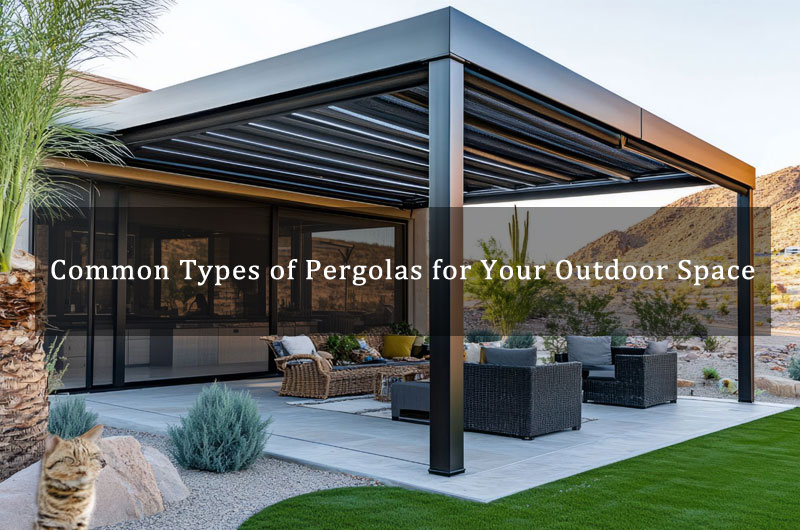
Pergolas are one of the most versatile architectural features that can define your outdoor space – whether you’re creating a cozy lounge area, a shaded dining spot, or a garden centerpiece. These open-roof structures not only enhance visual appeal but also extend usable living space and improve comfort outdoors.
From classic wood builds to modern retractable models, there’s a pergola style for every taste and backyard size.
In this article, we’ll explore the most common types of pergolas, their unique characteristics, and how to choose the right one for your outdoor environment.
1. Traditional Wooden Pergolas
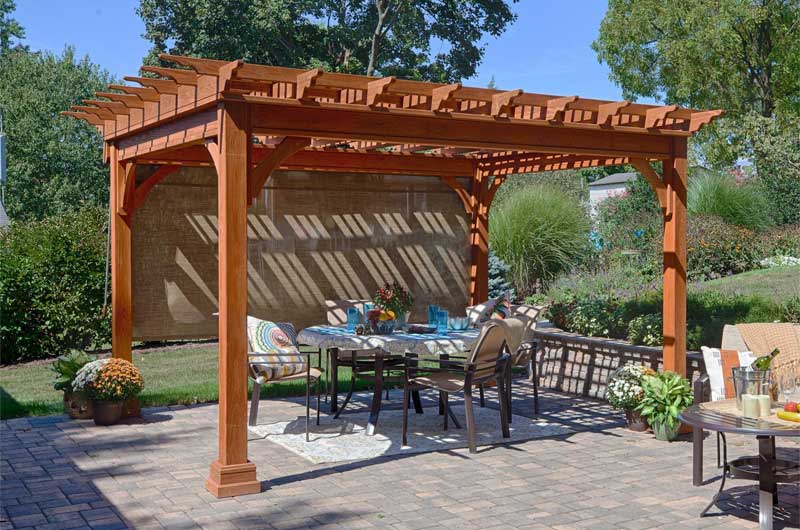
Classic, warm, and timeless – wooden pergolas are perhaps the most recognizable type. They typically feature sturdy posts and horizontal beams arranged in an open lattice design.
Key Features
- Materials: Cedar, redwood, pressure-treated pine, oak
- Finish: Natural wood grain, stain, or paint
- Customization: Fully customizable in size, shape, and design
Pros
- Natural look blends well with landscaping
- Easy to paint or stain to match décor
- Excellent for vines and climbing plants
Cons
- Needs regular upkeep, such as staining or sealing.
- Vulnerable to rot and pests without proper care
Wooden pergolas work beautifully in traditional, rustic, or cottage-style gardens. They pair especially well with flowering vines like wisteria or grapevine, creating a natural green canopy over time.
2. Vinyl Pergolas
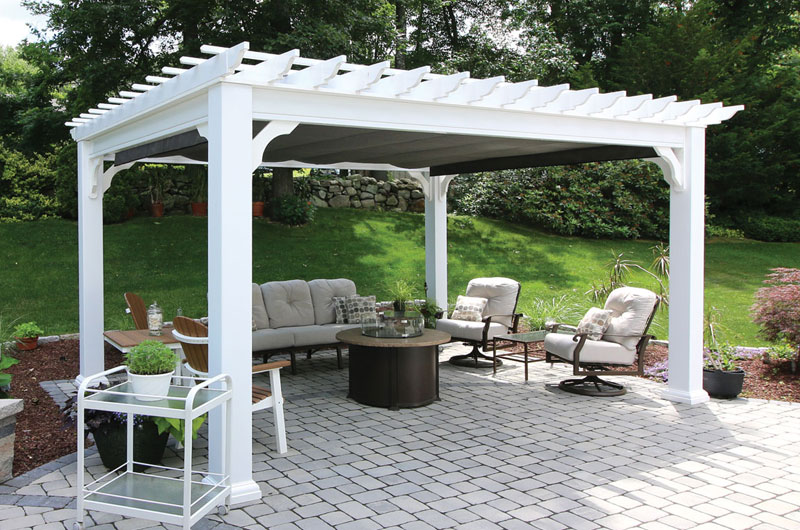
For homeowners seeking low maintenance without sacrificing beauty, vinyl pergolas are an excellent choice. Made from durable PVC materials, these pergolas mimic the clean look of painted wood.
Key Features
- Material: PVC / Vinyl
- Finish: White or textured wood-grain
- Resistance: Weather-resistant and fade-proof
Pros
- Virtually maintenance-free
- Does not rot, warp, or peel
- Easy to clean
Cons
- Limited color options
- Can be pricier than basic wood
Vinyl pergolas are ideal for modern or coastal homes where crisp, white structures complement outdoor furnishings and architecture. Ideal for supporting climbing plants, though they lack the natural warmth of real wood.
3. Aluminum Pergolas
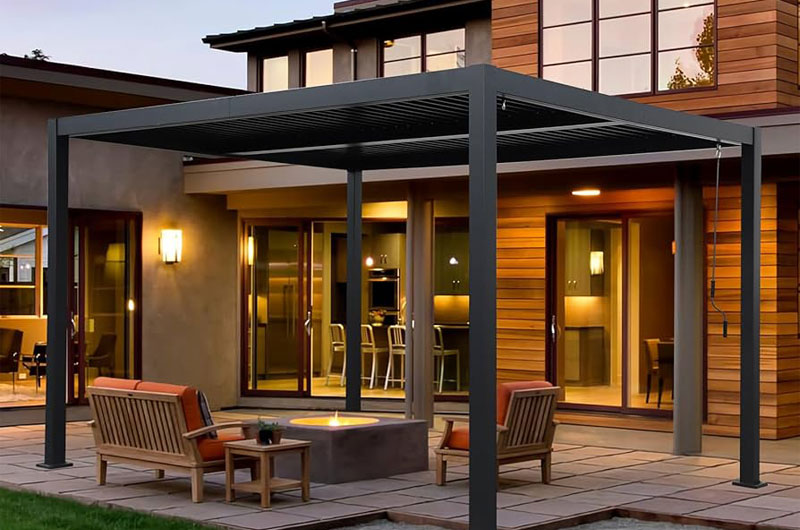
If sturdiness and longevity are top priorities, aluminum pergolas deliver. Known for their strength and lightweight feel, aluminum structures often incorporate modern design elements.
Key Features
- Material: Powder-coated aluminum
- Style: Clean lines, slim profiles
- Extras: Adjustable louvers for sun control
Pros
- Extremely durable and rust-proof
- Low maintenance
- Sleek, contemporary appearance
Cons
- Can be more expensive
- Industrial look may not suit every landscape
Aluminum pergolas are perfect for minimalist and contemporary outdoor spaces. Many come with adjustable louvers, allowing you to control shade and light throughout the day.
4. Louvered Pergolas
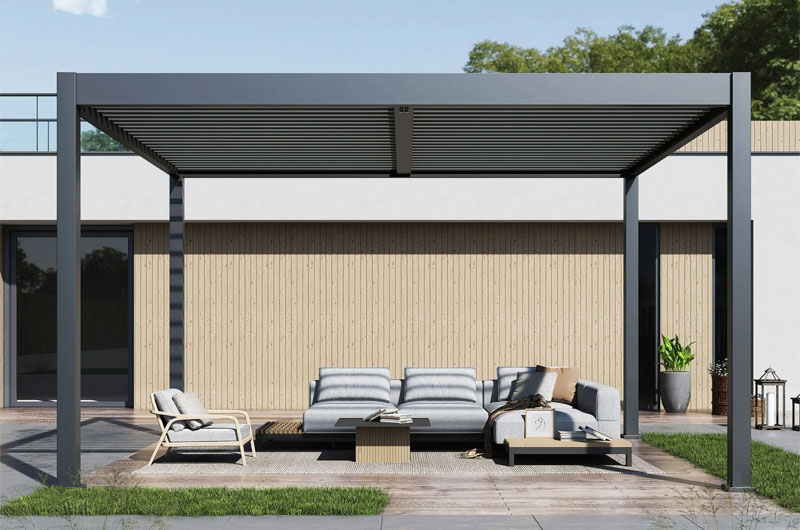
Louvered pergolas take shade control to the next level. With adjustable horizontal slats, you can open or close the roof to let sunlight in or provide full shade.
Key Features
- Louvers: Manual or motorized operation
- Control: Customizable shade and airflow
- Integration: Often compatible with lighting and retractable screens
Pros
- Ultimate flexibility
- Works in various climates
- Adds value as a functional outdoor feature
Cons
- Higher cost due to mechanics
- Installation can be more complex
These pergolas are a worthwhile investment for those who frequently enjoy outdoor living or love to entertain guests. Integrated lighting and retractable screens make them an ideal all-season solution.
5. Freestanding Pergolas
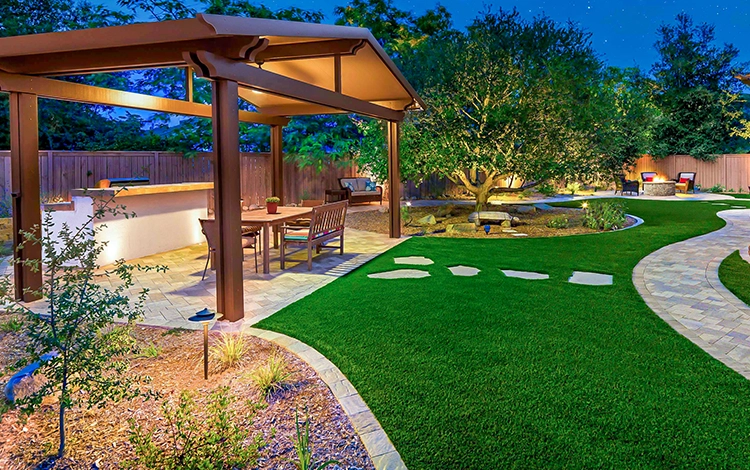
Freestanding pergolas are independent structures that sit anywhere in your yard. They’re not attached to your home, which makes them extremely versatile.
Key Features
- Independent installation
- Flexible placement
- Great for focal points
Pros
- Can be placed anywhere
- Creates a garden focal point
- Ideal for stand-alone seating or dining areas
Cons
- Requires more yard space
- Might need additional stabilization
These are great if you’re aiming to divide an open backyard into distinct zones – like a dining oasis, outdoor kitchen area, or cozy lounging corner.
6. Attached Pergolas
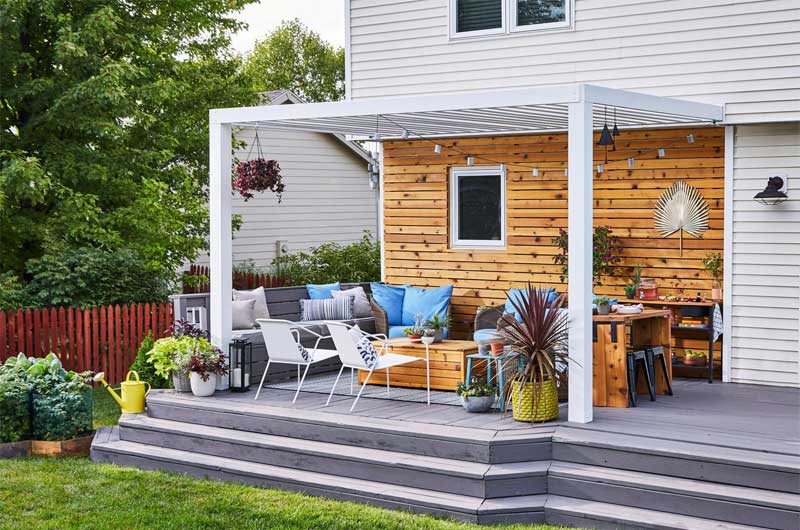
Attached pergolas connect directly to your home or deck, seamlessly extending your indoor living outdoors.
Key Features
- Often built off a house wall
- Integrates with siding and architectural details
- Provides transition between indoors and outdoors
Pros
- Enhances outdoor living near patios and decks
- Works as an extended shade cover
- Can be integrated with sliding doors
Cons
- Requires secure structural connection
- Design must complement home exterior
Attached pergolas are excellent if you want a cozy, shaded extension of your patio or deck, perfect for dinner parties or relaxing afternoons.
7. Retractable Pergolas
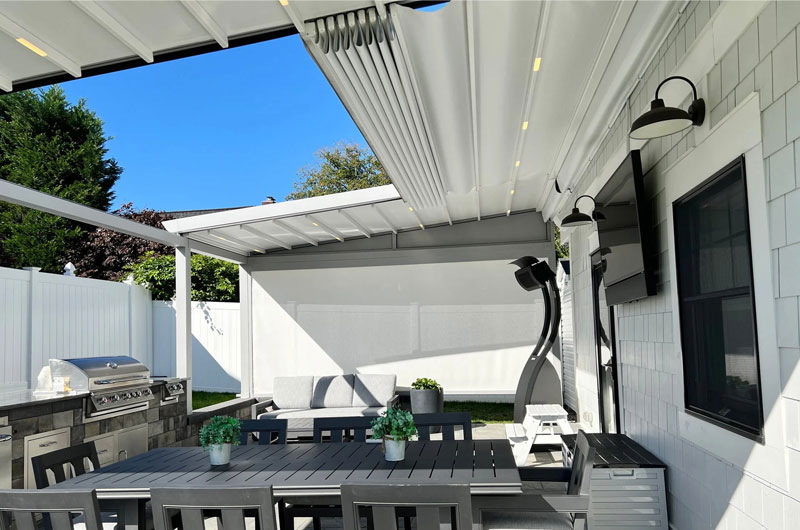
For ultimate versatility, pergolas with retractable canopies offer instant shade with a simple pull or motorized control.
Key Features
- Retractable fabric or canopy roof
- Manual or powered operation
- Provides full to partial shade
Pros
- Flexible sun protection
- Great for unpredictable weather
- Can be motorized
Cons
- Fabric may require replacement
- Slightly higher maintenance
These are perfect if you want a shaded space on hot days and sun on cooler afternoons without permanent beams overhead.