
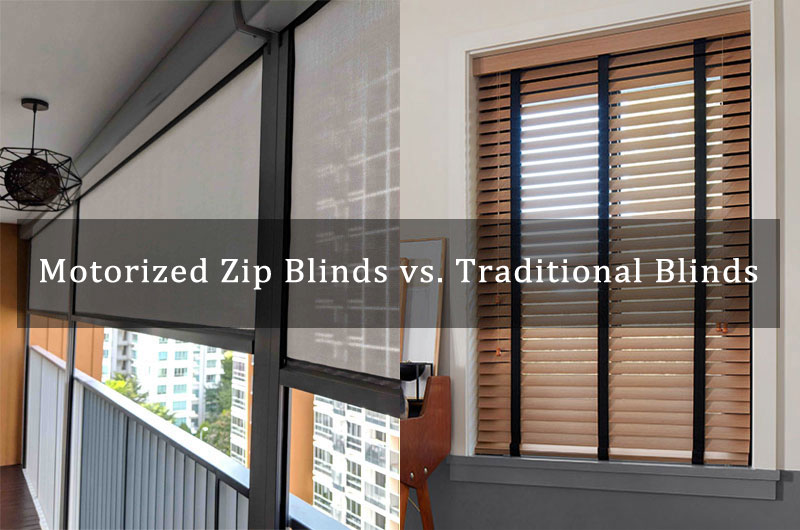
Window treatments do more than block out sunlight; they control privacy, regulate temperature, enhance decor, and even improve energy efficiency.
Among the many options available today, motorized zip blinds and traditional blinds are two popular choices, each appealing to different needs and lifestyles.
What Are Motorized Zip Blinds?
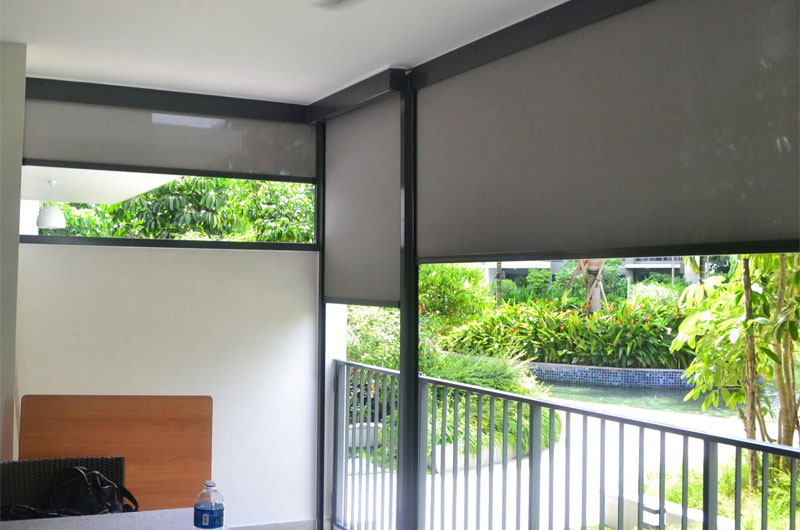
Motorized zip blinds are modern window coverings that combine sleek, tensioned fabric with remote or smart controls. They get their name from the zipper‑like side channels that keep the fabric taut, even on large windows or patio doors.
Unlike conventional blinds, motorized zip blinds operate with electric motors, allowing users to raise, lower, or tilt them with a remote, app, or voice assistant.
What Are Traditional Blinds?
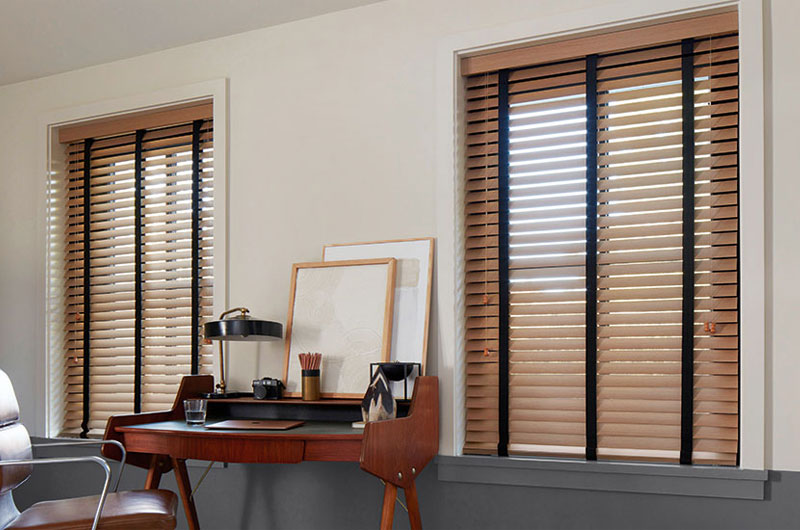
Traditional blinds include a wide range of manually operated window treatments, such as horizontal blinds (wood, aluminum, vinyl) and vertical blinds, that you adjust by pulling a cord, twisting a wand, or physically lifting the slats.
They have been a staple for decades, appearing in homes, offices, and commercial spaces across the globe.
A Comparison Chart Between Motorized and Traditional Blinds
| Feature / Factor | Motorized Zip Blinds | Traditional Blinds |
|---|---|---|
| Operation & Convenience | Motorized; remote, app, or voice control; can be scheduled | Manual; cords or wands; fully hands-on |
| Ease of Use for Large/High Windows | Excellent; easy for tall or hard-to-reach windows | Can be difficult or awkward |
| Aesthetics & Design | Sleek, modern, minimalistic; fabric options available | Wide variety: wood, aluminum, faux wood, vertical |
| Light Control & Privacy | Tight zip channels; excellent blackout; minimal side light | Adjustable slats; side gaps possible |
| Safety (Kids/Pets) | Very safe; no cords | Corded versions pose entanglement risks |
| Accessibility | Easy for elderly or mobility-challenged users | Manual operation may be challenging |
| Energy Efficiency | Can be automated for energy savings; better insulation | Manual; relies on user to adjust |
| Installation | More complex; may require professional setup | Simple; usually DIY-friendly |
| Maintenance | Minimal (dusting, battery/motor checks) | Dusting required; mechanical parts simple |
| Initial Cost | Higher upfront cost | Affordable |
| Long-Term Value | High, especially with automation and energy savings | Moderate; reliable but lacks automation |
| Best Suited For | Smart homes, large or modern windows, luxury spaces | Budget-conscious, traditional decor, small/standard windows |
1. Convenience & Ease of Use
Motorized Zip Blinds
One of the biggest advantages of motorized zip blinds is convenience. With no cords to tug and no manual lifting, these blinds can be controlled:
- Remotely via remote controls
- Through apps on smartphones or tablets
- With voice commands when paired with smart home systems (like Alexa or Google Home)
- On schedules, allowing blinds to open or close at set times for comfort or security
This makes them especially appealing for large windows, high ceilings, or hard‑to‑reach openings, where traditional blinds can be awkward to adjust manually.
Traditional Blinds
Traditional blinds are hands‑on. You pull a cord or twist a wand to raise, lower, or tilt the slats. While this works fine for most standard windows, it becomes less convenient as window size increases or if the blinds are mounted high. Over time, cords and mechanisms can also wear, leading to uneven movement or sticking.
Winner on Convenience: Motorized Zip Blinds
2. Aesthetics & Design Options
Motorized Zip Blinds
Motorized zip blinds typically offer a clean, modern look thanks to their sleek fabric and concealed mechanisms. The zip channels give a tailored appearance and can be paired with blackout or light‑filtering fabrics. These blinds are especially suited to contemporary interiors and spaces with large panes of glass, sunrooms, patios, or floor‑to‑ceiling windows.
They come in various fabric colors and textures but tend to have a more uniform, minimalist aesthetic due to their design constraints.
Traditional Blinds
Traditional blinds shine when it comes to design variety. Choices include:
- Horizontal wood blinds for warm, classic interiors
- Faux wood blinds that resist humidity
- Aluminum blinds for minimalist or industrial spaces
- Vertical blinds for sliding doors and wide windows
Traditional blinds can also incorporate valances, decorative tapes, and custom finishes, making them highly versatile for different decor styles.
Winner on Aesthetics: Tie (depends on design preferences)
3. Light Control & Privacy
Motorized Zip Blinds
Zip blinds can use light‑filtering or blackout fabrics, giving users excellent control over daylight and privacy. Because of the zip track, gaps at the sides are minimized, so there’s less light leakage compared to some traditional blinds – even when fully lowered.
Scheduled control also allows you to adjust light throughout the day to prevent glare or protect furniture from UV exposure.
Traditional Blinds
Traditional blinds with adjustable slats offer precise light control. You can angle slats to let in ambient light without compromising privacy. However, side light gaps can exist, especially with large windows or wider frames. Vertical blinds can reduce side light but may still let through more light than zip blinds when closed.
Winner on Light Control: Motorized Zip Blinds (for blackout and minimal gaps)
Winner on Adjustable Ambience: Traditional Blinds (for slatted control)
4. Safety & Accessibility
Motorized Zip Blinds
Because motorized blinds don’t use cords, they are much safer for homes with children and pets. Cords pose entanglement risks, and many safety standards now require cordless options in residential settings. Motorized options eliminate that risk entirely. They’re also easy to operate for people with mobility challenges, disabilities, or elderly users.
Traditional Blinds
Traditional blinds with cords can be a safety hazard, especially in homes with young children or pets. While cordless and wand‑operated designs exist, they may still require manual effort. People with limited strength, reach, or dexterity may find them difficult to operate.
Winner on Safety: Motorized Zip Blinds
5. Energy Efficiency & Comfort
Motorized Zip Blinds
Motorized blinds can improve energy efficiency when integrated with smart home systems. They can be designed to lower during peak heat to save on cooling or open in winter to let in warming sunlight. The tight seal of zip blinds also promotes better insulation compared to blinds with side gaps.
Traditional Blinds
Traditional blinds can also contribute to energy savings, especially if they feature insulating slats, but they lack automation. Without scheduled adjustments, they rely on manual operation, which means potential missed opportunities for energy optimization.
Winner on Energy Efficiency: Motorized Zip Blinds (when automated)
6. Installation & Maintenance
Motorized Zip Blinds
Installing motorized blinds involves more steps than traditional blinds. You need power (battery, plug‑in, or hardwired), and in some cases, professional installation. Software setup (for smart controls) can require extra configuration. Maintenance is typically minimal, but motors can fail over many years, potentially requiring repair or replacement.
Traditional Blinds
Traditional blinds are usually easier and cheaper to install, often done as a DIY project. They don’t require wiring or programming. Cleaning and maintenance can be more hands‑on (dusting each slat), but the mechanical parts are straightforward and familiar to most homeowners. Replacement parts are inexpensive and easy to find.
Winner on Installation & Maintenance: Traditional Blinds
7. Cost & Value
Motorized Zip Blinds
Motorized zip blinds are more expensive upfront, especially when paired with smart home systems or professional installation. However, many homeowners consider the convenience, safety, and energy savings worth the investment, especially in luxury homes or high‑use spaces.
Traditional Blinds
Traditional blinds are generally more budget-friendly upfront and easy to find at most home improvement stores. For budget‑conscious buyers or rentals where automation isn’t essential, they offer a solid, cost‑effective solution.
Winner on Affordability: Traditional Blinds
Winner on Long‑Term Value: Motorized Zip Blinds (in premium or automated settings)
Which Is Right for You?
Both motorized zip blinds and traditional blinds have distinct advantages:
Choose Motorized Zip Blinds if you want:
- Hands‑free convenience and automation
- Better safety (no cords)
- Smart home integration
- Excellent blackout and insulation
- Sleek, modern aesthetics
Choose Traditional Blinds if you want:
- Lower upfront cost
- A wide selection of traditional styles
- Easy DIY installation
- Precise slatted light control
- Simple, reliable operation
In the end, the best choice depends on your budget, lifestyle, home design, and how much you value automation and convenience. In modern smart homes, motorized zip blinds increasingly define upscale window treatments. But traditional blinds remain a dependable, versatile, and affordable choice for virtually any space.