
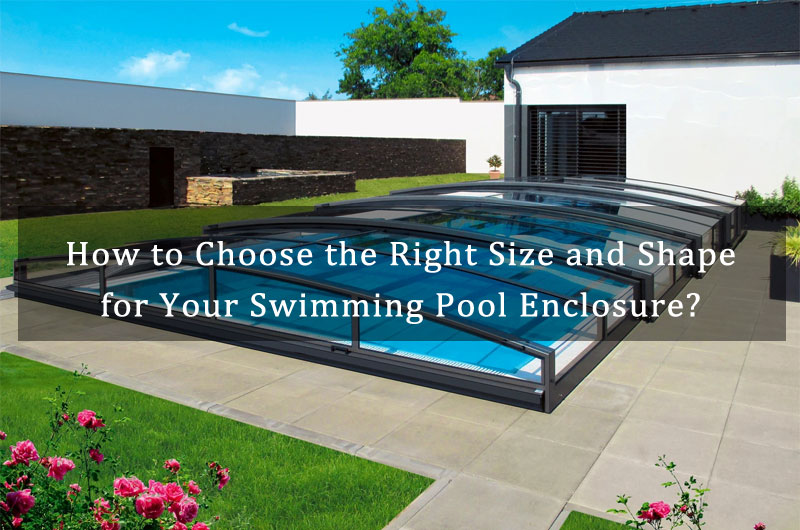
Adding a swimming pool enclosure is one of the most practical and aesthetic upgrades a pool owner can make.
Whether you want to extend your swimming season, improve safety, reduce maintenance, or enhance your backyard’s look, the size and shape of your pool enclosure matter more than most people think.
Making the right choice can transform your swimming pool into a functional, beautiful space for relaxation and entertainment.
In this article, we’ll walk through the essential factors to consider when choosing the size and shape of your swimming pool enclosure – balancing practicality, aesthetics, safety, and your budget.
Why the Size and Shape Matter
The size and shape of your pool enclosure affect:
- Functionality: How useful and comfortable the space will be for swimming, lounging, entertaining, and storage.
- Energy Efficiency: The heating and cooling needs of the pool area.
- Maintenance: How much debris gets in and how easy you can clean it.
- Visual Balance: How well the enclosure complements your home and landscape.
- Cost: Larger and more complex shapes tend to cost more.
Knowing your goals helps you prioritize the size and shape that work best for your unique situation.
1. Start With the Pool’s Dimensions and Layout
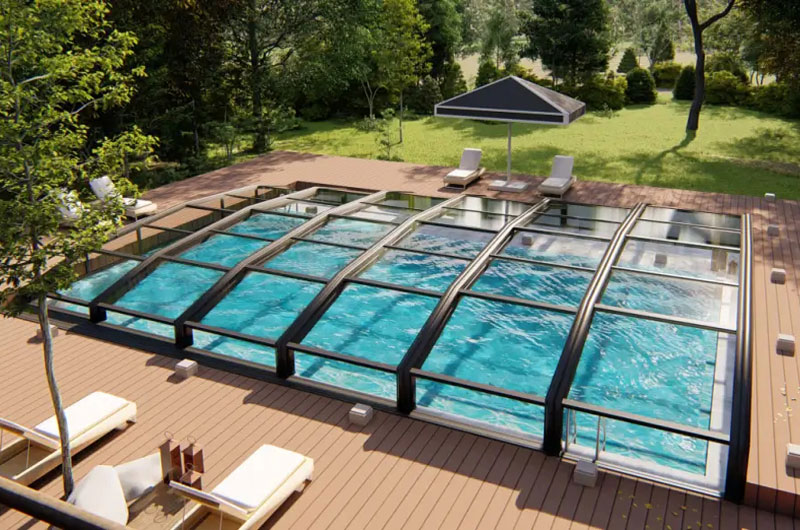
Before designing your enclosure, take stock of your pool’s current size and layout.
Key Questions to Ask
- What are the pool’s length and width?
- Does the pool have curved edges or a freeform shape?
- Is it an in‑ground or above‑ground pool?
- Are there additional features?
For rectangular pools, enclosures can follow simple geometric shapes, which are cost‑effective and easy to build. However, freeform pools often benefit from customized enclosures to maintain visual harmony.
2. Consider How You Want to Use the Space
The way you use your pool area should drive both size and shape decisions.
Recreational and Family Use
If your enclosure serves:
- Active swimmers who like laps
- Kids playing with toys
- Family gatherings
then you’ll want plenty of open space around the water. A long, rectangular enclosure with extra deck clearance works well for movement and play.
Lounging and Entertaining
If the pool area doubles as a lounge or party space, you may want:
- Room for chairs and tables
- Space for a mini bar or cookout area
- Clear sightlines to entertain guests
An enclosure with a wider footprint and square or oval design can create a spacious and welcoming environment.
Combining Functions
Some homeowners blend functions, like adding a hot tub or fire pit inside the pool enclosure. In those cases, the enclosure has to be larger and sometimes shaped unconventionally to accommodate multiple zones.
3. Evaluate Local Climate and Weather Challenges
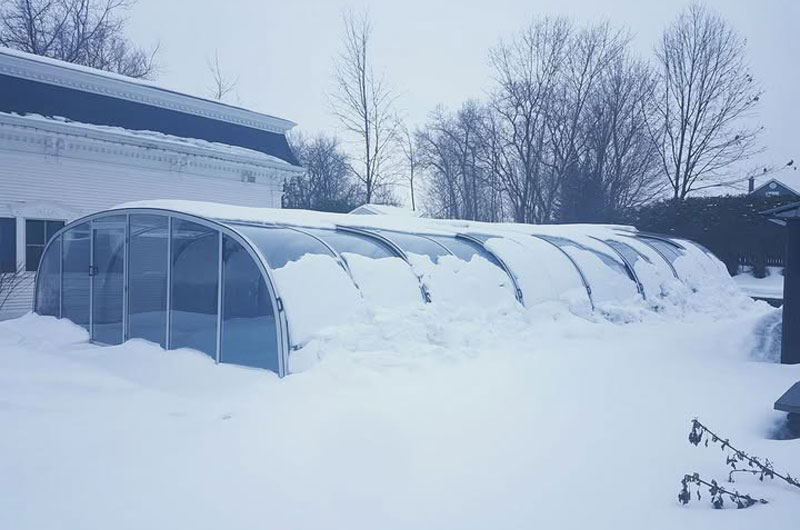
Your region’s climate heavily influences your pool enclosure choice.
Hot & Sunny Climates
In warm regions, a domed or cathedral-shaped enclosure provides good airflow and space, while still offering sun protection and shade control.
Cool or Cloudy Climates
Areas that want to extend the swimming season or improve heat retention benefit from:
- Taller enclosures with curved roofs
- Fully enclosed designs with insulated panels
These shapes help trap heat and block cold winds, making the pool comfortable even in shoulder seasons.
Rain, Snow & Wind
If you face heavy rain or snow loads:
- A‑frame or peaked roofs help shed water or snow.
- A larger footprint might be needed to offset snow buildup away from the pool edge.
Addressing wind direction and sun orientation can also reduce evaporation and improve comfort.
4. Match the Shape to the Pool and Environment
The enclosure shape should align with your pool style and backyard.
Rectangular Pools
Rectangular or square enclosures are often the most efficient and cost‑effective choice. They provide:
- Simple construction
- Efficient weatherproofing
- Easy panel installation
This shape works especially well for lap pools or formal backyard designs.
Freeform Pools
Freeform pools look more natural and organic. In these cases, consider a custom curved enclosure or multi‑facet design that mirrors the pool’s lines.
Natural Landscaping
If your backyard features hills, gardens, or unique foliage, a custom enclosure shape that wraps around natural elements can:
- Enhance aesthetics
- Preserve views
- Make transitions seamless
5. Factor in Headroom and Accessibility
How tall should your enclosure be? This comes down to:
- Pool depth and diving boards
- Seating and entertainment areas
- HVAC equipment or lighting
Consider at least 7‑8 feet of headroom in central areas and raised domes or peaks where you expect people to stand or walk frequently.
Accessibility also includes:
- Door placement
- Pool entry points
- Walkways and ramps for guests with mobility needs
6. Think Long‑Term: Expansion and Future Needs
One mistake many pool owners make is not planning for the future.
Growing Family
If you anticipate regular guests or a growing family, an enclosure that’s slightly larger than what you need now ensures comfort down the road.
New Additions
Planning space for future features like:
- A spa or sauna
- Outdoor kitchen
- Fitness area
means you won’t need costly modifications later.
7. Budget and Material Considerations
Larger enclosures and complex shapes usually cost more due to:
- Increased material needs
- Specialized engineering
- Custom fabrication
Standard shapes like rectangles and arches are typically more affordable. But custom designs offer maximum flexibility and better integration. Be sure to:
- Request quotes from multiple installers
- Ask about long‑term maintenance costs
- Choose materials suited to your climate
Glass, polycarbonate panels, and aluminum framing all have pros and cons in terms of price, durability, and appearance.
8. Add Safety and Regulations
Don’t forget safety. In many areas, local building codes require:
- Safe fencing
- Lockable doors
- Proper ventilation
Make sure your enclosure plan meets all local safety regulations. Choosing the right size and shape can make it easier to comply with these laws while maintaining accessibility and comfort.