
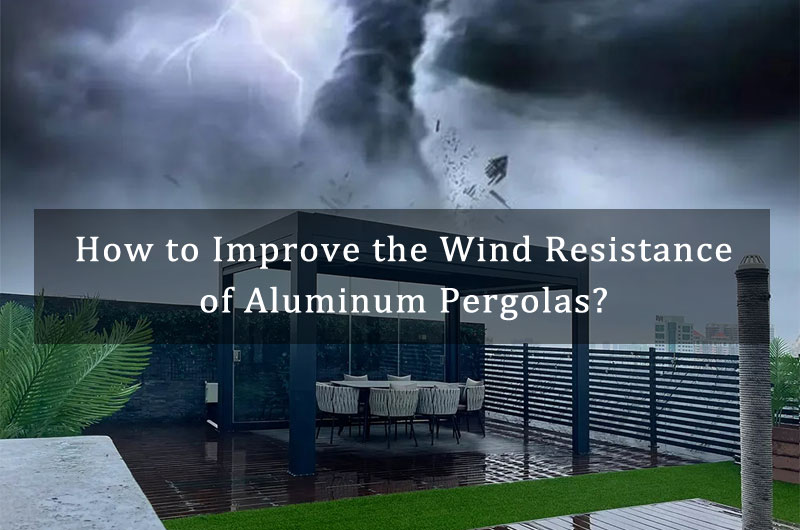
Besides offering shade and aesthetic appeal, many homeowners choose aluminum pergolas because of their excellent durability and wind resistance. However, wind performance depends on some factors.
Understanding how wind resistance works can help you choose a safer and longer-lasting pergola for your outdoor space.
This guide explains wind load ratings, structural design features, installation methods, and maintenance practices that improve the wind resistance of aluminum pergolas.
Understanding Wind Load Ratings for Aluminum Pergolas
Wind load ratings indicate the maximum wind speed a pergola can withstand without structural failure. This rating is usually expressed in miles per hour (mph) and is determined through engineering calculations and structural testing.
Typical Wind Resistance Levels
Different pergola materials have varying levels of wind resistance. Aluminum pergolas are among the strongest residential options due to their excellent strength-to-weight ratio. For example:
- Standard aluminum pergolas can typically withstand 70–120 mph winds, depending on the design and installation.
- Many engineered aluminum pergolas are rated 100–130 mph or higher, making them suitable for regions with severe storms.
- Premium commercial-grade systems can even reach 150–200 mph wind ratings when professionally engineered.
By comparison, wood pergolas typically resist only 50–75 mph winds, and vinyl pergolas may handle just 40–60 mph, highlighting aluminum’s superior structural strength.
Wind Load Requirements and Building Codes
In many regions of the United States, building codes require outdoor structures to meet minimum wind resistance standards. Most residential structures must withstand at least 90 mph wind speeds, while hurricane-prone areas require significantly higher ratings.
For example:
- Inland regions: 90–100 mph design wind speeds
- Coastal areas: 110–140 mph
- Hurricane zones: 140 mph or more
These requirements ensure outdoor structures remain stable during severe weather conditions.
Certified vs. Claimed Wind Ratings
When choosing an aluminum pergola, it is important to distinguish between manufacturer-claimed wind ratings and certified wind ratings. Certified ratings are tested and approved by regulatory bodies or engineering organizations, which means they are more reliable for building permits and insurance claims.
Always review structural documentation and engineering certifications before purchasing a pergola intended for high-wind areas.
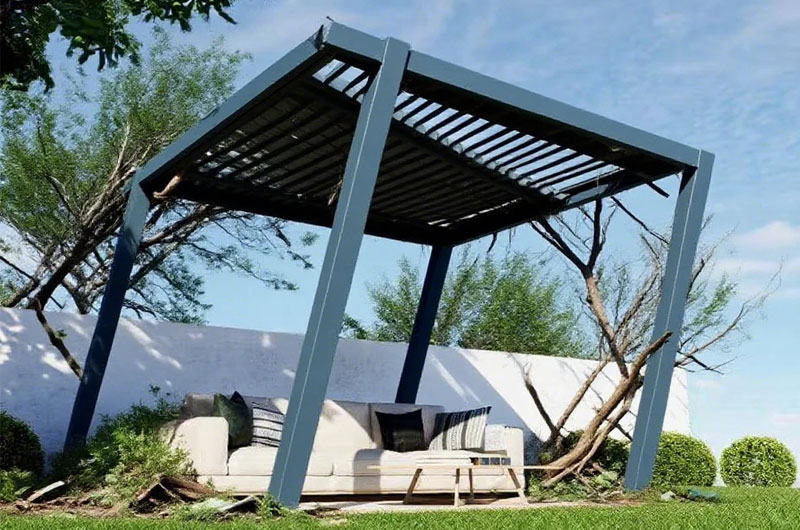
How Aluminum Pergola Design Improves Wind Resistance
Wind resistance is not determined by material alone. The structural design of an aluminum pergola plays a critical role in how it performs during strong winds.
High-Strength Aluminum Alloys
Most high-quality pergolas are made from 6063-T6 aluminum alloy, which provides excellent tensile strength while remaining lightweight. This combination allows the structure to resist wind pressure without excessive bending or deformation.
Powder-coated aluminum also offers additional protection against corrosion.
Thick Structural Components
Wind-resistant pergolas typically feature heavy-duty posts and beams. Structural columns with wall thicknesses between 2.5 mm and 3.5 mm provide a solid backbone that resists lateral wind forces.
Larger beam profiles and reinforced joints further improve the pergola’s ability to handle strong gusts.
Reinforced Connection Points
Connections are one of the most important structural elements in wind-resistant design. A pergola’s wind rating depends not only on the aluminum thickness but also on how the parts are joined together.
High-quality systems include:
- Reinforced corner brackets
- Structural-grade bolts and screws
- Interlocking beam-to-post connections
Well-engineered connections distribute wind loads evenly across the structure.
Aerodynamic Roof Designs
Many modern aluminum pergolas use adjustable louvered roofs instead of fixed panels. This design allows air to pass through the structure during windy conditions, reducing uplift pressure.
When strong winds are expected, louvers can be partially opened to allow airflow and minimize the “sail effect.” Some systems even include automated wind sensors that adjust the louvers automatically.
Balanced Structural Weight
While aluminum is lightweight compared to steel, properly engineered pergolas use thicker extrusions and reinforced frames to achieve the right balance between weight and strength. This prevents the structure from lifting or swaying during storms.
Installation Tips to Improve the Wind Resistance of Aluminum Pergolas
Even the strongest pergola design can fail if it is installed improperly.
Use Deep Concrete Footings
Pergola posts should be anchored into concrete footings rather than simply bolted to surface-level decking. In many cases, footings should extend 18–24 inches deep into the ground to resist uplift forces caused by strong winds.
Concrete foundations provide the stability needed to prevent the structure from tipping or lifting during storms.
Install Heavy-Duty Anchoring Hardware
Anchoring hardware must be strong enough to handle both vertical uplift and horizontal wind loads. Recommended hardware typically includes:
- Galvanized steel brackets
- Anchor bolts embedded in concrete
- Lag bolts for beam connections
The quality of these anchors directly affects the pergola’s ability to withstand extreme wind events.
Follow Manufacturer Specifications
Aluminum pergola manufacturers provide detailed installation instructions based on engineering calculations. These guidelines include:
- Recommended footing size
- Bolt spacing and depth
- Structural reinforcement requirements
Ignoring these specifications may significantly reduce the structure’s wind resistance.
Consider Local Wind Zones
Wind conditions vary greatly by region. Coastal areas and open landscapes tend to experience stronger winds than sheltered urban environments.
Before installation, check your region’s wind zone requirements and ensure the pergola meets or exceeds those standards.
In hurricane-prone regions, it may be necessary to obtain engineered structural plans or professional installation to meet building codes.
Position the Pergola Strategically
Placement can also affect wind resistance. Installing the pergola near walls, fences, or natural windbreaks such as trees can reduce direct wind exposure.
However, avoid placing pergolas directly in wind tunnels or open areas where gusts are strongest.
Maintenance Tips to Keep Your Aluminum Pergola Safe in High Winds
Regular maintenance ensures that your pergola continues to perform well in windy conditions for many years.
Inspect Bolts and Connections
Over time, bolts and screws may loosen due to vibration, temperature changes, or normal use. Periodically check all structural connections and tighten any loose hardware.
Pay special attention to:
- Beam-to-post connections
- Roof components
- Anchoring brackets
Keeping these parts secure helps maintain structural stability.
Check Anchors and Foundations
Inspect the pergola’s anchoring system and foundation regularly. Look for signs such as:
- Cracks in concrete footings
- Rust or corrosion on anchor bolts
- Movement or shifting of posts
Addressing these problems early can help avoid major structural damage later.
Keep Louvers and Moving Parts Functional
For louvered pergolas, make sure the roof mechanism operates smoothly. Properly functioning louvers allow you to adjust airflow during storms and reduce wind pressure on the structure.
Remove Loose Accessories Before Storms
Outdoor accessories such as curtains, screens, hanging lights, or decorative panels can catch wind and create additional stress on the pergola.
Before severe weather:
- Remove lightweight accessories
- Secure retractable screens
- Open louvers to allow airflow if recommended
These steps reduce wind resistance and protect the structure.