
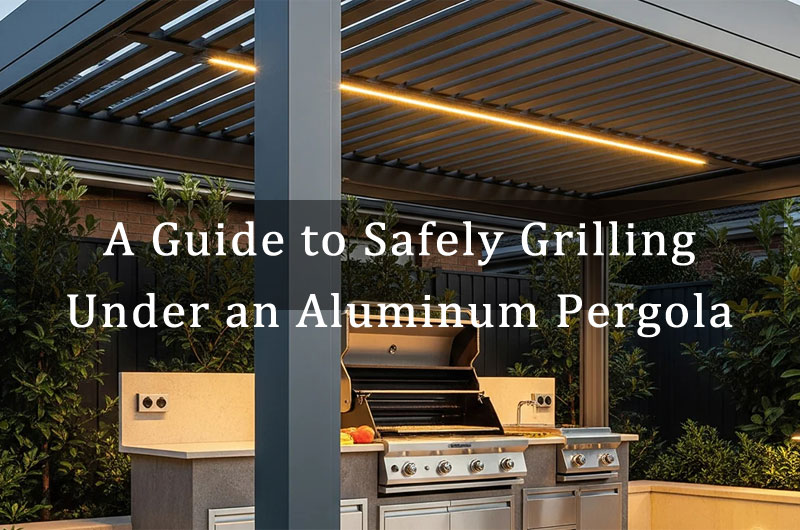
Many homeowners enjoy placing a grill beneath their pergola for convenient outdoor cooking.
While aluminum pergolas are non-combustible and heat-resistant, grilling under them still requires careful planning and safety precautions.
This guide walks you through best practices to help you grill safely under an aluminum pergola.
Is It Safe to Grill Under an Aluminum Pergola?
Aluminum pergolas are safer than wood pergolas when it comes to grilling because aluminum does not burn, warp easily, or ignite from sparks. However, “non-combustible” does not mean “risk-free.”
The main concerns when grilling under a pergola include:
- Heat buildup
- Smoke accumulation
- Grease splatter
- Carbon monoxide (for gas or charcoal grills)
- Damage to finishes or integrated features like lighting or motorized louvers
With proper setup and ventilation, grilling under an aluminum pergola can be both safe and enjoyable.
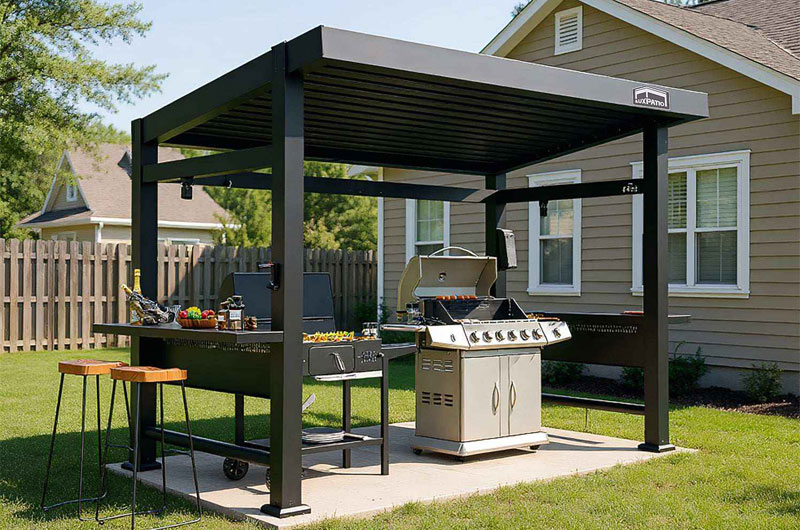
Choose the Right Type of Grill
Not all grills are equally suitable for pergola use.
Best Options
- Electric grills: Produce minimal smoke and no open flame, making them the safest option.
- Gas grills (propane or natural gas): Acceptable with proper ventilation and clearance.
Use With Extra Caution
- Charcoal grills: Generate higher heat, sparks, and more smoke. These should only be used under open-roof or well-ventilated pergolas.
Avoid placing portable fire pits or smokers directly under a pergola unless the manufacturer explicitly allows overhead use.
Maintain Proper Clearance
Adequate space between your grill and pergola structure is critical.
General guidelines:
- Keep at least 3–5 feet (90–150 cm) of vertical clearance between the grill and the pergola roof.
- Position the grill away from pergola posts, beams, and side panels.
- Avoid placing grills directly beneath solid panels or fully closed louvers.
If your pergola has adjustable louvers, always open them fully before grilling.
Ensure Good Ventilation
Ventilation is the single most important factor when grilling under any covered structure.
To improve airflow:
- Open pergola louvers or retractable roofs
- Keep at least two sides of the pergola open
- Use ceiling or wall-mounted outdoor-rated fans to disperse smoke
- Avoid grilling on still, windless days when smoke can linger
Never grill in a fully enclosed pergola or outdoor room without proper ventilation systems.
Protect the Pergola From Heat and Grease
Even though aluminum resists heat, prolonged exposure to high temperatures and grease can damage coatings and finishes.
Helpful precautions:
- Install a heat-resistant grill mat under the grill
- Use a grill hood or lid to direct heat and smoke upward
- Regularly clean grease trays to prevent flare-ups
- Wipe down pergola surfaces near the grill to prevent grease buildup
These steps help maintain the pergola’s appearance and extend its lifespan.
Be Mindful of Integrated Features
Modern aluminum pergolas often include lighting, motorized systems, zip blinds, or heaters.
Before grilling:
- Turn off nearby heaters
- Keep flames away from LED lights, wiring, and motors
- Retract fabric screens or blinds
- Avoid smoke exposure to sensors or control panels
Heat and grease can shorten the life of electrical components if not properly managed.
Follow Fire and Carbon Monoxide Safety
Safety equipment should always be nearby when grilling.
Recommended precautions:
- Keep a fire extinguisher rated for grease and gas fires within reach
- Never leave the grill unattended
- Do not use grills indoors or in enclosed pergolas
- If using gas or charcoal, ensure fresh air circulation at all times
If you ever feel dizzy or notice excessive smoke buildup, turn off the grill immediately and move to fresh air.
Consider Design Enhancements for Frequent Grillers
If grilling under your pergola is a regular activity, design upgrades can improve safety and comfort:
- Open-slat or louvered pergola roofs
- Built-in ventilation panels
- Dedicated grilling zones offset from seating areas
- Outdoor kitchen layouts with pergola-safe clearances
Planning these features from the start ensures a better long-term experience.