
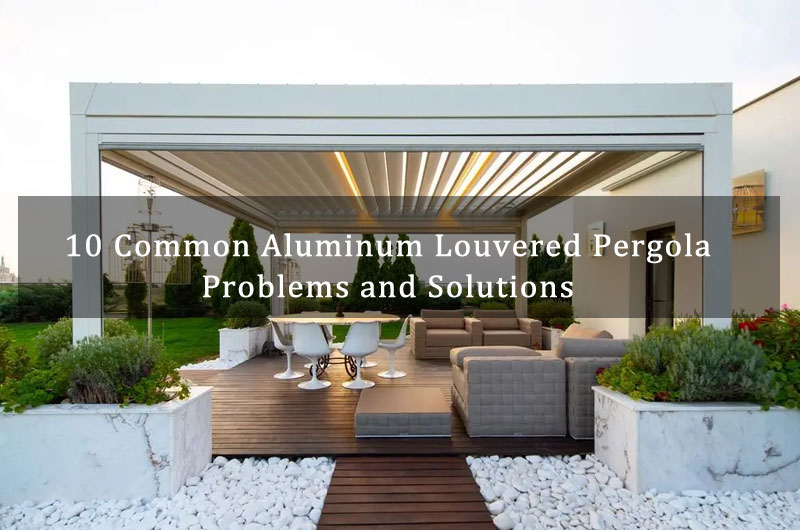
Aluminum louvered pergolas are increasingly popular among homeowners and commercial spaces for their durability, low maintenance, and adjustable shade.
However, like all outdoor structures, they are not without issues.
Understanding common problems and effective solutions can help you enjoy your pergola year‑round with minimal frustration.
1. Louver Mechanism Failure
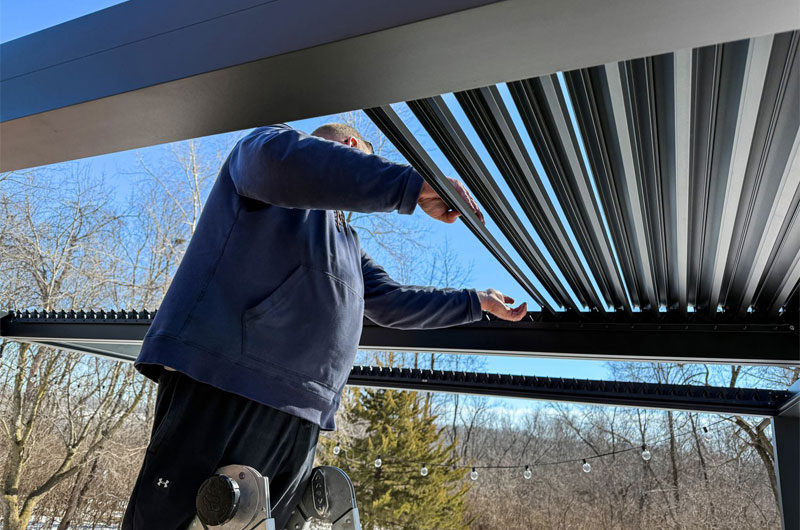
One of the most common complaints with aluminum louvered pergolas is that the louvers stop rotating or become difficult to adjust.
This often happens due to:
- Debris buildup in tracks
- Lack of lubrication
- Worn or damaged gears
- Misaligned louvers
Why It Happens
Aluminum pergola louvers are designed to move smoothly, but outdoor exposure – dust, leaves, sand, or insects can jam mechanisms.
Additionally, salt air near coastal areas accelerates wear.
Solutions
A. Routine Cleaning
- Sweep out debris monthly.
- Use a soft brush and mild soap solution to clean tracks and pivot points.
B. Lubrication
- Apply a silicone‑based spray lubricant to pivot points and tracks every 3–6 months.
- Avoid oil‑based lubricants, which attract dirt.
C. Check Alignment
- Inspect louvers visually.
- If misaligned, adjust by loosening and re‑seating hinges per your manufacturer’s manual.
D. Replace Damaged Components
- Gears, brackets, or pivot arms can wear over time.
- Replace worn parts with OEM components to preserve warranty and performance.
Preventive Tips
- Schedule deep cleaning every season.
- Avoid forcing stuck louvers; gentle manipulation preserves parts.
2. Water Leakage Through Louvers
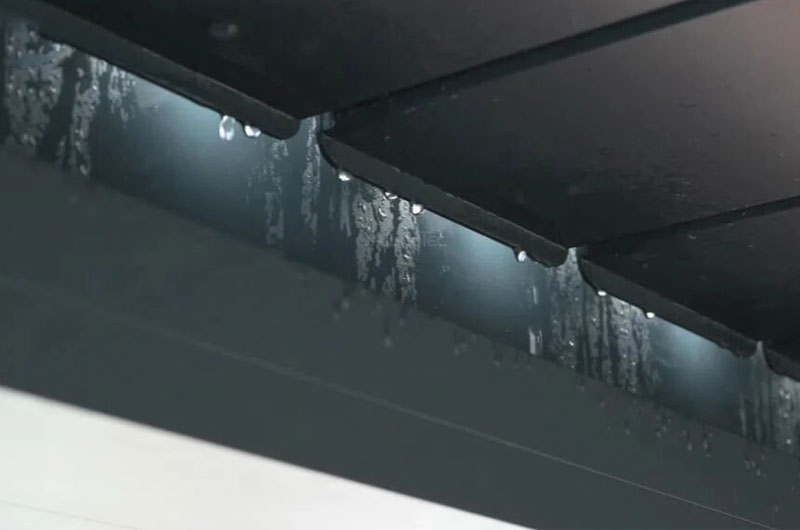
Water leakage is perhaps the most cited issue from pergola owners.
Despite louvers closing fully, water can sometimes seep through or drip, particularly during heavy rain or storms.
Why It Happens
- Incorrect slope or installation – If louvers aren’t installed at the right pitch, water can pool and leak.
- Damaged seals or gaskets – Small rubber seals between louvers can degrade over time.
- Overhead drainage system clogging – Integrated gutters or water channels may accumulate debris.
Solutions
A. Adjust Louver Angle
Set the louvers to the recommended angle during rain to allow effective runoff. Most systems perform best at a slight negative angle toward drainage channels.
B. Replace Seals
- Inspect rubber seals periodically.
- Replace brittle or torn seals with manufacturer‑approved replacements.
C. Clear Drainage Channels
- Check built‑in gutters, downspouts, and internal channels.
- Remove leaves, twigs, or grit that block water flow.
D. Add Secondary Drainage
In areas with heavy rainfall:
- Install add‑on gutter extensions.
- Consider a perimeter rain diverter to redirect excess water away from walls and furniture.
Best Practices
- Perform a water test after installation.
- Check and tighten any loose screws or fasteners to prevent louver misalignment during rainfall.
3. Motor or Remote Control Problems
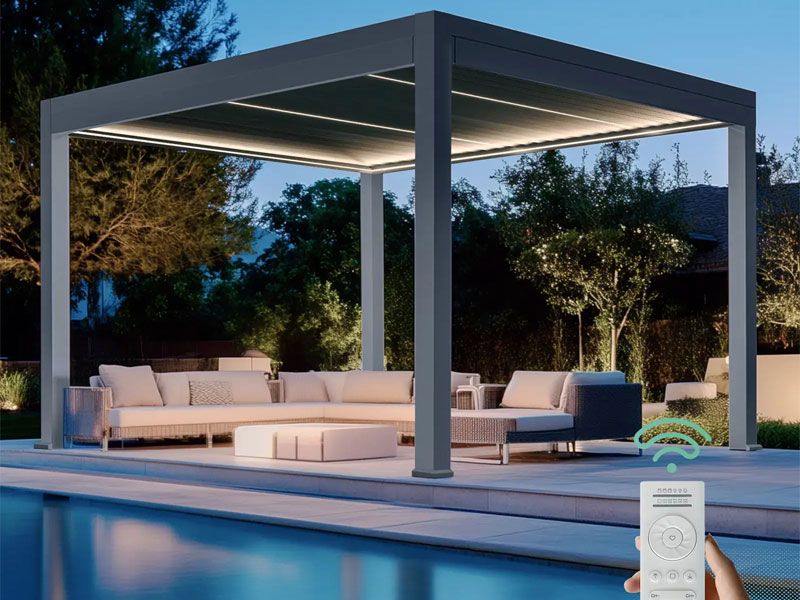
Motorized pergolas add convenience, but electronics introduce potential problems:
- Motor won’t respond
- The remote control fails
- Intermittent movement
Why It Happens
- Dead batteries in a remote
- Signal interference
- Faulty motor or wiring
- Weather‑related damage
Solutions
A. Start with Simple Fixes
- Replace remote batteries.
- Confirm line‑of‑sight between the remote and receiver if no response.
- Reprogram the remote (follow manual instructions).
B. Check Power Supply
- Ensure the motor has consistent power.
- Look for tripped breakers or loose wiring.
C. Inspect for Moisture
- Water intrusion can short electronics.
- Add weatherproofing tape or covers around the receiver box.
D. Replace the Motor
If the motor has burnt out due to overload or age:
- Choose a replacement motor that matches the voltage and torque specs.
- Hire a licensed electrician or technician when needed.
Tips for Longevity
- Protect electronics from voltage spikes by installing a surge protector.
- Store the remote indoors when not in use.
4. Corrosion or Paint Damage
While aluminum is highly corrosion‑resistant, environmental conditions can still cause aesthetic or surface deterioration, including:
- Fading or chalking of paint
- Minor surface corrosion (especially near coastal salt air)
- Oxidation
Why It Happens
- UV exposure causes fading over time.
- Abrasive particles (sand, dust) wear the finish.
- Improper or poor‑quality paint application.
Solutions
A. Regular Cleaning
Gently wash with mild soap and water every 2–3 months. Avoid harsh chemicals that can strip finishes.
B. Wax Coating
Apply a clear automotive wax annually to protect paint from UV and moisture.
C. Touch‑Up Paint
- Use color‑matched aluminum paint to touch up scratches or chips.
- Follow manufacturer recommendations for prep and application.
D. Replace Affected Panels
If corrosion becomes extensive:
- Replace individual panels rather than the entire structure.
- Consult professional installers to ensure proper fitment.
Preventative Maintenance
- Trim nearby plants to prevent sap and debris from contacting the pergola surface.
- Install shade cloth during intense summer months to reduce UV damage.
5. Structural Instability or Rattling Noise
Over time, pergolas can develop wobbles, squeaks, or rattle, especially in the wind.
Why It Happens
- Loose fasteners
- Shifting soil or foundation movement
- Improper installation
- Thermal expansion and contraction
Solutions
A. Tighten Fasteners
- Check bolts, screws, and anchors seasonally.
- Use a torque wrench to match the manufacturer’s torque specifications.
B. Strengthen Anchoring
- For structures on concrete slabs, ensure anchors are secure.
- For soil installations, consider deeper footings or helical piers.
C. Add Reinforcement
Cross‑bracing or diagonal supports can greatly increase rigidity.
D. Install Wind Bracing
In windy environments:
- Use wind straps or cable braces.
- Select wind‑rated pergola models for hurricane or high‑wind zones.
Design Tip
A pergola closer to the house will naturally be more stable than a free‑standing one.
6. Insect or Debris Accumulation
Bees, wasps, spiders, and leaves can accumulate in louvers, creating nests or blockages.
Why It Happens
Outdoor structures attract insects naturally, especially if the pergola is near vegetation, lights, or water.
Solutions
A. Install Screens or Netting
Fine mesh screens stop debris and insects without compromising airflow.
B. Use Screened Louvers
Some pergola systems have perforated or integrated insect screen options.
C. Routine Cleaning
Monthly brushing or gentle vacuuming significantly reduces build‑up.
D. Natural Repellents
Place citronella candles or plants like lavender nearby to reduce insects.
7. Uneven Louvers or Sagging
Uneven louvers can occur when one side appears lower than the other, or they sag.
Why It Happens
- Improper initial leveling
- Warp from thermal stress
- Loose support brackets
Solutions
A. Re‑Level Louvers
Using a level tool:
- Adjust mounting brackets
- Realign pivot points
Professional help may be required if adjustments are beyond manual tweaks.
B. Replace Worn Support Brackets
Metal fatigue or stress can weaken support pieces. OEM replacements ensure proper tension.
C. Check Structural Frame
Sagging can indicate a frame that’s not square. Reinforce with corner brackets or plate gussets.
8. Noise When Opening or Closing
Creaking, grinding, or scraping sounds during louver movement are common complaints.
Why It Happens
- Lack of lubrication
- Hard debris in tracks
- Loose screws creating vibration
Solutions
A. Lubricate Moving Parts
Silicone or Teflon‑based sprays reduce friction and quiet movement.
B. Clean Tracks Thoroughly
Remove grit and dirt to prevent grinding noises.
C. Tighten Loose Components
Check for loose fasteners or rattling elements.
D. Weather Strips
Install soft weather strips on contact points to absorb noise.
9. Issues With Integrated Lighting
Pergolas with built‑in LED lighting systems sometimes suffer from flickering, partial outages, or total failure.
Why It Happens
- Moisture ingress
- Faulty driver or transformer
- Voltage fluctuation
- Loose wiring connections
Solutions
A. Check Power and Connections
- Ensure wiring is tight and dry.
- Replace worn connectors.
B. Replace Transformers or Drivers
LED systems rely on low‑voltage drivers; a faulty one can cause flicker.
C. Weatherproof Lighting
Use rated outdoor fixtures and seal connections with appropriate connectors or silicone.
D. Consider Solar or Battery Upgrades
If power issues are frequent, solar‑powered LED strips with battery backup can work as an alternative.
10. Warranty and Installation Issues
Installation mistakes or unclear warranty coverage can leave owners stuck with unexpected repair costs.
Why It Happens
- DIY installations without following the manufacturer’s guides
- Lack of professional calibration
- Unknown warranty terms
Solutions
A. Follow the Installation Manual
Always read the manual thoroughly before assembly.
B. Use Licensed Installers
Certified professionals ensure correct leveling, anchoring, and drainage setup.
C. Know Your Warranty
- Understand what’s covered: structural, mechanics, electronics, and finish.
- Register your pergola to activate the warranty.
D. Keep Documentation
Store receipts, manuals, and photos of installation, crucial if you need to file a claim.
Maintenance Checklist
| Task | Frequency |
|---|---|
| Clean louvers & tracks | Monthly |
| Inspect seals and replace if needed | Quarterly |
| Lubricate mechanisms | Every 3–6 months |
| Tighten fasteners | Quarterly |
| Test motor/remote | Monthly |
| Clear drainage | After heavy storms |
| Inspect lighting | Quarterly |
| Wax finish | Annually |