
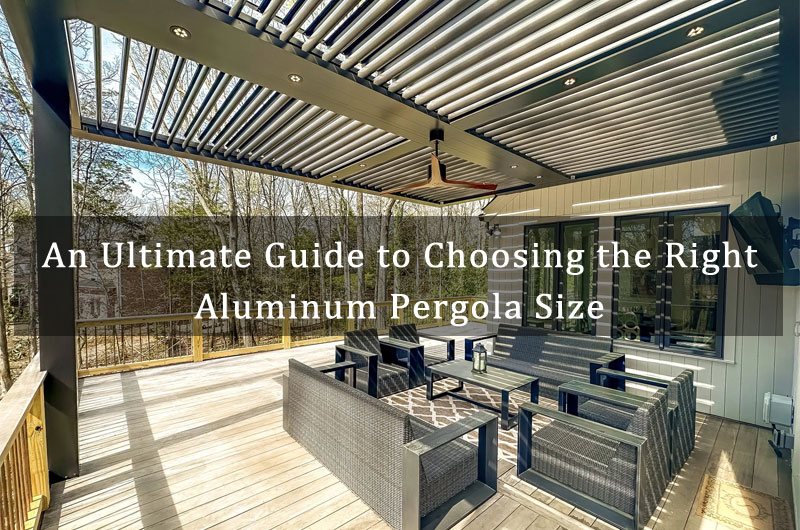
While the design and features of aluminum pergolas often get the spotlight, choosing the right pergola size is just as critical.
An aluminum pergola that’s too small can feel awkward and limiting, while one that’s too large may overwhelm your space or exceed your budget.
1. Why Pergola Size Matters?
The size of your aluminum pergola affects more than just appearance. It directly influences:
- Comfort and usability – Enough room for furniture, movement, and activities
- Visual balance – Proper proportions that complement your home and landscape
- Shade coverage – Adequate protection from sun and light rain
- Functionality – Dining, lounging, entertaining, or outdoor cooking
Getting the size right ensures your pergola feels intentional, practical, and inviting rather than cramped or oversized.
2. Start with Your Available Outdoor Space
Before looking at pergola models or layouts, measure your available space carefully.
Measure the Area
Use a tape measure to determine:
- Width and length of the installation area
- Distance from walls, fences, or other structures
- Overhead clearance (for attached pergolas or balconies above)
Always leave at least 2–3 feet (0.6–0.9 meters) of open space around the pergola for walkways and visual breathing room.
Consider the Shape
Pergolas come in rectangular, square, and custom shapes. Rectangular pergolas work best for patios and decks, while square designs are ideal for seating areas or garden focal points.
3. Match Pergola Size to Its Intended Use
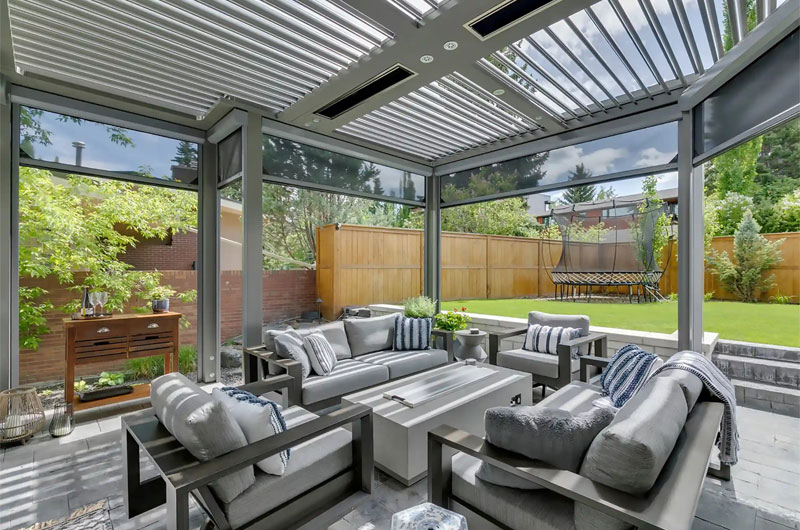
Your pergola’s purpose plays a major role in determining its ideal size.
For Lounge or Seating Areas
- Recommended size: 10′ × 10′ to 12′ × 14′ (3.0 × 3.0 m to 3.6 × 4.3 m)
- Accommodates sofas, coffee tables, and side tables
- Ideal for relaxing, reading, or casual entertaining
For Outdoor Dining
- Recommended size: 10′ × 12′ (3.0 × 3.6 m) or larger
- Allows space for a dining table, chairs, and room to walk around comfortably
- Add extra width if you plan to host large gatherings
For Outdoor Kitchens or BBQ Areas
- Recommended size: 12′ × 14′ to 12′ × 16′ (3.6 × 4.3 m to 3.6 × 4.9 m)
- Provides room for grills, counters, and safe clearance from heat sources
For Poolside or Garden Shade
- Recommended size: 8′ × 10′ to 10′ × 12′ (2.4 × 3.0 m to 3.0 × 3.6 m)
- Offers shade without blocking views or airflow
4. Consider Pergola Height and Clearance
Height is often overlooked but just as important as width and length.
Standard Pergola Height
- Most aluminum pergolas range from 8 to 10 feet (2.4 to 3.0 meters) tall
- This height allows for proper airflow and a comfortable, open feel
Adjusting Height for Features
- Ceiling fans or heaters: Add 1–2 feet (0.3–0.6 m) of extra clearance
- Retractable canopies or louvered roofs: Ensure sufficient space for operation
- Climbing plants or lighting: Higher pergolas offer more flexibility
A pergola that’s too low can feel boxed in, while one that’s too tall may reduce shade effectiveness.
5. Think About Sun Direction and Shade Coverage
Pergola size should work with—not against—your sun exposure.
- South- or west-facing patios may need larger pergolas for extended shade
- East-facing spaces often benefit from smaller structures
- Consider extending pergola dimensions on the sun-exposed side
If you’re using adjustable aluminum pergolas, slightly larger sizes provide better control over sunlight throughout the day.
6. Balance Size with Your Home’s Architecture
A pergola should look like a natural extension of your home.
Proportional Guidelines
- Pergola width should not exceed the width of the house wall it’s attached to
- Large homes can support wider and taller pergolas
- Smaller homes look best with compact, streamlined designs
Matching the pergola size to your home’s scale enhances curb appeal and overall harmony.
7. Plan for Furniture and Future Needs
When choosing pergola size, don’t just think about today—think ahead.
Ask yourself:
- Will you add more seating later?
- Do you plan to install screens, zip blinds, or curtains?
- Might you upgrade to motorized louvers or lighting systems?
Opting for a slightly larger pergola upfront can help you avoid expensive upgrades or replacements down the road.
8. Standard vs. Custom Aluminum Pergola Sizes
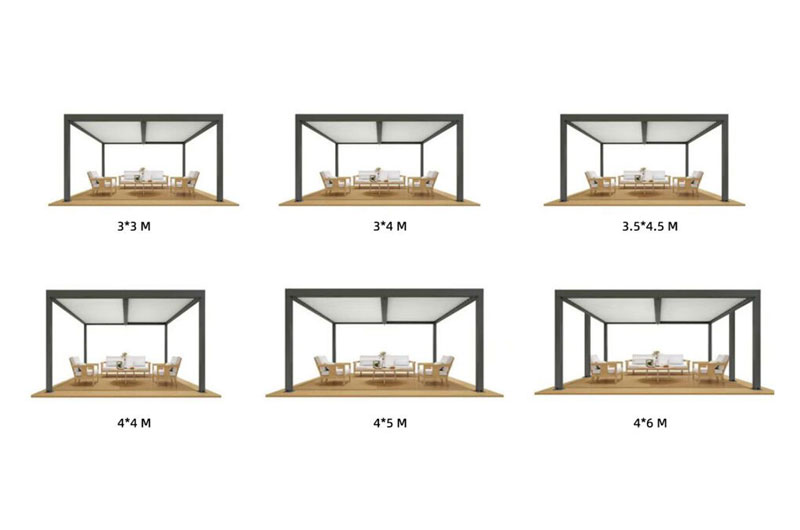
Standard Sizes
Common aluminum pergola sizes include:
- 8′ × 10′ (2.4 × 3.0 m)
- 10′ × 10′ (3.0 × 3.0 m)
- 10′ × 12′ (3.0 × 3.6 m)
- 12′ × 14′ (3.6 × 4.3 m)
- 12′ × 16′ (3.6 × 4.9 m)
These are cost-effective and faster to install.
Custom Sizes
Custom pergolas are ideal for:
- Irregular or narrow spaces
- Large commercial or entertainment areas
- Unique architectural layouts
While custom sizes cost more, they offer a perfect fit and maximum usability.
9. Local Regulations and Installation Considerations
Before finalizing pergola size, check:
- Local building codes and height restrictions
- HOA guidelines
- Permit requirements for larger structures
Oversized pergolas may require additional approvals or structural reinforcements.
10. Final Tips for Choosing the Right Pergola Size
- Always measure twice before ordering
- Use furniture layouts to visualize space
- Choose slightly larger if you’re unsure
- Prioritize comfort and usability over minimal footprint
The right aluminum pergola size transforms your outdoor area into a functional, stylish extension of your home.