
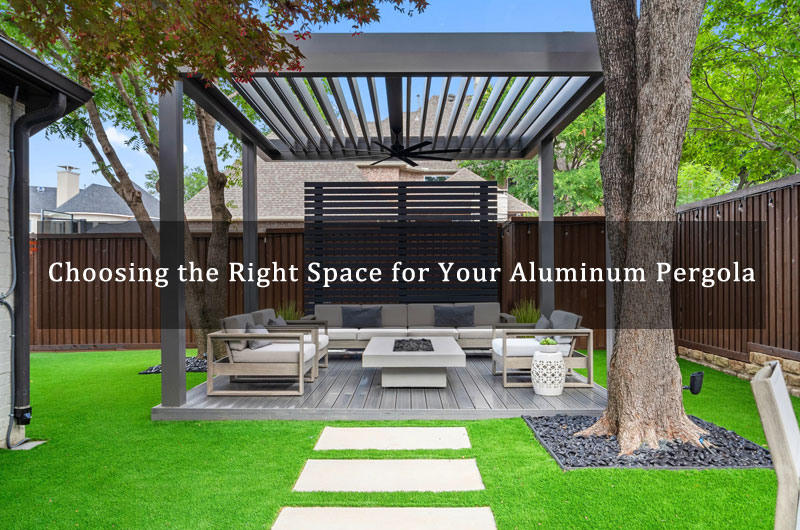
Choosing where to place your aluminum pergola is more than picking a pretty spot; it involves thinking about sun exposure, functionality, landscaping, privacy, wind, drainage, and structural support.
This guide breaks down the key factors to help you choose an optimal site that looks great, feels comfortable, and fits seamlessly with your outdoor lifestyle.
1. Evaluate Sun and Shade Patterns
The sun’s path changes throughout the day and across seasons. To enjoy your pergola comfortably, it’s important to consider how sunlight moves across your yard.
- Morning vs. Evening Sun: If you want morning shade for breakfast coffee or evening shade for dinners, observe where shadows fall at different times of day. A pergola placed in the east keeps morning sun at bay; a western location shades evening sun.
- Seasonal Shifts: In summer, the sun is higher in the sky, meaning more direct overhead light. In winter, lower sun angles can light up a space you thought was shaded. Track sun angles before final placement.
- Heat Control: Even though aluminum pergolas have an open-slat design, they can reduce heat when combined with shade sails, retractable canopies, or climbing vines. Choose placement that maximizes shade during peak heat hours if climate comfort is a priority.
2. Consider Functionality and Flow
Your pergola should serve your lifestyle – whether it’s dining, lounging, entertaining, or quiet reading. Place it near areas where you’ll naturally use it.
- Near the House: A pergola adjacent to a patio, deck, or sliding doors becomes a true extension of your living space. This makes it easier to move food, chairs, and décor between indoor and outdoor areas.
- Garden Views: Situating the pergola where it overlooks a garden, water feature, or scenic vista creates a relaxing retreat. Frame views thoughtfully so the pergola becomes a focal point rather than blocking them.
- Entertaining Zones: If you plan to host gatherings, ensure the pergola has enough space for a table and seating. Position it close to utilities (like outdoor kitchens or grills) for convenience.
3. Assess Privacy Needs
A pergola can be an intimate spot, but proximity to neighbors, streets, or sidewalks might compromise your sense of seclusion.
- Natural Screens: Use existing trees, hedges, or shrubs to create natural privacy. A pergola placed near tall plants or privacy screens can feel cozy and protected.
- Strategic Orientation: Orient the pergola so it faces away from neighbors’ windows or busy streets. You can further enhance privacy with curtains, trellis panels, or climbing vines on select sides.
- Visual Barriers: Even if a spot isn’t completely hidden, partial visual barriers can make the space feel more enclosed and comfortable without isolating it from nice views.
4. Check Wind and Weather Exposure
Aluminum pergolas are sturdy, but extreme wind and weather can affect comfort and long-term durability.
- Prevailing Winds: Note the direction of prevailing winds in your area. A pergola placed in line with strong winds may feel drafty or require extra anchoring. Use surrounding structures or landscaping to block excessive wind.
- Storm Protection: If you live in a storm-prone area, consider a location shielded by your house or larger trees. Pergolas with optional covers or louvered roofs offer added protection from sun and rain.
- Rain Runoff: Avoid locations where water tends to pool or run off from rooflines. Good drainage prevents water damage to furniture and keeps the pergola space comfortable after rain.
5. Look at the Terrain and Ground Conditions
A pergola needs a level, stable base. Sloped or uneven ground can make installation difficult and create safety issues.
- Level Surface: The ideal site should be relatively flat. If your yard slopes, consider terracing or building a small patio pad to create a level footprint for the pergola.
- Soil Stability: Soft or loose soil may make anchoring posts tricky. Gravel, pavers, or a concrete pad often provide the stability needed for pergola footings. Discuss ground preparation with your installer.
- Accessibility: Ensure walkways to the pergola are easy to navigate. A path from your home’s entrance or patio improves accessibility and encourages frequent use.
6. Match with Landscape Design
Your pergola should blend seamlessly into your overall landscape design, enhancing the space rather than looking like a last-minute addition.
- Architectural Harmony: Choose a spot that complements your home’s lines and style. An aluminum pergola with sleek lines may suit modern homes best near the patio, while a location near gardens works well for cottage or rustic settings.
- Vegetation and Greenery: A pergola near climbing plants like wisteria, jasmine, or grapevines can quickly create a lush canopy. Plan your planting so vines don’t overwhelm the structure but gently enhance it.
- Lighting Opportunities: Placing the pergola where existing outdoor lights already exist or can be easily added makes evening use more inviting. Solar lights, string lights, or built-in fixtures can elevate the ambiance.
7. Think Long-Term: Future Use and Add-Ons
Your pergola might be more than a standalone structure – it could host lighting, fans, curtains, or even screens. Think ahead.
- Electrical Access: If you want fans, lighting, or outlets, consider how close the site is to electrical sources. Planning early prevents costly retrofitting.
- Shade Solutions: Some pergolas support retractable canopies or adjustable louvers. Ensure the chosen location accommodates these add-ons without interfering with nearby trees or structures.
- Seasonal Comfort: Outdoor curtains or screens add comfort in cooler months or bug-prone areas. Plan space for hardware and track systems when picking the site.
8. Evaluate Local Regulations and Codes
Before digging footings or pouring concrete, check local regulations.
- Permits: Some cities require permits for structures above a certain size. Confirm setback requirements and utility line locations to avoid costly mistakes.
- HOA Guidelines: If you live in an HOA-managed community, be sure to review any rules or guidelines that affect pergola placement. Some HOAs limit pergola location, color, or height.