
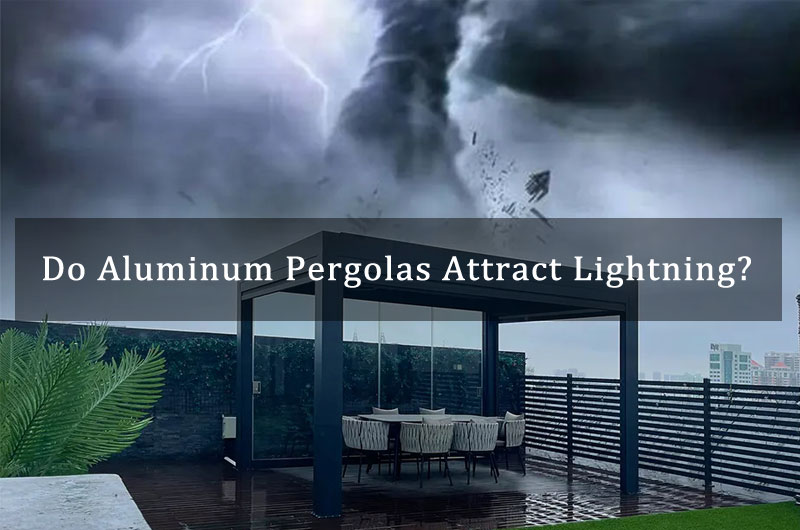
Outdoor living spaces are increasingly popular, and aluminum pergolas have become a go-to choice for homeowners because of their durability, low maintenance, and modern look.
But when summer storms roll in, you might wonder: Do aluminum pergolas attract lightning?
In short, the answer is no – aluminum pergolas do not inherently attract lightning more than any other object of similar size and height.
To understand why, it helps to look at how lightning works, what “attraction” really means, and what factors truly influence lightning strikes.
Lightning: Not an Attraction, But a Discharge
First, it’s important to clarify a basic fact about lightning:
Lightning doesn’t “seek out” metals or specific materials.
Instead, lightning is a massive electrical discharge that occurs when charge imbalances build up between clouds and the ground. When the electric field becomes strong enough, that energy must travel – jumping through the air in a bolt to neutralize the charge difference.
Lightning looks for the path of least resistance between the cloud and the ground, and that path depends more on height, shape, and isolation than on what an object is made of.
In other words: lightning doesn’t have a preference for aluminum, wood, concrete, or plastic. It isn’t “magnetically attracted” to materials like a magnet is attracted to iron.
Why People Think Metal Attracts Lightning?
The myth that metal attracts lightning comes from a misunderstanding:
Metal is a good conductor of electricity – but conductivity isn’t the same as attraction. Just because aluminum conducts an electrical current well doesn’t mean it increases the likelihood of a lightning strike in the first place.
Lightning rods, which are made of metal, do not attract lightning because they are metal, but because they provide a direct and low-resistance path to ground that can safely channel a strike if one occurs nearby. But this is a protective design, not a magnet effect.
Therefore, the presence of a metal pergola by itself doesn’t cause lightning to hit your property.
What Influences Lightning Strikes?
Several key factors determine the likelihood of an object being struck by lightning:
1. Height
Tall objects are more likely to be struck simply because they provide a shorter distance for the electrical discharge to travel between the cloud and the ground.
For example:
- A tall tree.
- A chimney or radio tower.
- A hilltop structure.
If your pergola is lower relative to its surroundings, it’s far less likely to be the target of a strike just because of its material.
2. Isolation
Objects that stand alone in an open area have a higher chance of being struck than those surrounded by taller structures, trees, or buildings.
An isolated pergola in an open field might be somewhat more exposed than the same pergola nestled under a tree canopy or next to a taller home.
3. Topography and Weather Frequency
Areas prone to frequent thunderstorms – such as Florida or parts of the Midwest have a higher overall lightning risk. Similarly, a pergola on a hilltop will statistically see more lightning activity than one in a sheltered backyard.
But critically: none of these factors depend on whether the pergola is made of aluminum or wood.
Aluminum Pergolas: Conductivity Is a Safety Advantage
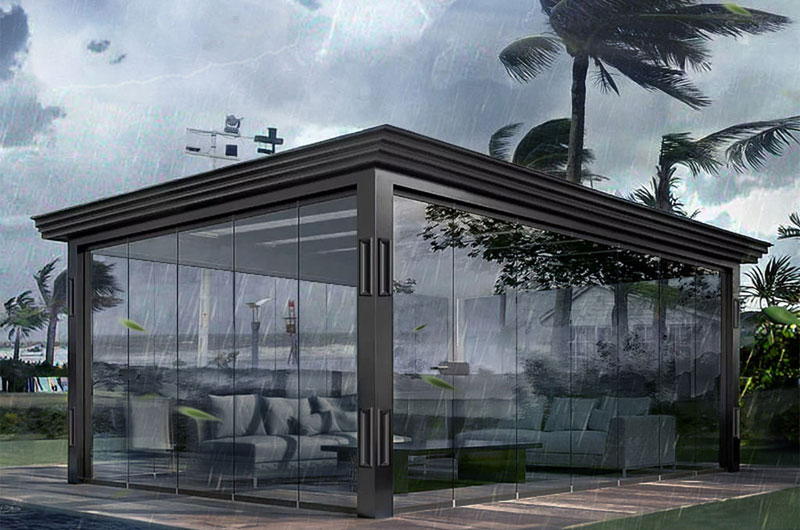
While aluminum does not attract lightning, its conductive properties can actually be beneficial if lightning does strike nearby:
Conducts Charge Efficiently
If lightning hits a conductive object like an aluminum pergola, the electrical current can travel across the frame. If the pergola is connected to a proper grounding system, that charge can be safely transferred into the earth, reducing the risk of damage.
Reduces Fire Risk
Unlike wood, aluminum does not burn. If a lightning strike occurs on your property, aluminum pergolas are far less likely to catch fire, making them safer in this respect than flammable materials.
Acts like a Faraday Pathway
Some experts compare a well-grounded conductive structure to a Faraday cage — meaning electricity travels around the outside without going through and damaging internal components. While not a perfect analogy for an open pergola, the conductive path still helps disperse the energy.
Grounding and Lightning Protection
Even though aluminum pergolas do not inherently attract lightning, there are practical safety measures worth considering if you live in a lightning-prone region:
Install Proper Grounding
Connecting your pergola structure to a proper ground (with grounding rods and bonding wires installed by a qualified electrician) ensures that if lightning does hit, its energy has a safe, low-resistance path to earth.
Consider a Lightning Protection System
For larger structures, or pergolas on tall buildings or rooftops, adding a lightning protection system (like air terminals and down conductors) can help divert strikes to ground safely.
Follow Local Codes and Best Practices
Building codes and safety standards often include guidance for storm-resistant design, especially in regions prone to severe weather.
Final Takeaway
Aluminum pergolas do not attract lightning more than structures made of other materials. Lightning’s path is shaped by natural electrical forces, and height, shape, and location are far more important than material when it comes to where lightning will strike.
If lightning hazards are a real concern in your area:
- Focus on good design, grounding, and lightning protection systems rather than the material itself.
- During thunderstorms, prioritize personal safety by seeking shelter indoors, not standing under any outdoor structure.