
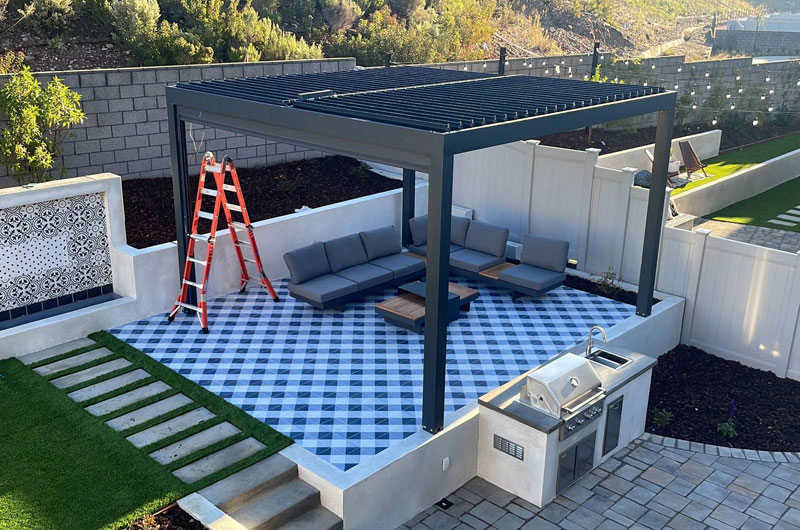
Adding an aluminum louvered pergola to your backyard can be a transformative home improvement project. These structures combine sleek modern design with functional benefits – from shade and rain protection to enhanced outdoor living space.
But before you order or install one, it’s crucial to understand whether you need a building permit. The short answer is: it depends on where you live, how the pergola is designed and installed, and what features it includes.
Let’s break this down in clear, actionable terms.
Permit Requirements
There is no single national rule governing pergola permits in the United States. Instead, building codes and zoning ordinances are enforced at the city or county level, and these local rules decide what does and doesn’t require a permit. However, there are common patterns seen across many jurisdictions:
1. Freestanding vs. Attached Pergolas
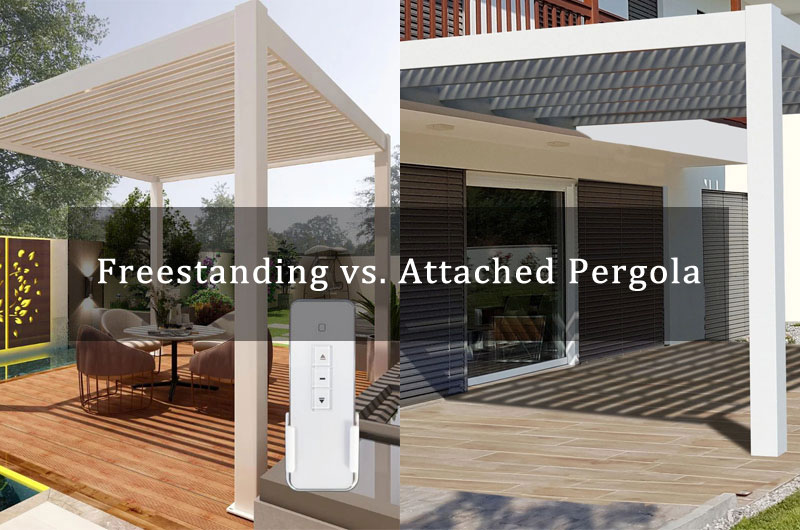
- Freestanding pergolas – those not physically connected to your house – are less likely to require a permit, especially if they are small and simple.
- Attached pergolas – those bolted or anchored to the home’s structure – are more likely to be treated as an addition or structural improvement and therefore require a building permit.
This distinction matters because anything that affects the primary structure (such as anchoring to a wall) can trigger safety and structural reviews under local building codes.
2. Size and Height Matter
Many jurisdictions use size and height thresholds to determine permit requirements:
- A common cut-off for accessory structures is around 120 square feet (roughly a 10′ × 12′ area). Below this size, a pergola may not require a formal building permit, though standards vary.
- Structures above this threshold typically require a permit.
- Height limits – often around 10 to 12 feet, may also trigger permit requirements if exceeded.
Even if a pergola falls under these limits, it still must comply with zoning restrictions like setbacks (how far it must be from property lines) and easements.
3. Utilities and Added Features Trigger Permits
Any pergola that includes:
- Electrical wiring (for lighting, fans, motorized louvers)
- Gas lines (for heaters or grills)
- Mechanical systems
will usually require additional permits for those trade components, even if the pergola itself doesn’t need a building permit.
For example, installing permanent lighting or motorized louver controls typically needs an electrical permit, and possibly inspections, independent of the building permit.
4. Local Zoning and Special Districts
Even when a building permit isn’t required, local zoning rules almost always apply. These govern:
- Setbacks from property lines
- Lot coverage limits (total area of structures on your lot)
- Easement restrictions (keeping structures off utility corridors)
In some cities, shade structures (including pergolas) must meet specific planning standards even to be installed without a permit.
Examples from Local Codes
To illustrate how varied these rules can be, here are examples from different places:
- California: Detached pergolas under ~120 sq. ft. and under 10 feet tall might be exempt, but attached pergolas almost always require permits.
- San Diego: Open pergolas ≤ ~300 sq. ft. and outside special overlay zones can sometimes be exempt, but motorized louvered systems typically require a permit plus an electrical permit.
- Cape Coral, FL: All pergolas (attached or detached) must obtain building permits.
These specifics underscore why local rules are the final authority.
Why Permits Matter?
You might be tempted to skip the permit process, especially if your pergola seems small or simple, but there are good reasons to do it right:
1. Safety and Compliance
Permits ensure structures meet the local building code for wind loads, structural supports, and electrical safety, which is especially important for heavy aluminum systems and motorized parts.
2. Property Value & Resale
Unpermitted structures can create headaches during a home sale. Buyers and appraisers often flag improvements without permits, potentially lowering sale value or requiring retroactive permitting.
3. Avoiding Penalties
If you build without a permit where one was required, you may be subject to fines, stop-work orders, or even having to remove the structure.
So, How Do You Find Out If You Need a Permit?
The most reliable way to determine permit requirements is:
1. Contact Your Local Building Department
Building departments can tell you:
- Whether your pergola design needs a permit
- What forms and plans are required
- If professional drawings or engineering stamps are needed
2. Check Local Zoning Codes Online
Most cities post their building and zoning rules publicly, often under “Accessory Structures,” “Shade Structures,” or “Outdoor Improvements.”
3. Consult with a Contractor or Pergola Installer
Experienced installers often know local code nuances and can tell you if permits are typically required, and may even handle the permitting for you.
Tips for a Smooth Permitting Process
If a permit is required, here’s how to make the process easier:
1. Prepare Detailed Plans
Include:
- Exact dimensions
- Foundation/footing design
- Location relative to property lines
- Electrical plan (if applicable)
2. Consider Engineered Drawings
Some jurisdictions require or recommend engineered drawings, especially for large aluminum structures with wind load considerations.
3. Factor in Time and Costs
Plan review and permit issuance can take days to weeks, depending on complexity and local workload.
4. Don’t Forget HOA Rules
Even if your city doesn’t require a permit, your Homeowners Association (HOA) might impose its own design and approval requirements. These are separate from building permits and must be satisfied before construction.
Summary
- It depends on where you live: Permitting requirements vary widely across cities and counties.
- Freestanding, small pergolas are more likely to be permit-exempt.
- Attached pergolas and those with utilities nearly always need permits.
- Size, height, setbacks, and local zoning codes matter.
- Permits protect safety, value, and compliance.