
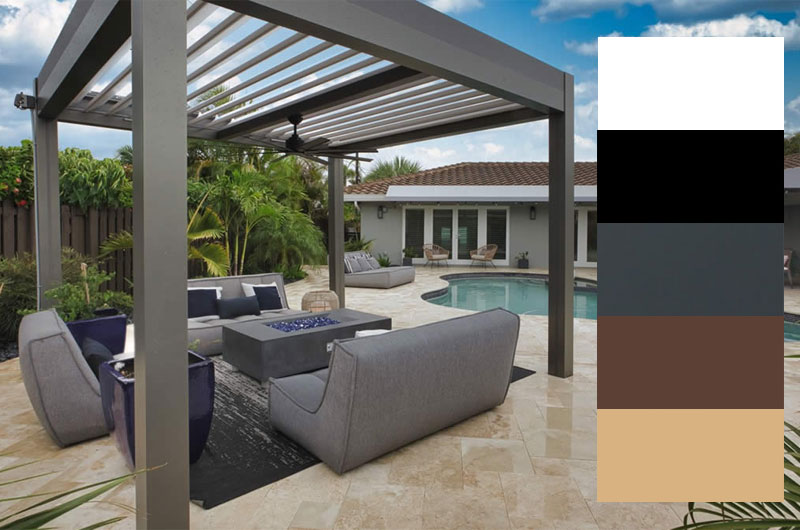
Choosing the right color for your aluminum pergola is one of the most important choices when shaping the look and feel of your outdoor living area.
The color you choose will influence not only the overall aesthetic appeal but also the pergola’s durability, maintenance requirements, and how it integrates with your home and landscape.
With so many color options and finish styles available, making the right decision can quickly become a challenge.
In this article, we will guide you in selecting the ideal aluminum pergola color.
1. Consider Your Home’s Architectural Style
The first step in choosing the right pergola color is to evaluate your home’s architectural design:
- Modern and Contemporary Homes: Sleek, minimalist structures typically pair best with neutral colors like black, white, anthracite gray, or metallic finishes like anodized aluminum. These hues enhance sleek lines and pair seamlessly with contemporary materials like glass and steel.
- Traditional or Transitional Homes: Classic homes with brick, stone, or wood siding often benefit from warmer, earthy tones – think bronze, clay, or deep brown. These colors can enhance traditional materials and create a timeless look.
- Mediterranean or Rustic Designs: Terracotta, warm beige, and muted green pergolas blend beautifully with stucco walls, clay roof tiles, and lush garden landscapes.
By aligning the pergola color with your home’s architectural style, you ensure visual harmony that enhances both the structure and its surroundings.
2. Match or Contrast with Your Exterior Palette
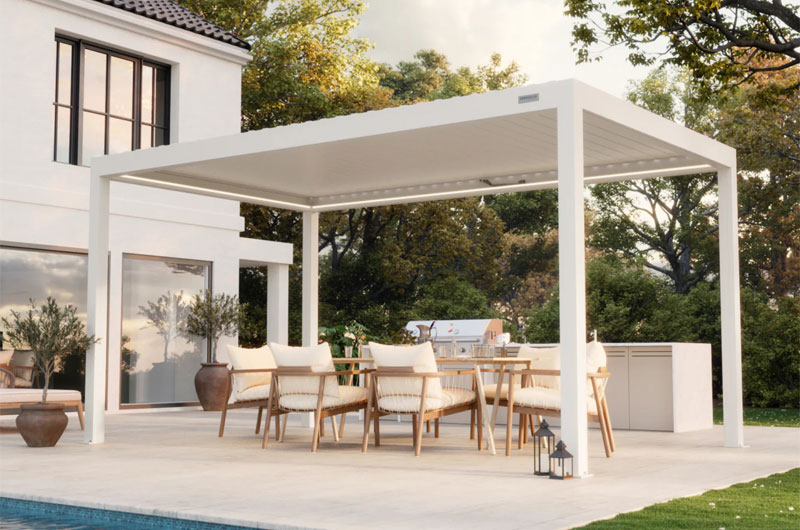
Choosing whether to match or contrast with your existing exterior colors can be a defining design choice:
Matching Colors
Matching your pergola to existing exterior elements (such as siding, window trim, or roofing) creates a cohesive, unified look.
This is ideal if your goal is seamless integration rather than making the pergola a standout feature.
Pros of Matching:
- Creates a calm and harmonious appearance
- Makes the outdoor space feel like a natural extension of the home
- Works well with minimalist landscaping
Contrasting Colors
If you want your pergola to be a focal point, choose a contrasting color.
For example:
- A white pergola against a dark exterior
- A deep charcoal pergola with light-colored stone or brick
Pros of Contrasting:
- Adds visual interest and dimension
- Highlights architectural features
- Makes the outdoor structure stand out
When choosing contrast, ensure the colors still complement each other – not clash.
Try using color wheels or digital visualization tools to explore different combinations before making your final selection.
3. Understand Color Temperature and Mood
Colors evoke emotions and set the tone of your outdoor space:
- Cool Colors (e.g., anthracite gray, blue-gray, black): These tones give a sleek, modern feel and often make spaces feel larger and more tranquil. Cool tones work especially well in minimalist gardens or near water features.
- Warm Colors (e.g., brown, bronze, tan): Warm hues evoke comfort, making shaded areas feel inviting and cozy. They complement natural wood and stone beautifully.
When choosing a color, also consider how it feels during different times of the day and in various lighting conditions.
A pergola that looks crisp in the afternoon sun might appear dull in shaded evening light, so observing your outdoor area at different times helps in decision-making.
4. Impact of Climate and Environment
Your location’s climate plays a role in how colors look and perform over time:
Sun Exposure
- Dark colors absorb more heat. While they can add sophistication, they may also make the pergola structure warmer – important to consider if you plan to spend a lot of time underneath it.
- Light colors reflect heat and help keep shaded areas cooler.
If your pergola faces intense, all-day sunlight, lighter colors may help maintain comfort during hot summers.
Environmental Elements
Think about your surroundings:
- Coastal areas with salty air may favor finishes that resist corrosion and fading.
- Backyard spaces surrounded by lush greenery often look better with natural, earthy tones.
Understanding environmental impact ensures your pergola remains attractive and durable.
5. Durability and Maintenance of the Finish
Aluminum pergolas are typically powder-coated, a durable finish that resists scratching, chipping, and fading.
However, some colors and textures require different levels of maintenance:
- Gloss Finishes: Bright, reflective surfaces that show dirt and water spots more easily but are simple to clean.
- Matte Finishes: While these finishes help mask dirt and minor flaws, they may require gentle cleaning to preserve the surface.
- Textured Finishes: Hide scratches and fingerprints but can trap dirt, needing a more thorough wash occasionally.
When choosing a finish, balance aesthetic preference with realistic maintenance expectations for your climate and usage.
6. Coordinate with Outdoor Furniture and Décor
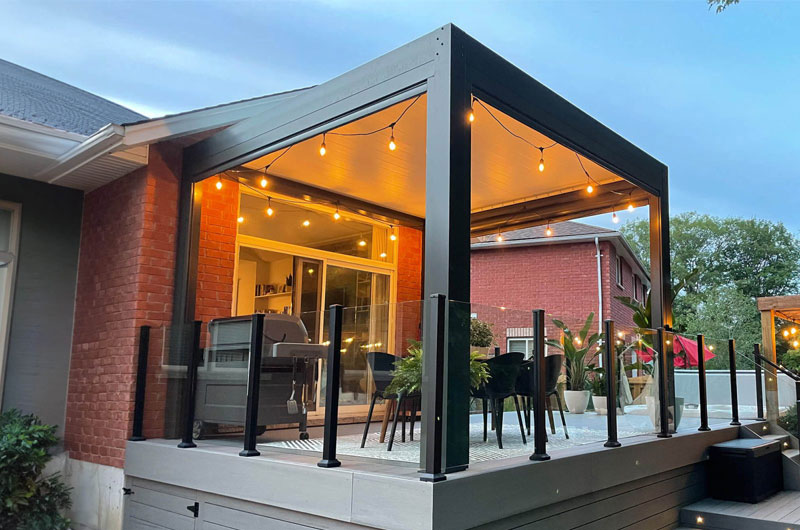
Your pergola isn’t an isolated element; it’s part of a larger outdoor environment that includes furniture, textiles, and accessories.
A well-coordinated palette creates a cohesive and inviting space.
- Neutral Pergola Colors (e.g., white, black, gray): These blend easily with most furniture styles and allow bold décor colors to shine.
- Warm, Earthy Pergola Colors (e.g., bronze, brown): Pair beautifully with wood and wicker furniture, terra cotta planters, and natural fabrics.
- Contrasting Accent Colors: Use pergola color as a backdrop to accentuate vibrant furniture like rust-orange cushions or teal lounge chairs.
Before finalizing your pergola color, visualize how it will interact with your existing décor.
7. Future-Proof Your Choice
Trend-driven colors may be tempting, but outdoor structures are long-term investments. Instead of choosing ultra-trendy shades that may feel dated in a few years, opt for classic, versatile colors that stand the test of time:
- Timeless Choices: Black, white, charcoal, bronze
- Subtle Accents: Deep greens, muted blues
If you do choose a bolder color, balance it with neutral tones in surrounding elements to prevent overwhelm.
8. Sample and Test Before You Commit
Never choose a pergola color based solely on a small swatch or digital image. Always:
- View larger samples outdoors in natural light
- Ask for physical color chips or sample panels
- Test how the color appears at different times of day
Natural light changes perception dramatically. A color that looks perfect indoors can seem too bright or too dull outside.
9. Consult with Professionals
If you’re unsure, don’t hesitate to contact us to seek help:
- We provide design consultations
- Landscape designers can suggest colors that enhance your garden’s features
- Painting or coating specialists can recommend finishes best suited for your climate and material
Professional insights can save time, money, and potential design regrets.