
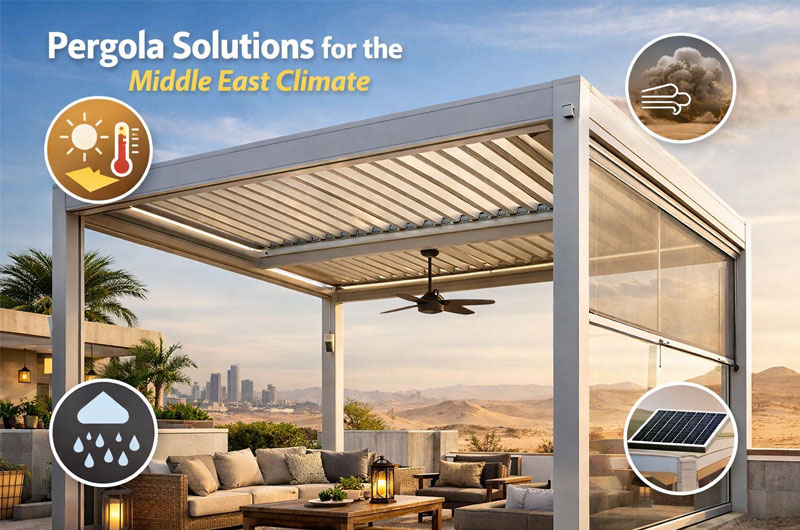
Designing outdoor living spaces in the Middle East presents unique challenges due to extreme heat, intense sunlight, sandstorms, and occasional humidity.
Pergolas, when thoughtfully designed, can transform exposed outdoor areas into comfortable, functional, and luxurious extensions of residential and commercial properties.
Understanding the Middle East Climate Challenges
The Middle East climate is characterized by:
- Extreme heat (often exceeding 40°C in summer)
- High solar radiation and UV exposure
- Frequent dust and sandstorms
- Low rainfall but occasional heavy showers
- Coastal humidity in some regions
These environmental conditions significantly influence pergola design. Materials must withstand thermal expansion, UV degradation, and abrasion from sand, while structures must provide effective shading and ventilation.
Why Pergolas Are Ideal for Hot Climates?
Pergolas are particularly suited for arid regions because they offer controlled shading without completely blocking airflow. Unlike enclosed structures, pergolas allow hot air to escape while reducing direct solar exposure.
Modern pergola systems—especially bioclimatic designs—can:
- Regulate sunlight and airflow
- Reduce heat buildup
- Improve outdoor comfort year-round
These benefits make pergolas essential elements in luxury villas, resorts, restaurants, and rooftop terraces across the Gulf states.
Material Options for Middle East Pergolas
1. Aluminum: The Top Choice
Aluminum is widely regarded as the most suitable material for pergolas in the Middle East.
Key advantages:
- Heat resistance: Performs well under high temperatures
- Corrosion resistance: Ideal for coastal environments
- Low maintenance: No warping, rotting, or frequent sealing
- Durability: Long lifespan with minimal upkeep
Powder-coated aluminum also resists fading, scratching, and sand abrasion, making it highly reliable in desert conditions.
2. Steel and Metal Composites
Steel pergolas offer high strength and wind resistance but require protective coatings to prevent corrosion. They are often used in commercial or large-span structures.
3. Timber (Limited Use)
While wood provides a natural aesthetic, it is less suitable for harsh climates due to:
- Cracking and warping under heat
- High maintenance requirements
- Vulnerability to UV and moisture
Timber is best used in shaded or hybrid designs rather than fully exposed installations.
4. Fabric and Tensile Systems
Fabric pergolas are lightweight and cost-effective but have shorter lifespans due to UV degradation. They are often used for temporary or decorative shading.
Advanced Pergola Designs for Hot Climates
1. Bioclimatic Pergolas
Bioclimatic pergolas are among the most advanced solutions for the Middle East.
Features:
- Adjustable aluminum louvers
- Automated control systems
- Integrated drainage
These systems allow users to control sunlight, airflow, and shade dynamically.
Benefits:
- Natural ventilation reduces heat buildup
- Full sun control throughout the day
- Protection from rain and dust
They are especially effective in regions like the UAE and Saudi Arabia, where climate adaptability is essential.
2. Adjustable Louvered Roof Pergolas
Adjustable louvered pergolas are similar to bioclimatic systems but may be manual or motorized.
Advantages:
- Adjustable shading
- Improved airflow
- Flexible use for different seasons
They help release hot air while providing shade when needed, improving comfort significantly.
3. Retractable Louvered Pergolas
Retractable louvered pergolas use fabric or slatted systems that can open and close.
Best for:
- Luxury villas
- Rooftop lounges
- Hospitality environments
They provide full control over sun exposure and can create open-sky experiences during cooler evenings.
4. Fixed Pergolas with Solar Optimization
Fixed pergolas are designed with carefully angled beams or slats to block peak sunlight while allowing indirect light.
This aligns with passive solar design principles, where structures are oriented to reduce heat gain in summer while maximizing comfort.
Key Design Considerations
1. Solar Orientation
Proper orientation is critical:
- East-west alignment reduces direct sun exposure
- Angled louvers block high summer sun while allowing winter light
This improves both comfort and energy efficiency.
2. Ventilation and Airflow
Ventilation is essential in hot climates. Pergolas should:
- Allow cross-ventilation
- Use open or adjustable roofing systems
- Avoid fully enclosed designs
Bioclimatic pergolas excel in this area by promoting natural airflow.
3. Sand and Dust Protection
Sandstorms are a major concern in the Middle East.
Effective solutions include:
- Sealed joints and drainage systems
- Minimal gaps in structural components
- Optional side screens or glass panels
These features help prevent dust accumulation and maintain usability.
4. Wind Resistance and Structural Stability
Pergolas must be engineered to withstand strong winds.
- Reinforced frames and anchoring systems are essential
- High-quality aluminum structures can resist wind when properly installed
5. Heat Reduction Strategies
Pergolas can significantly reduce ambient temperatures by:
- Blocking direct sunlight
- Promoting airflow
- Reducing heat gain on adjacent buildings
They also help lower indoor cooling loads by shading windows and walls.
Smart Features and Modern Innovations
Modern pergola systems increasingly integrate technology to enhance usability.
1. Motorized Systems
- Remote or app-controlled louvers
- Automatic adjustment based on weather
2. Integrated Lighting
- LED lighting for nighttime use
- Ambient lighting for luxury aesthetics
3. Sensors and Automation
- Rain sensors to close roofs automatically
- Wind sensors for safety
4. Solar Integration
Some pergolas incorporate photovoltaic panels, combining shading with energy generation.
Aesthetic and Architectural Integration
Pergolas in the Middle East are not just functional—they are also architectural statements.
Design trends include:
- Minimalist aluminum structures
- Integration with modern villa architecture
- Use of neutral and reflective colors to reduce heat absorption
Aluminum’s flexibility allows for customized shapes, sizes, and finishes, making it suitable for both contemporary and traditional designs.
Applications in the Middle East
Pergola solutions are widely used in:
- Luxury villas: Poolside lounges and garden seating
- Hotels and resorts: Outdoor dining and relaxation areas
- Restaurants and cafés: Shaded terraces
- Commercial spaces: Walkways and entrances
These applications enhance the usability of outdoor spaces even during peak summer.
Sustainability Considerations
Sustainability is becoming increasingly important in Middle Eastern architecture.
Pergolas contribute by:
- Reducing reliance on air conditioning
- Supporting passive cooling strategies
- Using recyclable materials like aluminum
Traditional regional architecture has long emphasized climate-responsive design, and modern pergolas continue this approach with advanced technology.
Conclusion
Pergola solutions for the Middle East climate must balance durability, functionality, and aesthetics. With extreme heat, intense sunlight, and environmental challenges, the right pergola design can significantly enhance outdoor living.
Among all options, aluminum bioclimatic and louvered pergolas stand out as the most effective solutions, offering superior heat control, ventilation, and longevity. Combined with smart technology and thoughtful design, pergolas can transform outdoor spaces into comfortable, energy-efficient environments year-round.