
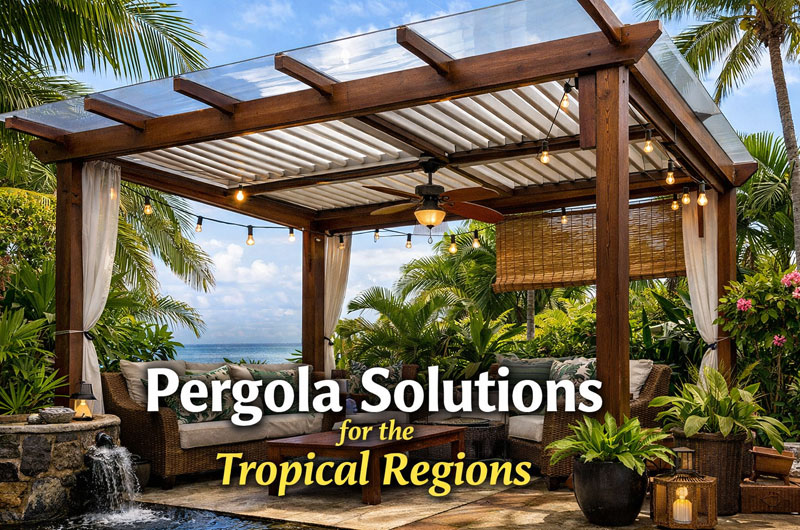
Designing pergolas for tropical regions requires a unique balance of durability, ventilation, and weather protection.
Unlike temperate climates, tropical climates feature strong sunlight, high humidity, frequent rainfall, and occasional storms. These conditions demand carefully engineered pergola solutions that not only enhance outdoor living but also withstand harsh environmental factors over time.
This article explores the most effective pergola solutions for tropical regions, covering materials, structural design, roofing systems, and comfort-enhancing features.
Understanding Tropical Climate Challenges
Before selecting a pergola design, it’s essential to understand the environmental conditions that influence performance and longevity.
Tropical regions typically experience:
- High UV exposure throughout the year
- Heavy rainfall and monsoon seasons
- High humidity, which can cause mold, rot, and corrosion
- Strong winds or tropical storms in some areas
These factors significantly affect material choice, structural integrity, and overall usability. For example, pergolas in humid climates must resist moisture damage, while those in coastal regions must also withstand salt air corrosion.
Choosing the Right Materials
Material selection is the foundation of any pergola designed for tropical regions. Choosing unsuitable materials may result in warping, corrosion, or accelerated deterioration.
1. Aluminum Pergolas
Aluminum is one of the most popular choices for tropical environments due to its:
- Rust resistance
- Lightweight yet strong structure
- Minimal maintenance requirements
It does not warp or expand under heat and performs well in humid and coastal conditions.
2. Vinyl and Composite Materials
Vinyl pergolas are ideal for moisture-rich environments because they:
- Resist rot, mold, and insects
- Require little maintenance
- Maintain color and structural integrity over time
Composite materials also provide similar benefits with enhanced durability.
3. Tropical Hardwoods
Natural hardwoods such as teak are well-suited for tropical climates because they:
- Contain natural oils that resist decay
- Withstand humidity better than softwoods
- Offer a premium, natural aesthetic
However, regular maintenance is needed to maintain their appearance over time.
Designing for Airflow and Ventilation
In tropical climates, airflow is critical. Without proper ventilation, pergolas can trap heat and become uncomfortable.
Effective design strategies include:
- Open-top or slatted roofs to allow heat to escape
- Louvered systems that can be adjusted for airflow and shade
- Open sides or lattice panels to promote cross-ventilation
Ventilation helps reduce humidity buildup and improves comfort significantly.
A well-ventilated pergola can feel several degrees cooler than a fully enclosed structure, making it more suitable for daily use.
Roofing Solutions for Tropical Weather
Roof design is one of the most important aspects of a tropical pergola. It must balance sunlight control, ventilation, and rain protection.
1. Louvered Roof Systems
Louvered pergolas are among the most versatile solutions. They allow users to:
- Open the roof for airflow
- Close it during rain
- Adjust sunlight exposure throughout the day
Many modern systems include built-in drainage to manage heavy rainfall efficiently.
2. Polycarbonate Roofing Panels
Polycarbonate panels are highly effective in tropical regions because they:
- Provide full waterproofing during heavy rain
- Block harmful UV rays
- Resist cracking and yellowing in heat
They are especially useful in monsoon-prone areas where consistent rain protection is essential.
3. Metal Roofing
Metal roofs offer:
- Maximum durability
- Excellent storm resistance
- Long-term reliability
However, they may retain heat, so proper insulation or ventilation is necessary.
Structural Strength and Weather Resistance
Tropical regions often experience strong winds and storms, making structural integrity essential.
Key considerations include:
- Reinforced posts and beams
- Secure anchoring systems
- Wind-resistant designs
Pergolas must be engineered to withstand sudden weather changes, especially in coastal or cyclone-prone areas.
Well-executed construction enhances safety while prolonging the structure’s lifespan.
Water Management and Drainage
Heavy rainfall is a defining feature of tropical climates, making drainage systems critical.
Effective pergola solutions include:
- Built-in gutters and downspouts
- Sloped roofing designs
- Integrated drainage channels in louvered systems
Without proper water management, standing water can damage both the pergola and surrounding surfaces.
Enhancing Comfort in Tropical Pergolas
A well-designed pergola should not only withstand the climate but also create a comfortable outdoor living space.
Cooling Features
- Ceiling fans to improve air circulation
- Misting systems for temperature reduction
- Shade screens or curtains to block sunlight
Smart Technology
Modern pergolas can include:
- Motorized louvers
- Remote-controlled shading systems
- Rain sensors that automatically close the roof
These features enhance usability and convenience, especially in unpredictable tropical weather.
Low Maintenance and Longevity
Maintenance is a key consideration in tropical regions due to humidity and environmental exposure.
Best practices include:
-
Choosing corrosion-resistant materials
-
Applying UV-resistant coatings
-
Regular cleaning to prevent mold and mildew
Low-maintenance materials like aluminum and vinyl are often preferred for long-term durability.
Balancing Aesthetics and Functionality
While durability is essential, pergolas should also complement the surrounding architecture.
Design styles for tropical regions include:
- Modern minimalist pergolas with clean aluminum frames
- Resort-style pergolas with thatch or wood finishes
- Hybrid designs combining natural and synthetic materials
The goal is to create a space that is both visually appealing and highly functional.