
Swimming pools are a prized investment for homeowners, offering relaxation, family fun, and a splash of luxury. But without proper protection, pools can quickly become burdensome. Leaves, pests, weather, and safety concerns make pool maintenance a full‑time task for many.
That’s where pool enclosures come into play. Pool enclosures not only protect your swimming area but also enhance usability, safety, and energy efficiency.
Two of the most popular options are retractable and fixed pool enclosures.
Retractable Pool Enclosures
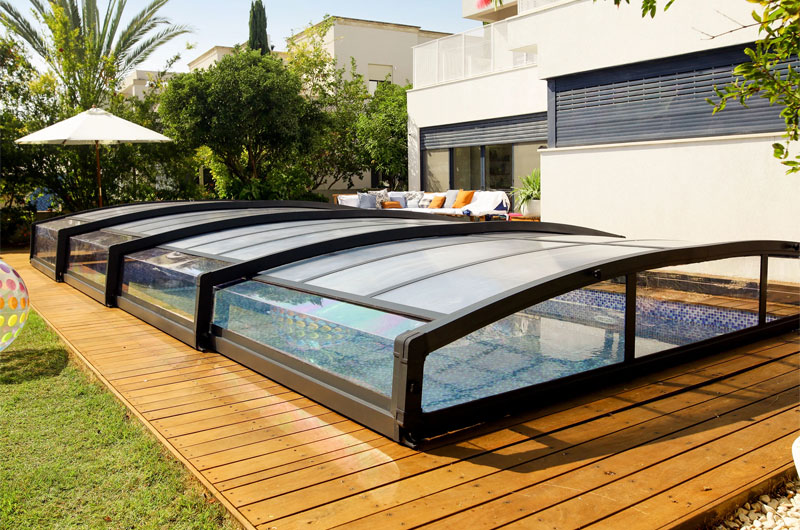
Retractable pool enclosures are typically constructed with modular segments that slide on tracks, allowing you to adjust the cover depending on weather conditions and personal preference.
Retractable designs range from low-profile greenhouse styles to high-profile full-coverage dome structures that can be completely retracted away from the pool.
Key Features
- Modular design: Panels slide or fold to create an open‑air experience.
- Flexible use: Adjust coverage based on weather or preference.
- Automation available: Many systems include motors and remote controls for easy operation.
- Variety of styles: From low‑profile models to taller structures.
Advantages of Retractable Enclosures
1. Year‑Round Enjoyment
With the ability to open and close the enclosure, you can enjoy warm, sunny days with an open pool and shielded comfort on cooler or windy days. This adaptability expands your swimming season.
2. Energy Efficiency
When closed, retractable enclosures trap heat from the sun, raising water temperature and reducing the need for heating. This insulation effect can save energy and extend swimming months in cooler climates.
3. Reduced Maintenance
Retracting the enclosure during windy or stormy weather keeps leaves, dirt, and debris out of the pool, dramatically reducing cleaning time.
4. Enhanced Safety
A closed pool enclosure creates an extra safety barrier, especially important for households with children or pets.
5. Better Aesthetics and Views
Retractable designs often offer unobstructed views of the sky and landscape when open, preserving the ambiance of your backyard.
Disadvantages of Retractable Enclosures
1. Higher Initial Cost
Retractable systems tend to cost more upfront due to their complexity, tracks, and moving parts.
2. Maintenance of Moving Components
Tracks and rollers require upkeep to avoid jamming, especially in areas with heavy dirt or sand.
3. Weather Vulnerability
In strong winds or heavy snowfall, lightweight retractable panels may need additional support or may not perform as well compared to permanent structures.
Fixed Pool Enclosures
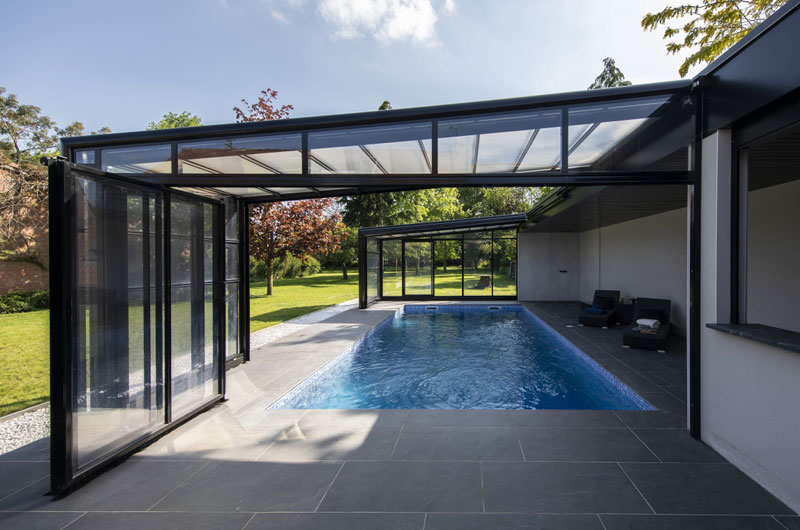
Fixed pool enclosures are stationary structures built around the pool. They do not open or close – they are a permanent cover. These structures often resemble sunrooms or greenhouses and can be custom designed to fit your space.
Key Features
- Permanent installation: Built to remain in place year‑round.
- Solid construction: Often made from framed glass or polycarbonate walls.
- Design flexibility: Can include doors, windows, ventilation, and even HVAC systems.
Advantages of Fixed Enclosures
1. Durability
Fixed enclosures are sturdy structures designed to endure severe weather, including heavy snow, strong winds, and storms. Their permanence makes them ideal in regions with extreme climates.
2. Structural Integrity
Because they are permanent, these enclosures are often stronger and less prone to issues than movable systems.
3. Lower Maintenance
With no moving parts, fixed enclosures typically require less routine upkeep.
4. Additional Living Space
Fixed enclosures can serve more than a pool cover; they can function as extended living areas, sunrooms, or entertainment spaces.
5. Customization
Options like decorative glass, built‑in seating, lighting, and heating systems make fixed enclosures highly customizable for comfort and style.
Disadvantages of Fixed Enclosures
1. No Open‑Air Option
Once built, you cannot open a fixed enclosure to expose the pool to the open air. This reduces the feel of an outdoor pool and limits direct sun exposure.
2. Higher Installation Time
Construction is more extensive and can take longer than installing a retractable system.
3. Potentially Higher Costs
Depending on materials and customization, fixed enclosures can be costly, especially with premium glass or structural enhancements.
A Quick Comparison Chart
| Feature / Factor | Retractable Pool Enclosure | Fixed Pool Enclosure |
|---|---|---|
| Flexibility | High – can open fully, partially, or remain closed | Low – permanent, no open-air option |
| Weather Resistance | Moderate – best in mild/moderate climates | High – withstands extreme weather conditions |
| Cost (Initial) | High – due to moving parts and track systems | Moderate to High – depends on materials & design |
| Maintenance | Requires upkeep of tracks and rollers | Minimal – mostly cleaning and inspections |
| Energy Efficiency | Good – traps heat when closed, reducing heating cost | Excellent – provides insulation and stable environment |
| Pool Accessibility | Flexible – can enjoy open-air or enclosed pool | Limited – always enclosed |
| Safety | Good – extra barrier when closed | Excellent – robust and permanent barrier |
| Aesthetics / Views | High – can enjoy outdoor feel and views | Moderate – enclosed feel, customizable interior |
| Installation Time | Short to Moderate | Longer – construction is permanent |
| Additional Benefits | Extends swim season, protects from debris | Can double as living/entertainment space, highly customizable |
Detailed Comparing Retractable and Fixed Pool Enclosures
To help you decide, here’s a direct comparison of important factors:
1. Flexibility
- Retractable: Highly flexible – open or close based on weather or preference.
- Fixed: Permanent – no changeable configuration.
2. Weather Resistance
- Retractable: Good for mild to moderate climates; may struggle with extreme weather.
- Fixed: Exceptional resistance and stability in harsh conditions.
3. Cost
- Retractable: Higher upfront but potentially cost‑effective long term through energy savings.
- Fixed: Varies greatly, can be high if heavily customized.
4. Maintenance
- Retractable: Needs track and hardware maintenance.
- Fixed: Minimal maintenance, simple cleaning and inspections.
5. Aesthetics and Comfort
- Retractable: Offers outdoor feel with flexibility.
- Fixed: Offers a permanent indoor experience, which can be styled extensively.
6. Safety
Both systems improve safety, but fixed enclosures offer a more robust barrier that cannot be easily opened by children or pets.
Which Option Is Right for You?
Choosing between retractable and fixed pool enclosures depends on your lifestyle, climate, budget, and desired pool experience.
Choose Retractable If:
- You want year‑round pool access with an open‑air experience.
- You enjoy flexibility and control over your pool environment.
- You want to enjoy a longer swimming season while preserving the open-air feel.
- Your climate is moderate and not prone to extreme weather.
Choose Fixed If:
- You live in a region with harsh winters or severe weather.
- You want a permanent, low‑maintenance solution.
- You plan to use the pool area as additional living or entertainment space.
- You prefer structural strength and long‑term durability.