
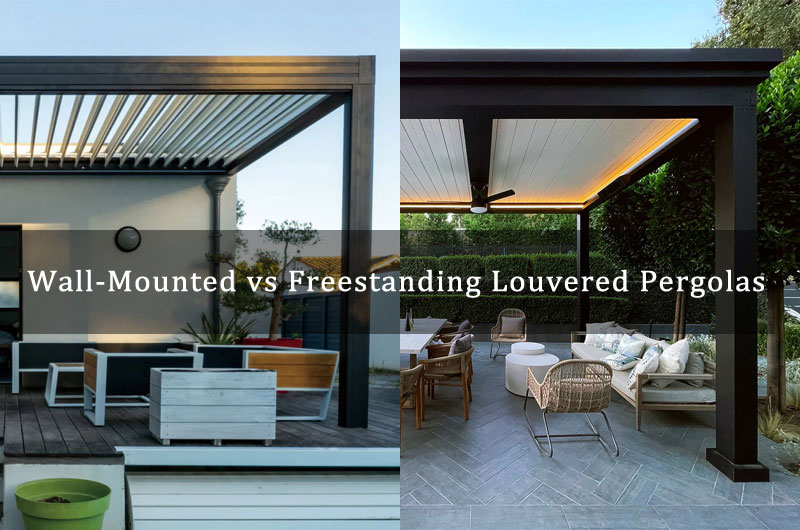
When choosing a louvered pergola, one of the most important considerations is the installation type.
Typically, louvered pergolas are available in two main installation styles: wall-mounted and freestanding.
Each has its unique advantages, limitations, and suitability depending on the space, aesthetic preference, and functional needs.
Wall-Mounted Louvered Pergolas
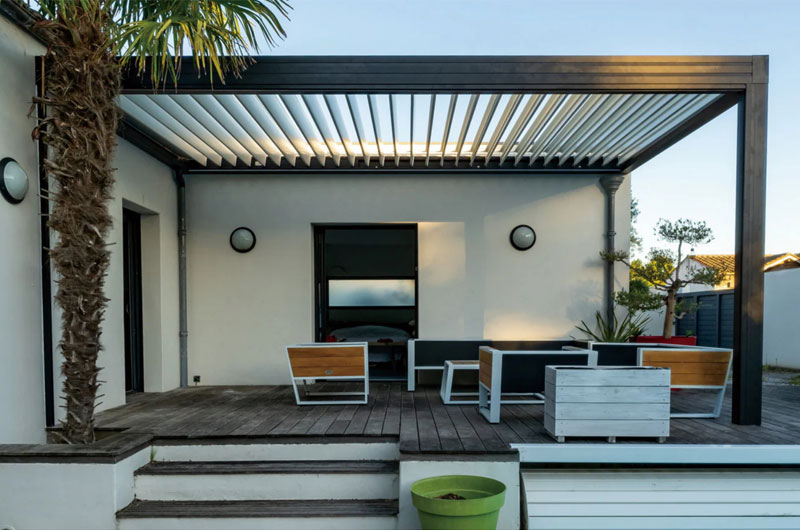
Wall-mounted louvered pergolas are directly attached to an existing structure, such as a house, building, or garage.
They are sometimes referred to as “attached pergolas” because they rely on a wall for structural support.
Features and Benefits
- Space Efficiency:
Wall-mounted pergolas are ideal for smaller outdoor areas or narrow patios. Since one side is anchored to a wall, they take up less space compared to freestanding options while still providing full coverage over the designated area. - Seamless Integration:
These pergolas blend naturally with the existing architecture, creating a cohesive look between indoor and outdoor spaces. The attachment to a wall allows the pergola to feel like a natural extension of the home, perfect for decks, patios, or poolside lounges. - Structural Stability:
By anchoring to a sturdy wall, wall-mounted pergolas often require fewer posts and less ground anchoring, which can enhance structural stability and reduce installation complexity in certain setups. - Weather Protection:
Since one side is connected to a building, wall-mounted pergolas can provide better protection against wind or rain coming from that direction. The attachment can also allow for integration with gutters or drainage systems, directing rainwater away from the outdoor space.
Limitations
- Site Restrictions:
Wall-mounted pergolas can only be installed where a strong, load-bearing wall is present. They are not suitable for open gardens or areas where no adjacent structures exist. - Limited Placement Flexibility:
The design and layout are often dictated by the existing wall. This can restrict the orientation and size of the pergola, sometimes limiting options for sun exposure or shading angles. - Potential Wall Modifications:
Installation may require drilling or modifying the wall, which could affect exterior finishes or require additional waterproofing to prevent leaks.
Freestanding Louvered Pergolas
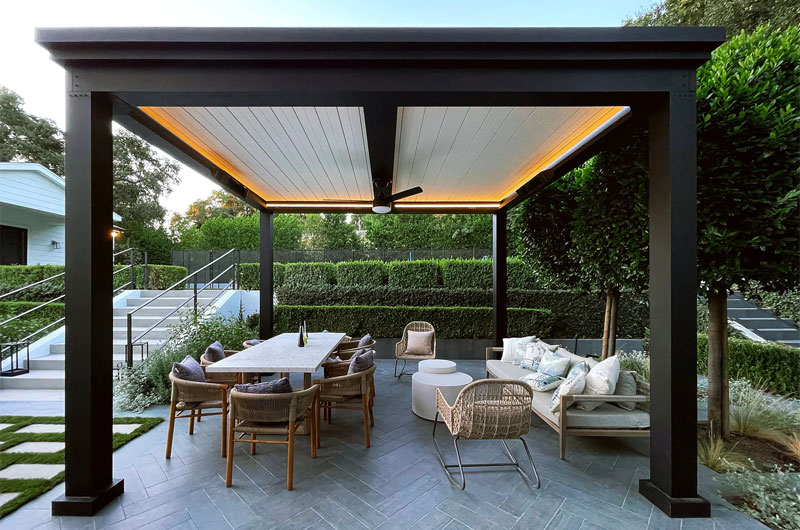
Freestanding louvered pergolas, also known as “standalone pergolas,” are independent structures supported entirely by posts anchored to the ground.
They offer versatility, allowing placement anywhere in your outdoor space without the need for supporting walls.
Features and Benefits
- Flexibility in Placement:
Freestanding pergolas can be installed anywhere – over a garden, poolside, or even in the middle of a lawn. This flexibility allows homeowners to design outdoor areas exactly as they envision, without constraints from existing structures. - Versatility in Design:
Since they don’t require a wall, freestanding pergolas can have open designs on all sides. This allows for 360-degree access and unobstructed views, making them ideal for outdoor entertaining or garden focal points. - Expandable Options:
Freestanding models can be combined or expanded to create larger outdoor spaces. Additional sections can be added without limitations imposed by existing walls, allowing for customization based on functional or aesthetic needs. - Aesthetic Appeal:
Freestanding pergolas often serve as a centerpiece in a garden or outdoor area. Their standalone nature makes them versatile for decorative purposes, from hanging plants and lighting to curtains or screens for privacy.
Limitations
- Requires More Space:
Since freestanding pergolas are independent, they require adequate space for posts and foundations. In compact areas, this might limit their suitability. - Higher Installation Complexity:
Freestanding pergolas often require more extensive groundwork, including concrete footings or anchoring systems, to ensure stability, particularly in windy areas. This can increase installation time and cost compared to wall-mounted options. - Wind Exposure:
Without the support of a wall, freestanding pergolas are more exposed to wind. Using secure anchoring and durable materials is crucial to ensure stability and withstand storms.
Comparison: Wall-Mounted vs Freestanding
To better understand the differences between these two pergola types, consider the following comparison chart:
| Feature | Wall-Mounted Pergola | Freestanding Pergola |
|---|---|---|
| Support Structure | Attached to an existing wall | Independent, supported by posts |
| Space Efficiency | More space-efficient | Requires more space |
| Placement Flexibility | Limited by wall location | Can be installed anywhere |
| Integration with Home | Seamless, blends with architecture | Standalone, can be a focal point |
| Installation Complexity | Generally simpler | More complex, requires solid foundation |
| Wind and Weather Resistance | Wall provides partial protection | Fully exposed; needs strong anchoring |
| Customization Options | Limited expansion | Highly flexible, expandable |
| Cost | Typically lower | May be higher due to foundations and posts |
Making the Right Choice
When deciding between a wall-mounted and freestanding louvered pergola, several factors should guide your choice:
- Available Space:
For smaller patios or areas directly adjacent to the house, wall-mounted pergolas are often the best fit. For large, open gardens or commercial spaces, freestanding pergolas provide more flexibility. - Design Goals:
If you want the pergola to feel like an extension of your home and provide partial protection from wind, wall-mounted options are ideal. They are ideal for creating standalone outdoor focal points and dedicated entertaining areas. - Installation Considerations:
Wall-mounted pergolas generally involve less groundwork, making them simpler and faster to install. Freestanding pergolas may require concrete footings, more precise leveling, and structural engineering considerations. - Budget:
While both types can vary widely in cost depending on size, material, and accessories, freestanding pergolas typically involve higher installation costs due to foundations and post supports. - Aesthetic Preferences:
Wall-mounted pergolas offer a modern, integrated look. Freestanding pergolas can be customized to suit a variety of design styles and serve as a visual centerpiece in a garden or courtyard.