
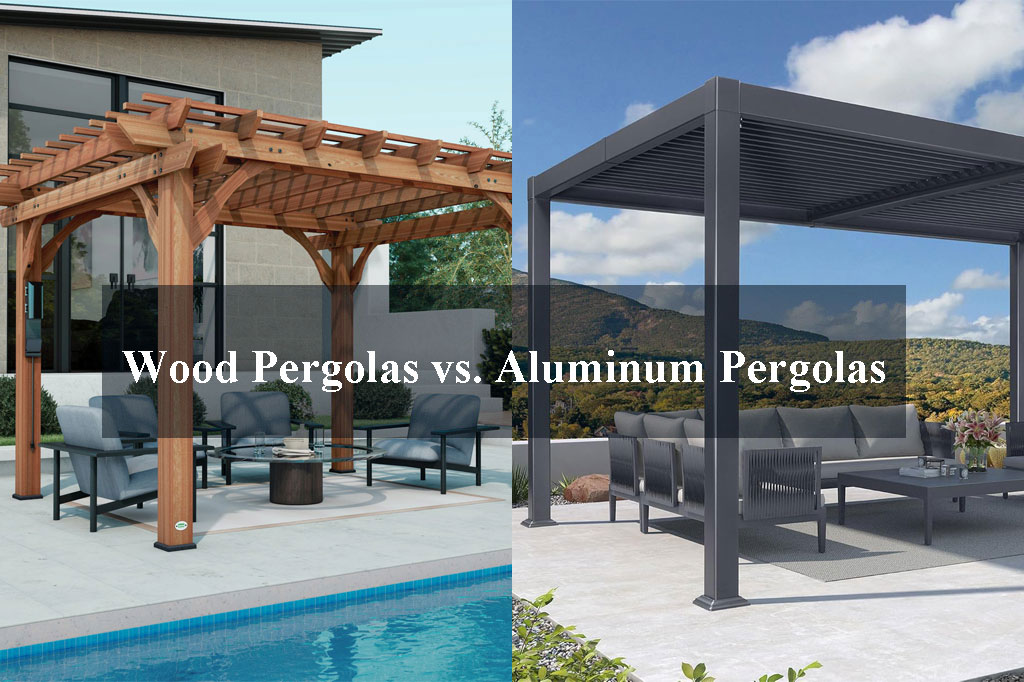
If you’re considering adding a pergola to your outdoor space, one of the first big decisions is material: wood or aluminum.
Historically, wood has been the go-to choice for its natural look and classic appeal. In recent decades, aluminum has gained popularity because of its durability and low‑maintenance profile.
Which is truly better — wood or aluminum? The answer depends heavily on what you value: aesthetics, longevity, cost, maintenance commitments, environmental impact, or design flexibility.
Wood: Natural Beauty — but High Maintenance
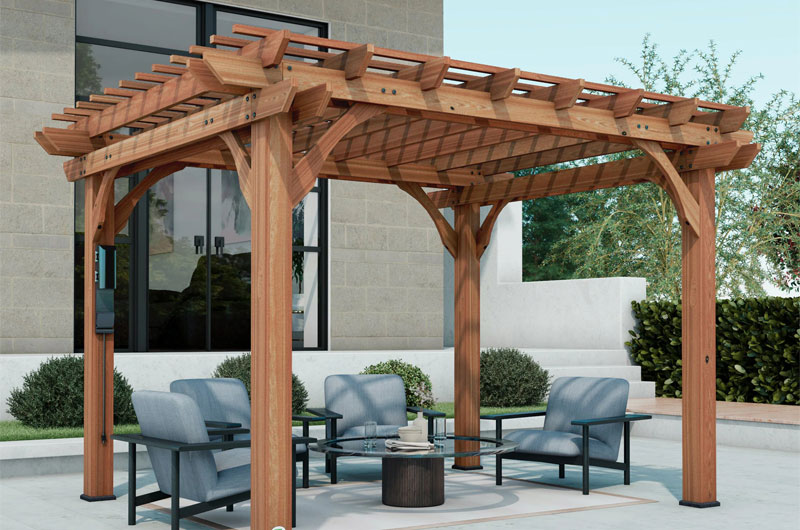
Advantages of wood:
- Wood has an organic, warm aesthetic that blends beautifully with gardens, vegetation, and natural surroundings. It’s often preferred if you want a traditional, rustic, or natural‑looking pergola.
- Wood can be adapted to many designs: carved beams, custom shapes, latticework, climbing‑plant trellises — features that give your pergola individuality.
- If responsibly sourced, wood can be more environmentally friendly than metal, especially with sustainably managed forests.
Challenges with wood:
- Wood is vulnerable to moisture, insects, rot, mold, warping, cracking, and fading under sun exposure — especially if untreated or poorly maintained.
- To preserve its appearance and structural integrity, a wood pergola typically requires regular maintenance: pressure‑washing, sanding, sealing or staining/painting every 1–2 years (or more often under harsh weather).
- Without diligent care, lifespan is limited. Many wood pergolas last around 10–15 years; with regular maintenance and high‑quality wood, perhaps 15–20 years before significant restoration or replacement is required.
- Maintenance is not just time-consuming — it adds up financially over time.
In short: wood offers a warm, natural, customizable pergola — but only if you commit to regular upkeep. Without that, wood pergolas age fast and degrade structurally.
Aluminum: Built to Last, Built for Ease
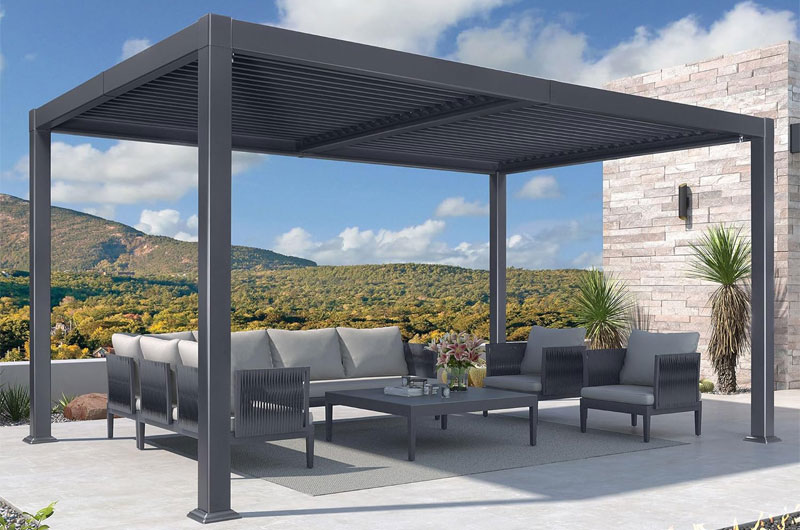
Advantages of aluminum:
- Longevity & resilience: Aluminum does not rot, warp, crack, or attract termites or other pests. It resists rust, corrosion, moisture, and is much less sensitive to temperature swings.
- Low maintenance: Most aluminum pergolas need little more than occasional washing with soap and water. They don’t require sealing, painting, or staining.
- Long lifespan: Aluminum structures often remain serviceable and attractive for 20–30 years — sometimes even longer — with minimal upkeep.
- Ease of installation: Because aluminum is lighter than wood, many pergolas come as modular kits, easier to assemble (even DIY‑style) than heavy timber structures.
- Modern aesthetics and flexibility: Powder‑coated aluminum can come in various finishes, including colors or simulated wood‑grain surfaces. This makes it versatile for modern, contemporary, or even classic design tastes.
- Better performance under harsh conditions: For rain, snow, humidity, coastal salt air, or frequent temperature swings — aluminum performs much more reliably.
Potential drawbacks of aluminum:
- Some people find aluminum less “natural” or cozy than wood; even wood‑grain finishes can feel more industrial or modern than a genuine timber texture.
- Aluminum can get hotter to the touch under strong sunlight than wood — wood stays cooler naturally.
- The initial cost of a good aluminum pergola (especially powder-coated or louvered models) may be higher than basic wood pergolas.
Overall: aluminum is the friend of “set it and forget it” outdoor living — very little maintenance, high durability, strong resistance to weather and pests, and long-term cost-effectiveness.
Cost Considerations: Short-Term vs. Long-Term
At first glance, a wooden pergola often costs less than a high‑quality aluminum one — especially if you go for simple wood and do the labor yourself.
However, the real cost over time tells a different story:
- Wood requires repeated investments in sealants, stains/paints, repairs when boards warp or rot, and protection treatments against pests. Over a decade or more, these ongoing costs — plus periodic part replacement — can add up significantly.
- Aluminum, while possibly more expensive upfront, generally needs only minimal maintenance (cleaning) and rarely needs repairs or refinishing. This can make it more cost‑effective over the long run.
For homeowners who care about long-term value and minimal hassle, aluminum often becomes the more economical option when accounting for lifetime maintenance costs.
Style & Design
- If what you want is a classic, natural, rustic look — wood still has the edge. Its grain, texture, and organic feel are hard to replicate perfectly.
- If your home has a modern, minimalist, or contemporary design, or you prefer sleek lines, uniform finishes, and modular components — aluminum often fits better. Powder‑coated aluminum can look very clean and modern.
Environmental & Sustainability Factors
- Wood is renewable (if responsibly sourced), biodegradable, and naturally carbon‑sequestering — advantages if you prioritize sustainability and ecological footprint.
- Aluminum, on the other hand, is highly durable and recyclable — a well-made aluminum pergola can last decades, reducing the need for replacement and material waste.
- That said, aluminum production is energy-intensive, which can have significant environmental costs depending on the source and manufacturing process.
Thus, your environmental choice depends on what kind of sustainability you value — renewable materials vs. longevity + recyclability + reduced maintenance chemicals.
Use Cases & Practical Considerations
Aluminum pergolas shine in environments or climates where exposure to moisture, sun, temperature swings, or pests is likely: e.g., coastal homes with salt air and humidity; rainy or snowy regions; or houses where you don’t want to worry about regular upkeep.
Wood pergolas may be more appealing in climates with mild, dry weather, or in homes where the pergola is part of a more “natural,” garden‑centric aesthetic. If you enjoy DIY or are willing to invest in regular upkeep, wood can be very rewarding and beautiful — especially to complement climbing vines or natural landscaping.
Summary: Which is “Better”? — It Depends on What You Value
There is no absolute winner between wood and aluminum pergolas — each has tradeoffs. The right choice depends largely on what you prioritize:
- Your climate (sun intensity, rain, humidity, pests)
- How much time and money you’re willing to commit to maintenance long-term
- The design style and feel you want in your backyard (modern vs. natural)
- Whether you prefer DIY installation or professional installation