
Aluminum pergolas have become a popular outdoor feature for patios, gardens, and luxury villas due to their sleek design, durability, and low maintenance.
But are aluminum pergolas safe in strong winds?
The short answer is: yes, aluminum pergolas can be very safe in strong winds—but only when they are properly designed, engineered, and installed.
This article explores how aluminum pergolas perform in windy conditions, what factors influence their safety, and how to ensure maximum wind resistance.
Understanding Wind Resistance in Pergolas
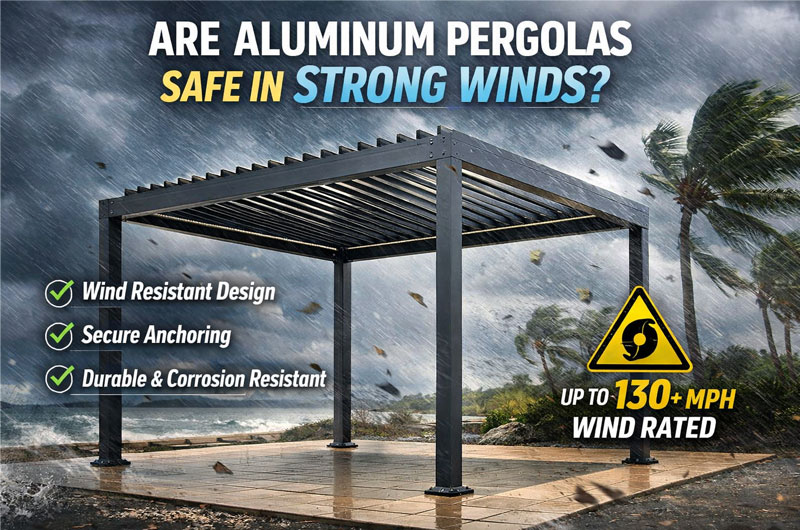
Wind resistance is not a fixed number—it varies depending on design, materials, and installation. In general, well-engineered pergolas can withstand wind speeds ranging from 50 mph to over 130 mph, with high-end models reaching even higher ratings.
Aluminum pergolas, in particular, are known for their excellent strength-to-weight ratio. Unlike wood or vinyl, they are far less susceptible to warping, cracking, or structural weakening over time, making them a more dependable choice in storm conditions.
Some premium aluminum pergolas are engineered to withstand winds up to 130 mph or more, while specialized systems can even reach 160 mph or higher under ideal conditions.
Why Aluminum Performs Well in Strong Winds
1. High Strength-to-Weight Ratio
Aluminum is lightweight yet structurally strong. This combination enables manufacturers to produce sturdy frames that can withstand wind pressure without bending or breaking.
Unlike wood, aluminum does not absorb moisture or degrade over time, which helps maintain its structural integrity even after years of exposure to the elements.
2. Engineered Structural Design
Modern aluminum pergolas are designed with reinforced joints, beams, and posts. These designed connections ensure wind loads are shared throughout the framework, reducing localized strain.
Strong connection points are critical because the weakest part of any structure is where components meet. High-quality pergolas use precision manufacturing and heavy-duty fasteners to prevent failure in strong winds.
3. Aerodynamic Features (Louvered Roofs)
One major advantage of aluminum pergolas is the availability of adjustable louvered roofs.
These systems improve wind safety by allowing airflow through the structure:
- Open louvers reduce wind pressure
- Adjustable angles help deflect gusts
- Less “sail effect” compared to solid roofs
In fact, open or slatted designs naturally reduce wind load because air can pass through rather than pushing against a solid surface.
4. Corrosion Resistance
Aluminum pergolas are typically powder-coated, making them resistant to:
- Rust
- UV damage
- Moisture corrosion
This ensures that the structure maintains its strength over time, which is crucial for long-term wind resistance.
The Most Important Factor: Proper Anchoring
Even the strongest aluminum pergola can fail if it is not properly anchored.
Anchoring is what prevents:
- Uplift (the structure being lifted by wind)
- Sliding or shifting
- Structural collapse
Experts emphasize that pergolas should be secured into concrete footings using heavy-duty anchor bolts for maximum stability.
Without proper anchoring, even moderate winds can cause movement or damage.
Wind Ratings: What Do They Mean?
Wind ratings indicate the maximum sustained wind speed a pergola can handle without structural failure.
Typical ranges include:
- 30–50 mph: Basic pergolas (light-duty, often wood or vinyl)
- 50–100 mph: Standard aluminum pergolas
- 100–130+ mph: Reinforced aluminum or steel systems
- 150–200+ mph: High-end, hurricane-rated structures
It’s important to match the pergola’s wind rating with your local climate conditions.
Factors That Affect Wind Safety
1. Installation Quality
Professional installation ensures:
- Correct footing depth
- Proper anchor spacing
- Structural alignment
Poor installation can significantly reduce wind resistance—even for high-quality pergolas.
2. Location and Exposure
A pergola in a sheltered backyard behaves very differently from one in:
- Coastal areas
- Open plains
- Hilltops
Exposure to direct wind increases the load on the structure.
3. Design Features
Certain additions can increase wind risk:
- Solid roofs
- Privacy screens
- Curtains or fabric canopies
These elements act like sails and can catch wind, increasing pressure on the structure.
4. Maintenance
Regular inspections help ensure:
- Bolts remain tight
- No corrosion at anchor points
- Structural components stay aligned
Even durable aluminum systems require occasional checks to maintain safety.
Are Aluminum Pergolas Safe in Storms?
Yes—when properly designed and installed, aluminum pergolas are among the safest outdoor structures in windy conditions.
They are particularly suitable for:
- Coastal regions
- Hurricane-prone areas
- High-wind zones
In fact, aluminum and steel pergolas are often recommended over wood or vinyl for these environments due to their superior wind resistance.
However, no pergola is completely “storm-proof.” Extreme conditions like tornadoes or direct hurricane impact can still cause damage.
Safety Tips for High-Wind Conditions
To maximize safety, homeowners should follow these best practices:
- Choose a high wind-rated model (100+ mph for windy regions)
- Ensure professional installation
- Anchor securely into concrete
- Open louvers during strong winds
- Remove loose accessories (curtains, décor)
- Inspect regularly for wear or loosening
Conclusion
Aluminum pergolas are not only stylish and durable—they can also be highly safe in strong winds when properly engineered and installed. Their strength, corrosion resistance, and aerodynamic design features make them one of the best choices for outdoor structures in challenging weather conditions.
However, safety ultimately depends on three main factors:
- Quality of design and materials
- Proper anchoring and installation
- Appropriate use based on local wind conditions
If these elements are in place, an aluminum pergola can provide a secure and long-lasting outdoor space—even in areas prone to strong winds.