
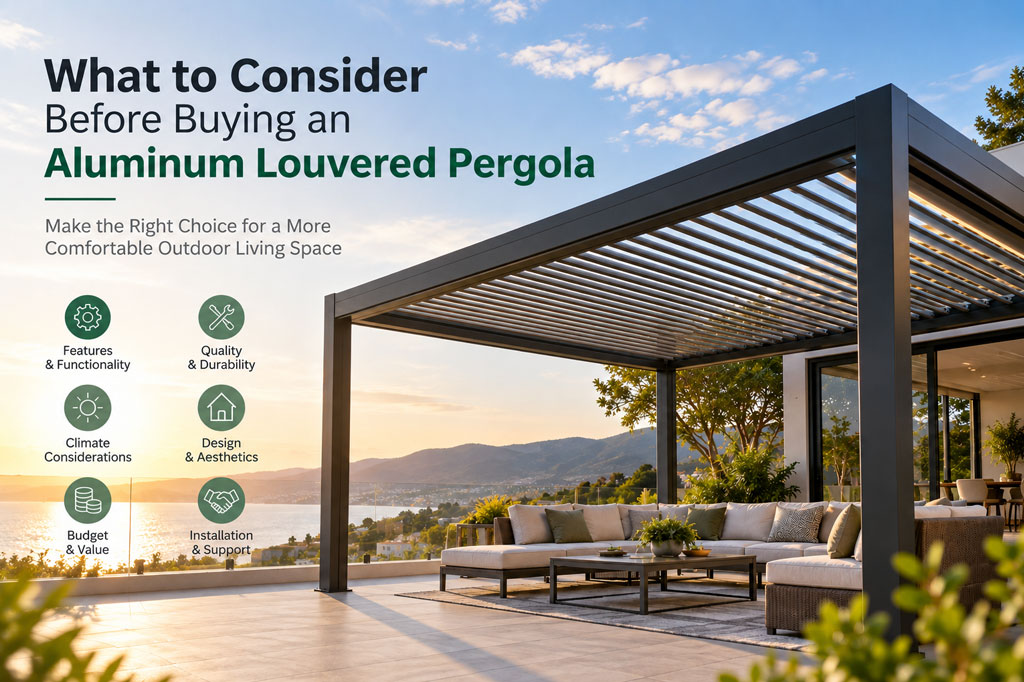
An aluminum louvered pergola can transform a patio, garden, rooftop, poolside area, or commercial terrace into a more comfortable and functional outdoor space. With adjustable roof louvers, it allows you to manage sunlight, shade, airflow, and light rain without losing the open feeling of being outdoors.
However, buying the right pergola involves more than choosing a size and color. Roof design, structural strength, drainage, installation conditions, controls, accessories, and local weather all affect how well the pergola will perform.
Before making a decision, consider the following important factors.
1. How You Plan to Use the Pergola
Begin by identifying the main purpose of your outdoor space. This will help determine the size, roof system, installation method, and accessories you need.
Common applications include:
- Outdoor dining and family gatherings
- Poolside seating or relaxation areas
- Garden lounges
- Outdoor kitchens
- Rooftop terraces
- Restaurant and café seating
- Hotel and resort leisure spaces
- Commercial event or entertainment areas
A small residential seating area may only require a simple manual pergola. A restaurant terrace, on the other hand, may benefit from motorized louvers, integrated lighting, zip blinds, and a multi-module structure.
Think about how many people will use the area, what furniture or equipment will be placed underneath it, and whether the space needs to remain usable during changing weather.
2. Choose the Right Louvered Roof System
Not all aluminum louvered pergolas operate in the same way.
Manual Adjustable Louvers
A manual adjustable louvered pergola uses a hand-operated mechanism to change the angle of the roof louvers.
It is suitable for buyers who want:
- Simple operation
- Lower initial cost
- Minimal electrical requirements
- Easy maintenance
- Adjustable sunlight and ventilation
This option generally works well for smaller patios, gardens, and residential seating areas.
Motorized Adjustable Louvers
A motorized adjustable louvered pergola allows the louvers to be opened or closed using a remote control, wall switch, or compatible smart-control system.
It is ideal for:
- Frequently used outdoor spaces
- Large pergola installations
- Premium residential projects
- Restaurants, hotels, and commercial terraces
- Projects requiring rain, wind, or sun sensors
Motorized operation offers greater convenience, particularly when the roof is large or divided into multiple zones.
Retractable Louvered Roof
A retractable louvered pergola allows the roof panels to slide and stack, creating a substantially open roof.
Choose this system if you want:
- A more open view of the sky
- Maximum natural light when the roof is retracted
- Flexible shade coverage
- A strong indoor-outdoor connection
Adjustable and Retractable Louvers
An adjustable and retractable louvered pergola combines tilting and retracting functions. It provides the widest range of control but involves a more advanced mechanical system and a higher investment.
This option is particularly suitable for high-end villas, hospitality projects, and outdoor spaces where maximum flexibility is required.
3. Evaluate the Installation Location
The location of the pergola affects its structure, orientation, drainage, and comfort.
Before requesting a quotation, consider:
- The direction of the sun throughout the day
- Prevailing wind direction
- Nearby walls, doors, windows, and roof edges
- Underground pipes or electrical cables
- Existing drainage points
- Available foundation or mounting surfaces
- Access for transportation and installation
- Surrounding trees and buildings
Louver orientation is especially important. Correctly positioned louvers can provide shade during the hottest part of the day while allowing useful daylight and ventilation at other times.
For rooftop installations, structural loading, wind exposure, access, and anchoring require particular attention. A qualified engineer may need to assess the existing building before the pergola is installed.
4. Select the Correct Size and Layout
The pergola should be large enough to cover the intended activity area without making the surrounding space feel crowded.
Measure the installation site carefully and allow room for:
- Dining tables and chairs
- Outdoor sofas
- Doors and walking paths
- Barbecue or kitchen equipment
- Planters and landscaping
- Side screens or sliding doors
- Maintenance access
Do not select a pergola based only on its external dimensions. Ask about the usable internal area, post positions, beam dimensions, roof projection, and drainage outlet locations.
Large pergolas may need to be divided into multiple modules. Modular construction can improve structural performance and allow different roof sections to be controlled independently.
5. Check Wind, Rain, and Snow Performance
An outdoor pergola must be designed for the climate in which it will be installed.
Ask the supplier for information about:
- Maximum design wind load
- Snow-load capacity
- Rainfall or drainage performance
- Recommended operating temperature
- Corrosion protection
- Applicable testing standards
- Required foundation and anchoring method
Do not rely on a single performance figure without understanding the conditions behind it. Wind and snow capacity can vary according to pergola size, post height, configuration, foundation, anchoring, and whether side enclosures are installed.
For coastal areas, ask whether the finish and hardware are suitable for high humidity and salt exposure. For snowy regions, confirm whether the louvers should remain open during heavy snowfall and how snow should be removed safely.
6. Examine the Aluminum Structure and Finish
Aluminum is widely used for modern pergolas because it is lightweight, strong, corrosion-resistant, and relatively easy to maintain. Nevertheless, the quality of aluminum pergolas can vary significantly.
Important details include:
- Aluminum alloy and temper
- Wall thickness of posts, beams, and louvers
- Internal reinforcement
- Maximum unsupported span
- Quality of connectors and fasteners
- Powder-coating process
- Surface preparation
- Coating color and texture
- Resistance to fading and corrosion
A high-quality powder-coated finish helps protect the aluminum and maintain its appearance. In harsh coastal or industrial environments, additional surface protection may be advisable.
Request physical color samples whenever possible. Colors may look different on a computer screen and can change considerably under natural sunlight.
7. Understand the Drainage System
Drainage is one of the most important—and most frequently overlooked—features of a louvered pergola.
When the roof is closed, rainwater should be directed from the louvers into integrated gutters, through the beams, and down the posts toward the designated outlet.
Before purchasing, ask:
- Where does water enter the gutter?
- How large are the internal drainage channels?
- Where are the downpipe outlets located?
- Can the outlets connect to the site drainage system?
- How can the gutters be inspected and cleaned?
- What rainfall conditions has the system been designed for?
- How does the pergola manage wind-driven rain?
A louvered pergola can provide effective rain protection, but it should not automatically be treated as a completely sealed indoor room. Performance depends on the product design, installation quality, rainfall intensity, wind direction, and the use of side enclosures.
8. Review the Motor and Control System
If you are considering a motorized pergola, check the entire control system rather than focusing only on the remote control.
Ask about:
- Motor type and protection rating
- Power-supply requirements
- Manual override or emergency operation
- Remote-control range
- Multi-zone control
- App or smart-home compatibility
- Availability of replacement parts
- Wind, rain, and sun sensors
- Motor and electrical-component warranties
Automatic sensors can make the pergola more convenient, but they do not replace safe operation or proper structural design. The owner should still follow the manufacturer’s instructions during storms, snow, maintenance, and extended periods of non-use.
Electrical work should be completed according to local regulations by a qualified professional.
9. Plan Accessories Before Production
Accessories can turn a basic shade structure into a more complete outdoor living space. It is best to decide which features you need before the pergola enters production.
Popular options include:
- Integrated LED lighting
- Zip blinds
- Aluminum privacy panels
- Sliding glass doors
- Electric lift windows
- Curtains
- Fans
- Heaters
- Speakers
- Rain and wind sensors
- Smart controls
Side enclosures can improve privacy and protection from low-angle sun, wind, and insects. However, they may also change airflow and increase the wind pressure acting on the structure. The supplier should consider these additions during the engineering and quotation stages.
Planning accessories early also allows cables, tracks, drainage components, and mounting points to be integrated more neatly into the pergola.
10. Check Permits and Local Regulations
Planning and building requirements vary by country, region, and municipality. Depending on the size and location of the pergola, you may need:
- Planning approval
- A building permit
- Structural calculations
- Homeowners’ association approval
- Electrical certification
- Permission for installation near property boundaries
Check these requirements before placing an order. This is especially important for large commercial projects, rooftop pergolas, wall-mounted structures, and installations in areas with high wind or snow loads.
11. Compare the Complete Cost, Not Just the Product Price
The lowest product quotation is not always the lowest total project cost.
A complete budget may include:
- Pergola structure
- Roof motor and controls
- Accessories
- Custom finishes
- Structural calculations
- Packaging and transportation
- Import duties and taxes
- Foundations
- Electrical work
- Installation
- Lifting equipment
- Site drainage
- Permits
- Ongoing maintenance
When comparing suppliers, make sure each quotation has the same dimensions, specifications, accessories, delivery terms, and installation scope.
12. Review the Warranty and After-Sales Support
An aluminum louvered pergola is a long-term outdoor installation. Reliable technical support and access to replacement parts are therefore important.
Before ordering, confirm:
- Structural warranty period
- Motor and control-system warranty
- Powder-coating warranty
- Coverage for accessories
- Warranty exclusions
- Availability of spare parts
- Installation support
- Maintenance requirements
- Procedure for reporting a problem
Also ask for installation drawings, electrical diagrams, foundation requirements, operating instructions, and maintenance guidance.
Final Thoughts
The right aluminum louvered pergola should fit the site, suit the local climate, complement the surrounding architecture, and provide the level of weather control you actually need.
Before purchasing, look beyond appearance. Compare the roof mechanism, structural specifications, drainage design, aluminum finish, operating system, installation requirements, accessories, warranty, and total project cost.
Seroban designs and manufactures customized aluminum louvered pergolas for residential and commercial outdoor spaces. To receive a suitable proposal, provide the installation location, site dimensions, project photos or drawings, preferred roof system, color, and required accessories when requesting a quotation.